All images from the
Library of Congress,
Prints and Photographs Division,
unless otherwise noted.


The unanimous Declaration of the thirteen united States of America, When in the Course of human events, it becomes necessary for one people to dissolve the political bands which have connected them with another, and to assume among the powers of the earth, the separate and equal station to which the Laws of Nature and of Nature's God entitle them, a decent respect to the opinions of mankind requires that they should declare the causes which impel them to the separation.
We hold these truths to be self-evident, that all men are created equal, that they are endowed by their Creator with certain unalienable Rights, that among these are Life, Liberty and the pursuit of Happiness.--That to secure these rights, Governments are instituted among Men, deriving their just powers from the consent of the governed, --That whenever any Form of Government becomes destructive of these ends, it is the Right of the People to alter or to abolish it, and to institute a new Government, laying its foundation on such principles and organizing its powers in such form, as to them shall seem most likely to effect their Safety and Happiness. Prudence, indeed, will dictate that Governments long established should not be changed for light and transient causes; and accordingly all experience hath shewn, that mankind are more disposed to suffer, while evils are sufferable, than to right themselves by abolishing the forms to which they are accustomed. But when a long train of abuses and usurpations, pursuing invariably the same Object evinces a design to reduce them under absolute Despotism, it is their right, it is their duty, to throw off such Government, and to provide new Guards for their future security.--Such has been the patient sufferance of these Colonies; and such is now the necessity which constrains them to alter their former Systems of Government. The history of the present King of Great Britain is a history of repeated injuries and usurpations, all having in direct object the establishment of an absolute Tyranny over these States. To prove this, let Facts be submitted to a candid world.
He has refused his Assent to Laws, the most wholesome and necessary for the public good.
He has kept among us, in times of peace, Standing Armies without the Consent of our legislatures.
He has affected to render the Military independent of and superior to the Civil power.
For Quartering large bodies of armed troops among us:
For cutting off our Trade with all parts of the world:
For imposing Taxes on us without our Consent:
For depriving us in many cases, of the benefits of Trial by Jury:
For transporting us beyond Seas to be tried for pretended offences:
He has abdicated Government here, by declaring us out of his Protection and waging War against us.
In every stage of these Oppressions We have Petitioned for Redress in the most humble terms: Our repeated Petitions have been answered only by repeated injury. A Prince whose character is thus marked by every act which may define a Tyrant, is unfit to be the ruler of a free people.
Nor have We been wanting in attentions to our Brittish brethren. We have warned them from time to time of attempts by their legislature to extend an unwarrantable jurisdiction over us. We have reminded them of the circumstances of our emigration and settlement here. We have appealed to their native justice and magnanimity, and we have conjured them by the ties of our common kindred to disavow these usurpations, which, would inevitably interrupt our connections and correspondence. They too have been deaf to the voice of justice and of consanguinity. We must, therefore, acquiesce in the necessity, which denounces our Separation, and hold them, as we hold the rest of mankind, Enemies in War, in Peace Friends.
We, therefore, the Representatives of the united States of America, in General Congress, Assembled, appealing to the Supreme Judge of the world for the rectitude of our intentions, do, in the Name, and by Authority of the good People of these Colonies, solemnly publish and declare, That these United Colonies are, and of Right ought to be Free and Independent States; that they are Absolved from all Allegiance to the British Crown, and that all political connection between them and the State of Great Britain, is and ought to be totally dissolved; and that as Free and Independent States, they have full Power to levy War, conclude Peace, contract Alliances, establish Commerce, and to do all other Acts and Things which Independent States may of right do. And for the support of this Declaration, with a firm reliance on the protection of divine Providence, we mutually pledge to each other our Lives, our Fortunes and our sacred Honor.
Annotation
“In Congress, July 4, 1776”
On July 4, 1776, the Second Continental Congress unanimously approved the Declaration of Independence. Both the document and the day would come to mark America’s founding.
Meeting in Philadelphia’s Independence Hall, the Second Continental Congress united delegates from all thirteen colonies to coordinate the war against Great Britain. It had first convened in May 1775, shortly after Lexington and Concord, and soon placed George Washington at the helm of a Continental Army. The Congress built on earlier intercolonial assemblies in the Albany Congress of 1754, the Stamp Act Congress of 1765, and the First Continental Congress of 1774.
On June 11, 1776, the Congress appointed five delegates—Thomas Jefferson, John Adams, Benjamin Franklin, Roger Sherman, and Robert Livingston—to prepare a declaration on independence. With Jefferson as lead drafter, the committee presented its draft to the full Congress on June 28. (John Trumbull’s monumental painting The Declaration of Independence, which has hung in the U.S. Capitol Rotunda since 1826, depicts this scene.) Congress revised the text before adopting it on July 4.
Two days earlier, on July 2, the Congress had approved the Lee Resolution, which announced the colonies “free and independent” from Britain. John Adams predicted that July 2 would be “celebrated, by succeeding Generations, as the great anniversary Festival” of American independence. Instead, however, Americans came to commemorate July 4, the day independence was declared and justified.
Primary Sources:
- Second Continental Congress, Lee Resolution (1776)
- John Adams, Letter to Abigail Adams (July 3, 1776)
- John Trumbull, The Declaration of Independence (1818)
Annotation
“America”
The Declaration of Independence was a “collective act,” in the words of the late, distinguished historian Pauline Maier. More than Thomas Jefferson, or the five-man drafting committee, or the Second Continental Congress, the Declaration of Independence was authored by America as a whole through a yearslong, continent-wide constitutional conversation.
As Maier powerfully documented, the Declaration borrowed from and built upon dozens of earlier American writings, big and small: political essays and pamphlets; intercolonial declarations; state constitutions and colonial instructions; county, city, town, and militia resolutions; and even judicial grand-jury charges. Jefferson himself acknowledged that the Declaration was “intended to be an expression of the [A]merican mind,” one that distilled the “harmonising sentiments of the day” rather than discovered any “new principles, or new arguments.”
(This Annotated Declaration, in turn, borrows from and builds upon Maier’s seminal book American Scripture: Making the Declaration of Independence, along with Akhil Reed Amar’s The Words That Made Us, Born Equal, and America’s Constitution, and Jeffrey Rosen’s The Pursuit of Happiness and The Pursuit of Liberty.)
Primary Sources:
- Thomas Jefferson, Letter to Henry Lee (May 8, 1825)
Annotation
“one people”
The thirteen colonies overcame significant political, cultural, legal, economic, and religious differences to unite against Great Britain.
Military necessity required unity. Only by joining forces could the colonies stand a chance against Britain, a truth memorably illustrated by Benjamin Franklin’s “Join or Die” cartoon. First sketched in 1754 to urge unity against the French and Indians, Franklin’s cartoon became a symbol of resistance to Great Britain as it was reprinted and remixed in the 1760s and 1770s.
Constitutional conversation also fostered unity, as delegates from different colonies mixed and mingled in intercolonial assembles, colonial legislatures conversed with each other via circular letters, and Americans read in newspapers and pamphlets about developments in other colonies.
But how binding would this unity be? After “We the People” ordained and established the Constitution in 1787–89, Thomas Jefferson and John C. Calhoun claimed that states could nullify federal laws and secede from the Union. Alexander Hamilton, John Marshall, and Andrew Jackson shot back that America constituted “one people,” indissolubly. When this debate culminated in Civil War, Lincoln carried the torch for the latter group, championing a “perpetual” “government of the people, by the people, for the people.”
Primary Sources:
- Benjamin Franklin, Join or Die (1754)
- Alexander Hamilton, Draft Farewell Address (1796)
- Thomas Jefferson, Draft of the Kentucky Resolutions (1798)
- Cohens v. Virginia (1821)
- John C. Calhoun, Exposition and Protest (1828)
- Andrew Jackson, Nullification Proclamation (1832)
- Abraham Lincoln, First Inaugural Address (1861)
- Abraham Lincoln, Gettysburg Address (1863)
Annotation
“the Laws of Nature and of Nature's God”
According to natural-law theory, certain God-given universal moral principles govern all human conduct. This law is “natural” because it applies even in the “state of nature,” even before humans form governments and establish “positive” law like statutes, judicial decisions, and custom. As William Blackstone explained in Commentaries on the Laws of England, natural law constitutes the “eternal, immutable laws of good and evil” that are “dictated by God himself” and are “binding over all the globe in all countries, and at all times.” Among the most influential natural-law philosophers at the founding were John Locke and Algernon Sidney.
Primary Sources:
- John Locke, Second Treatise on Government (1690)
- Algernon Sidney, Discourses Concerning Government (1698)
- William Blackstone, Commentaries on the Laws of England (1765–69)
Annotation
“a decent respect to the opinions of mankind”
The Declaration addressed both domestic and foreign audiences. Abroad, its drafters hoped to persuade European powers (especially France) to support the American cause with money, supplies, and troops. At home, the Declaration aimed to rally ordinary Americans, whose hearts and minds would need to be won for the war to be won.
Immediately after approving the Declaration, the Second Continental Congress ordered that copies be sent to state assemblies and military commanders and that its text be “proclaimed”—read aloud—“in each of the United States, and at the head of the army.” That night, Philadelphia printer John Dunlap produced some 200 copies.
In the days that followed, the Congress’s president—John Hancock, whose signature featured prominently on the Dunlap broadsides—sent copies to the states, urging that the Declaration be proclaimed “in such a Manner, that the People may be universally informed of it.” He also sent a copy to General Washington, who ordered it read to the troops in the hopes that the reading would “serve as a fresh incentive to every officer, and soldier, to act with Fidelity and Courage.”
More broadly, the Declaration’s words reached eyes and ears up and down the continent through public readings, newspapers, and broadsides.
Primary Sources:
- Journals of the Continental Congress (July 4, 1776)
- Dunlap Broadside (1776)
- John Hancock, Letters to States and General Washington (July 1776)
- George Washington, General Orders (July 9, 1776)
Annotation
“declare”
In English law, a declaration was the statement of charges a plaintiff presented against a defendant in court. In English politics and history, declarations enacted policies and ended regimes. Of the eight declarations that had ended the reign of a living king, the Declaration of Rights of 1689, which deposed King James II, was the most famous.
In this tradition, American intercolonial assemblies had issued declarations even before the Declaration of Independence: a 1765 Declaration of Rights and Grievances, a 1774 Declaration and Resolves, and a 1775 Declaration on Taking Up Arms, the last of which Thomas Jefferson had co-drafted.
Primary Sources:
- Declaration of Rights (1689)
- Stamp Act Congress, Declaration of Rights and Grievances (1765)
- First Continental Congress, Declaration and Resolves (1774)
- Second Continental Congress, Declaration on Taking Up Arms (1775)
Annotation
“We hold these truths to be self-evident”
The Declaration’s second paragraph closely paralleled the first three sections of George Mason’s May 1776 draft of the Virginia Declaration of Rights. Mason’s draft, in turn, had paralleled John Locke’s widely read and deeply influential Second Treatise on Government.
Primary Sources:
- John Locke, Second Treatise on Government (1690)
- George Mason, Committee Draft of the Virginia Declaration of Rights (May 27, 1776)
Annotation
“all men are created equal”
This patch of text framed America’s constitutional conversation for more than a century (“Equal” in what respects? Were White men “equal” to Black men? Were “men” equal to women?) and ultimately drove the adoption of four constitutional amendments.
The words themselves had deep roots. Before the Declaration, John Locke’s Second Treatise had maintained that “all [are] equal and independent,” and George Mason’s draft of the Virginia Declaration of Rights that “all men are born equally free and independent.” John Trenchard and Thomas Gordon’s Cato’s Letters had likewise proclaimed that “[a]ll men are born free,” and John Milton in The Tenure of Kings and Magistrates that “all men naturally were borne free.”
Yet Jefferson and Mason were themselves slaveholders, despite their lofty words. Both condemned slavery as a moral crime. “Indeed I tremble for my country when I reflect that God is just,” Jefferson prophesied in 1782, and Mason at the Constitutional Convention warned that slavery “bring[s] the judgment of heaven on a Country.” But neither ever quite looked in the mirror, even as they both attributed slaveholding to the sin of “avarice,” or greed.
Others, however, seized on their words. Over a dozen antislavery state constitutions framed in the Declaration’s wake echoed its most famous phrase (or that phrase’s Virginia precursor). Pennsylvania’s 1776 constitution, drafted in part by Benjamin Franklin, declared that “all men are born equally free and independent,” and Massachusetts’s 1780 constitution, drafted by John Adams, that “[a]ll men are born free and equal,” language which its supreme court later interpreted to have abolished slavery. In 1848, Elizabeth Cady Stanton, Lucretia Mott, and other delegates to the Seneca Falls Convention remixed the Declaration of Independence into their own Declaration of Sentiments, proclaiming that “all men and women are created equal.” In 1852, Frederick Douglass thundered that American slavery was “flagrantly inconsistent” with the Declaration’s “saving principles.”
In the 1850s and 1860s, competing interpretations of the Declaration led to crisis. In 1854, Indiana’s Senator John Pettit called the Declaration’s equality clause a “self-evident lie.” In 1857, the Supreme Court’s infamous Dred Scott decision stressed that “the enslaved African race were not intended to be included” in the Declaration’s promise. And in 1861, Confederate Vice President Alexander Stephens boasted that the Confederacy’s “corner-stone rests, upon the great truth that the negro is not equal to the white man.”
Abraham Lincoln, by contrast, insisted that the Declaration “set up a standard maxim for free society, which should be familiar to all, and revered by all; constantly looked to, constantly labored for, and even though never perfectly attained, constantly approximated.” On his reading, the document “did not mean to assert the obvious untruth, that all were then actually enjoying that equality, nor yet, that they were about to confer it immediately upon them,” but “meant simply to declare the right, so that the enforcement of it might follow as fast as circumstances should permit.” In his famous Gettysburg Address, Lincoln defined America as “dedicated to the proposition that all men are created equal.” (A century later, with the Lincoln Memorial as backdrop, Martin Luther King Jr. would “dream that one day this nation will rise up and live out the true meaning of its creed: ‘We hold these truths to be self-evident, that all men are created equal.’”)
In the crucible of the Civil War, Lincoln’s vision of birth equality prevailed, and the interpretations championed by Lincoln, Douglass, Stanton, and Mott were constitutionalized in the Thirteenth, Fourteenth, Fifteenth, and Nineteenth Amendments.
Primary Sources:
- John Milton, The Tenure of Kings and Magistrates (1650)
- John Locke, Second Treatise on Government (1690)
- John Trenchard & Thomas Gordon, Cato’s Letters (1720–23)
- George Mason, Committee Draft of the Virginia Declaration of Rights (May 27, 1776)
- Pennsylvania Constitution of 1776
- Massachusetts Constitution of 1780
- Thomas Jefferson, Notes on the State of Virginia (1782)
- George Mason, Speech at the Constitutional Convention (August 22, 1787)
- Commonwealth v. Aves (1836)
- Seneca Falls Convention, Seneca Falls Declaration (1848)
- Frederick Douglass, “What to the Slave Is the Fourth of July?” (1852)
- Senator John Pettit, Statement in the Senate (1854)
- Dred Scott v. Sandford (1857)
- Abraham Lincoln, Speech at Springfield, Illinois (1857)
- Alexander Stephens, Corner Stone Speech (1861)
- Abraham Lincoln, Gettysburg Address (1863)
- Thirteenth Amendment (1865)
- Fourteenth Amendment (1868)
- Fifteenth Amendment (1870)
- Nineteenth Amendment (1920)
- Martin Luther King Jr., “I Have a Dream” (1963)
Annotation
“unalienable”
Inalienable rights cannot be transferred or surrendered, even voluntarily. As Francis Hutcheson explained in Inquiry into the Original of Our Ideas of Beauty and Virtue (1725), a right is alienable—meaning it can be transferred or surrendered to a government—only if its transfer is both within our power and would serve a valuable purpose. The right of conscience is a classic inalienable right, because “we cannot command ourselves to think what either we our selves, or any other Person pleases.” So, too, is the freedom of religion, because “it can never serve any valuable purpose, to make Men worship [God] in a way which seems to them displeasing to him.” The right to property, by contrast, is alienable, because we can delegate the power to control its enforcement in order to gain security and protection over it.
Primary Sources:
- Francis Hutcheson, Inquiry into the Original of Our Ideas of Beauty and Virtue (1725)
- Theophilus Parsons, The Essex Result (1778)
Annotation
“Life, Liberty and the pursuit of Happiness”
George Mason’s draft of the Virginia Declaration of Rights had listed four natural rights: life, liberty, property, and “pursuing and obtaining happiness and safety.” Jefferson pared this down to “Life, Liberty and the pursuit of Happiness,” in part because the right to property (unlike the other three) is alienable.
Steeped in classical and Enlightenment moral philosophy, the founders understood “the pursuit of Happiness” to mean the pursuit of virtue and self-government, as epitomized by the rigorous daily schedule and list of thirteen virtues published in Benjamin Franklin’s bestselling posthumous Autobiography. Cicero’s Tusculan Disputations and Aristotle’s Nicomachean Ethics were the classic texts on the good life, and John Locke’s Essay Concerning Human Understanding, Joseph Addison’s Spectator, and David Hume’s Essays all used the specific phrase “the pursuit of happiness.”
Primary Sources:
- Aristotle, Nicomachean Ethics (ca. 340 BC)
- Cicero, The Tusculan Disputations (ca. 45 BC)
- John Locke, An Essay Concerning Human Understanding (1690)
- Joseph Addison, The Spectator (1711–12)
- David Hume, Essays, Moral Political, and Literary (1758)
- George Mason, Committee Draft of the Virginia Declaration of Rights (May 27, 1776)
- Benjamin Franklin, Autobiography (1791)
Annotation
“the consent of the governed”
According to social-contract theory, legitimate government requires the “consent,” or agreement, of the people being governed. As John Locke put it in the Second Treatise, “[m]en being . . . by nature, all free, equal, and independent, no one can be . . . subjected to the political power of another, without his own consent.” Algernon Sidney’s Discourses Concerning Government likewise insisted that “general consent” was “the ground of all just government.”
Primary Sources:
- John Locke, Second Treatise on Government (1690)
- Algernon Sidney, Discourses Concerning Government (1698)
Annotation
“the right of the people to alter or abolish it”
In social-contract theory, the people have a right to withdraw their consent—in other words, a right of revolution—when government becomes tyrannical or despotic. Whenever rulers “endeavour . . . to reduce [the people] to slavery under arbitrary power,” John Locke wrote in the Second Treatise, they “forfeit the power the people had put into their hands,” and the people “have a right to resume their original liberty.”
Primary Sources:
- John Locke, Second Treatise on Government (1690)
Annotation
“a long train of abuses”
John Locke recognized a right of revolution, but only as a last resort. “[L]ittle mismanagement[s] in public affairs” could not justify revolution, Locke explained in the Second Treatise, nor even did “[g]reat mistakes in the ruling part” or “many wrong and inconvenient laws” ordinarily suffice. Instead, offenses had to be grave and recurrent to justify revolution. Only when “a long train of abuses, prevarications and artifices, all tending the same way, make the design [to subvert liberty] visible to the people” would they “rouze themselves” and exercise their right of revolution.
Primary Sources:
- John Locke, Second Treatise on Government (1690)
Annotation
“King”
According to an English legal maxim, “the king can do no wrong.” To accuse the “King,” rather than his ministers, of wrongdoing was therefore revolutionary. Jefferson had been among the first to do so: In scathing terms, his 1774 Summary View of the Rights of British America held King George III personally responsible for colonial grievances. (“Let those flatter who fear,” Jefferson snapped; “it is not an American art.”) Later, in the bestselling 1776 pamphlet Common Sense, Thomas Paine condemned the very concept of hereditary monarchy and proclaimed that “in America the law is king.”
Primary Sources:
- Thomas Jefferson, A Summary View of the Rights of British America (1774)
- Thomas Paine, Common Sense (1776)
Annotation
“Facts”
Just as a plaintiff’s declaration in English law presented a statement of charges against the defendant being sued, a regime-ending declaration presented grievances against the monarch being deposed. Where the famous Declaration of Rights of 1689 had listed thirteen grievances against James II—among them that he kept standing armies in times of peace without Parliament’s consent, quartered troops in violation of law, and interfered with jury-trial rights—the Declaration of Independence listed eighteen grievances (nineteen, if one counts the capstone sentence on petitions) against King George III.
In drafting the Declaration, Jefferson drew on a long-voiced repertoire of American grievances. His own Summary View had featured eight grievances, a list he expanded to sixteen in a June 1776 draft preamble for the Constitution of Virginia. In addition, the Stamp Act Congress’s Declaration of Rights and Grievances, the First Continental Congress’s Declaration and Resolves, the Second Continental Congress’s Declaration on Taking Up Arms, and the same’s May 15 preamble had all accumulated grievances against the Crown, as had dozens of state and local resolutions issued in the weeks leading up to independence.
Primary Sources:
- Declaration of Rights (1689)
- Stamp Act Congress, Declaration of Rights and Grievances (1765)
- Thomas Jefferson, A Summary View of the Rights of British America (1774)
- First Continental Congress, Declaration and Resolves (1774)
- Second Continental Congress, Declaration on Taking Up Arms (1775)
- Second Continental Congress, Preamble to the Resolution on Independent Governments (May 15, 1776)
- Thomas Jefferson, Draft Preamble for the Constitution of Virginia (June 1776)
Annotation
“He has refused his Assent to Laws, the most wholesome and necessary for the public good”
In English law, no legislative act was complete without the King’s royal assent, or formal approval. In his Summary View, Jefferson had charged the King with “reject[ing] laws of the most salutary tendency,” including laws to prohibit or tax the international slave trade. The Massachusetts legislature, for instance, voted in 1771 and 1774 to abolish the slave trade, but on both occasions the royal governor, acting in the King’s name, blocked the measure. The Constitution’s Presentment Clause would later allow Congress to override a presidential veto by a two-thirds vote of both houses.
Primary Sources:
- Thomas Jefferson, A Summary View of the Rights of British America (1774)
- Article I, Section 7 (1787)
Annotation
“He has forbidden his Governors to pass Laws of immediate and pressing importance, unless suspended in their operation till his Assent should be obtained; and when so suspended, he has utterly neglected to attend to them”
On the Crown’s orders, colonial laws lay dormant until they secured royal assent. As Jefferson explained in A Summary View, the “suspending clause[s]” required by the Crown combined with the King’s “inattention” to pending laws to produce a double evil. First, “the law cannot be executed till it has twice crossed the [A]tlantic”—a monthslong voyage—by which time the mischief that motivated the law would have “spent its whole force.” Second, even if assent eventually came, the law would take effect only when “time, and change of circumstances, shall have rendered” the law moot and potentially even “destructive to [the] people.” Under the Constitution, a bill would become law if the president failed to sign or veto it within ten days (excluding Sundays), and a two-thirds vote of both chambers would override a presidential veto.
Primary Sources:
- Thomas Jefferson, A Summary View of the Rights of British America (1774)
- Article I, Section 7 (1787)
Annotation
“He has refused to pass other Laws for the accommodation of large districts of people, unless those people would relinquish the right of Representation in the Legislature, a right inestimable to them and formidable to tyrants only”
In A Summary View (1774), Jefferson had charged the King with ruling out “assent to any law for the division of a county”—the splitting up of one big county into two smaller ones—"unless the new county will consent to have no representative in assembly.” With Virginia’s western border undefined, some counties stretched “many hundred miles,” their courts located nearer to the distant eastern edge. Frontier Virginians with court business thus faced a punishing choice: either trek across vast distances with their witnesses or forfeit their representation in the colonial assembly. Similar episodes played out in New Hampshire, New York, and New Jersey. The Constitution would later require representatives to be reapportioned no less than once a decade, based on a mandatory national census that would capture population shifts from migration.
Primary Sources:
- Thomas Jefferson, A Summary View of the Rights of British America (1774)
- Article I, Section 2 (1787)
Annotation
“He has called together legislative bodies at places unusual, uncomfortable, and distant from the depository of their public Records, for the sole purpose of fatiguing them into compliance with his measures”
Royal governors moved the Massachusetts legislature from Boston to Cambridge and Salem in 1768 and 1774, respectively, and the South Carolina legislature from Charleston to Beaufort in 1772. The Constitution would empower Congress, not the President, to decide where the “Seat of Government” would lie and would require the concurrence of both chambers to move the legislative meeting place during a particular congressional session.
Primary Sources:
- Thomas Jefferson, A Summary View of the Rights of British America (1774)
- Article I, Section 5 (1787)
- Seat-of-Government Clause (1787)
Annotation
“He has dissolved Representative Houses repeatedly, for opposing with manly firmness his invasions on the rights of the people: ”
Royal governors disbanded the New York and Massachusetts legislatures in 1767 and 1768, respectively.
In New York, when the colonial legislature refused to comply with the Quartering Act of 1765, Parliament responded by suspending the assembly’s legislative power in the New York Restraining Act of 1767. “If [the people of New York] may be legally deprived in such a case of the privilege of making laws,” John Dickinson warned in Letters from a Pennsylvania Farmer, “why may they not, with equal reason, be deprived of every other privilege?”
In Massachusetts, the flashpoint was taxation without representation. When the colonial legislature circulated a letter protesting the Townshend Acts of 1767 to the other twelve colonies, the Secretary of State for the Colonies branded it “seditious.” The royal governor dissolved the Massachusetts Assembly after it refused (by a 92-17 vote) to rescind the missive.
In A Summary View, Jefferson reminded readers that English judges in prior centuries had been impeached and executed “as traitors to their country” for wrongly advising the King that he could dissolve Parliament at will. The Constitution would vest the power of legislative adjournment in Congress itself, rather than the executive, and require Congress to assemble at least once a year.
Primary Sources:
- Quartering Act (1765)
- New York Restraining Act (1767)
- John Dickinson, Letters from a Pennsylvania Farmer (1767–78)
- Townshend Acts (1767)
- Massachusetts Circular Letter (1768)
- Lord Hillsborough, Circular Letter to the Governors in America (1768)
- Thomas Jefferson, A Summary View of the Rights of British America (1774)
- Article I, Section 4 (1787)
- Article I, Section 5 (1787)
Annotation
“He has refused for a long time, after such dissolutions, to cause others to be elected; whereby the Legislative powers, incapable of Annihilation, have returned to the People at large for their exercise; the State remaining in the mean time exposed to all the dangers of invasion from without, and convulsions within: ”
When royal governors dissolved colonial legislatures, colonists simply formed extralegal substitute assemblies. In 1768, with the Massachusetts assembly dissolved for protesting the Townshend Acts of 1767 and with British troops en route to Boston to maintain order, James Otis Jr., Samuel Adams, and John Hancock convened a town meeting in Faneuil Hall, which resolved to hold a “convention” to discuss measures for the “peace and safety” of the people. When the convention met, nearly a hundred towns sent delegates. In 1774, moreover, seven colonies faced with suspended legislatures selected delegates to the First Continental Congress through similar popular bodies.
The Constitution would mandate fixed and frequent elections—every two years for U.S. Representatives, four for the President, and six for Senators.
Primary Sources:
- Townshend Acts (1767)
- Resolutions of the Boston Town Meeting (1768)
- Article I, Section 2 (1787)
- Article I, Section 3 (1787)
- Article II, Section 1 (1787)
Annotation
“He has endeavoured to prevent the population of these States; for that purpose obstructing the Laws for Naturalization of Foreigners; refusing to pass others to encourage their migrations hither, and raising the conditions of new Appropriations of Lands”
Population growth—through both natural increase and immigration—was vital to colonial prosperity. Yet beginning in 1763, the King restricted western settlement, and in 1774, he adopted new land policies making land acquisition more costly. “[T]he acquisition of lands being rendered difficult,” Jefferson complained in A Summary View, “the population of our country is likely to be checked.” At the same time, the Commissioners for Trade and Plantations routinely vetoed colonial schemes to attract immigrants, and in 1773, the Crown prohibited the naturalization of foreigners altogether, further discouraging immigration. The Constitution would grant Congress the power to admit immigrants and provide for their naturalization.
Primary Sources:
- Thomas Jefferson, A Summary View of the Rights of British America (1774)
- Article I, Section 8 (1787)
Annotation
“He has obstructed the Administration of Justice, by refusing his Assent to Laws for establishing Judiciary powers.”
In North Carolina, a standoff with the Crown over the power of colonial courts to reach British merchants froze the judicial system for three years. When colonial creditors sued British merchants doing business in the colony through agents without stepping foot there themselves, the legislature authorized courts to “attach”—or temporarily seize—the merchants’ in-colony property. Without this power, colonial courts would not be able to enforce judgments against such out-of-colony defendants, meaning that colonists would have to cross the Atlantic and sue in Great Britain if they hoped to recover their debts.
In 1772, however, the King instructed the royal governor to withhold assent for any law authorizing this sort of attachment. The North Carolina Assembly refused to renew the court system without renewing this power, so the governor dissolved the legislature, leaving the colony without superior courts for three years. In his first draft of the Declaration, Jefferson thus charged the King with “suffer[ing] the administration of justice totally to cease in some of these colonies.”
The Constitution would permit Congress to create geographically dispersed lower courts to spare federal litigants from having to trek all the way to the capital with their witnesses and documents.
Primary Sources:
- Thomas Jefferson, “Original Rough Draught” of the Declaration of Independence (1776)
- Article I, Section 8 (1787)
Annotation
“He has made Judges dependent on his Will alone, for the tenure of their offices, and the amount and payment of their salaries: ”
Colonists repeatedly battled the Crown over judicial independence. In the 1750s and 1760s, royal governors vetoed colonial efforts to insulate judges from unilateral executive removal. In 1761, a royal order provided that colonial judges would serve only at “the pleasure of the crown.” And in Massachusetts, the Crown usurped the payment of judicial salaries from the colonial legislature, a development that the Townshend Acts of 1767 had foreshadowed.
All this starkly departed from the independence English judges had enjoyed since 1701 under the Act of Settlement (and that American federal judges would later enjoy under the Constitution): life tenure (“Quam diu se bene Gesserint,” Latin for “during good behavior”) and fixed, non-diminishable salaries (“Salaries ascertained and established”).
Primary Sources:
- Act of Settlement (1701)
- Townshend Acts (1767)
- Article III, Section 1 (1787)
Annotation
“He has erected a multitude of New Offices, and sent hither swarms of Officers to harrass our people, and eat out their substance”
In the 1760s, colonists railed against the mushrooming ranks of customs officers and the intrusive powers they wielded.
To enforce imperial taxes and crack down on smuggling, the Townshend Acts of 1767 created the Boston-based American Board of Customs Commissioners and granted it sweeping investigative authority. In particular, the Acts authorized courts to grant “writs of assistance,” judicial orders empowering customs officers to search homes and buildings for smuggled goods and even compel “assistance” from bystanders to force entry. (In law, a writ is a judicial order directing its addressee to act—or not to act—in a specified way.) Customs officers pocketed a third of the proceeds from forfeitures, giving them a corrupt incentive to “harrass” the colonists for personal profit.
These general writs had long been controversial and, with the Stamp and Townshend Acts, became notorious. In 1761, James Otis Jr. denounced them in Massachusetts’s highest court as “the worst instrument of arbitrary power, the most destructive of English liberty and the fundamental principles of law, that ever was found in an English law-book.” Though he lost the case, Otis’s argument galvanized opposition to Great Britain (and would later inspire the Fourth Amendment’s protections against “unreasonable searches and seizures”). John Adams, who witnessed Otis’s argument as a young lawyer in the audience, marked it “the first scene of the first Act of opposition to the Arbitrary claims of Great Britain. Then and there the Child Independence was born.”
The colonists also resented the proliferation of customs officials. As the Massachusetts Circular Letter (1768) complained, the Board could “make as many appointments as they think fit, and . . . pay the appointees what sum they please,” incentivizing customs officers to pursue customs claims aggressively, perhaps to the point of overenforcement. This “multipli[cation]” of officers was “dangerous to the liberty of the people.”
Primary Sources:
- James Otis Jr., Against Writs of Assistance (1761)
- Stamp Act (1765)
- Revenue Act (1767)
- Commissioner of Customs Act (1767)
- Massachusetts Circular Letter (1768)
- Fourth Amendment (1791)
- John Adams, Letter to William Tudor (March 29, 1817)
Annotation
“He has kept among us, in times of peace, Standing Armies without the Consent of our legislatures: ”
Taxation without representation provoked colonial resistance, sometimes in the form of intimidation of royal officials and British loyalists. In 1768, London dispatched over a thousand British troops to Boston to protect the customs officers charged with enforcing the Townshend Acts of 1767. At the height of the occupation, one of every three adult males in Boston was a Redcoat.
Tensions exploded in downtown Boston on March 5, 1770. With a mob hurling snowballs, ice, and stones at them, British troops opened fire, killing five and wounding six. Within a week, a Boston newspaper printed a cartoon by Paul Revere of four of the victims’ coffins; within a month, Revere’s engraving The Bloody Massacre, depicting Redcoats firing on unarmed innocents, was circulating widely. Later that year, John Adams defended the soldiers against murder charges, securing acquittals for most and reduced convictions for two and exemplifying a leading colonist’s commitment to the rule of law and fair jury trial.
The Constitution would later empower Congress, rather than the President, to “raise and support Armies” and would limit appropriations for those purposes to two years or less.
Primary Sources:
- Townshend Acts (1767)
- Paul Revere, Four Coffins of Men Killed in the Boston Massacre (1770)
- Paul Revere, The Bloody Massacre (1770)
- John Adams, Argument for the Defense (1770)
- Article I, Section 8 (1787)
Annotation
“He has affected to render the Military independent of and superior to the Civil power”
In 1773, Parliament granted the East India Company a special exemption from all taxes except for the Townshend Act’s tea duty. On the night of December 16, 1773, Samuel Adams and other Sons of Liberty, disguised as Native American Mohawk warriors, protested this government-supported monopoly by boarding three vessels and dumping 342 chests of East India Company tea into the Boston Harbor. Parliament retaliated with the Coercive (or Intolerable) Acts. Among them, the Massachusetts Government Act “revoke[d]” Massachusetts’s charter and concentrated sweeping authority in its royal governor, who doubled as commander-in-chief of British forces in North America and who would soon dispatch hundreds of British troops to Boston. The Constitution would later vest commander-in-chief powers in an elected president and entrust the powers to appropriate military funds and make military rules to Congress.
Primary Sources:
Massachusetts Government Act (1774)
Article I, Section 8 (1787)
Commander in Chief Clause (1787)
Annotation
“He has combined with others to subject us to a jurisdiction foreign to our constitution, and unacknowledged by our laws; giving his Assent to their Acts of pretended Legislation”
The “others” were the members of Parliament. While early colonial protests focused narrowly on taxation—Parliament could not tax without representation, but many conceded it could still legislate for the colonies on trade and other matters—the Declaratory Act of 1766 and the Coercive Acts of 1774 showed the colonists they were thinking too small. The Declaratory Act asserted Parliament’s right “to bind the colonies and people of America . . . in all cases whatsoever.” The Coercive Acts abolished Massachusetts’s charter, closed Boston’s harbor, quartered troops, and curtailed jury trials—all “intolerable” measures, even though none taxed.
The Coercive Acts incited the colonists to reject Parliament’s jurisdiction over the colonies wholesale. For James Wilson, the idea that “the colonies . . . should be bound by the legislative authority of the parliament of Great Britain” was “repugnant to the essential maxims of jurisprudence.” Jefferson likewise considered the colonies “exempt . . . from the jurisdiction of the British parliament.” In the vivid words of John Adams, “[t]hat ‘supreme power over America is vested in the estates in parliament,’ is an affront to us; for there is not an acre of American land represented there— there are no American estates in parliament.”
Primary Sources:
- James Wilson, Considerations on the Nature and Extent of the Legislative Authority of the British Parliament (1774)
- Thomas Jefferson, A Summary View of the Rights of British America (1774)
- John Adams, Novanglus VII (1775)
Annotation
“For Quartering large bodies of armed troops among us”
The Quartering Acts of 1765 and 1774 compelled colonists to house British troops in inns, taverns, and vacant buildings and to supply them with food and supplies. The Third Amendment would later prohibit quartering in homes without owners’ consent.
Primary Sources:
- Quartering Act (1765)
- Quartering Act (1774)
- Third Amendment (1791)
Annotation
“For protecting them, by a mock Trial, from punishment for any Murders which they should commit on the Inhabitants of these States”
Despite the fact that John Adams had secured acquittals for most of the Boston Massacre defendants, the Administration of Justice Act of 1774 shielded royal officials in Massachusetts from local juries by allowing them to be tried in Great Britain if accused of murder or another capital crime. Colonists derided it as the “Murder Act,” and in 1775, the Second Continental Congress charged Parliament and the King with “exempting the ‘murderers’ of colonists from legal trial, and in effect, from punishment.” The Sixth Amendment would, “in all criminal prosecutions,” require “impartial” jury trials drawn from the “State and district wherein the crime shall have been committed.”
Primary Sources:
- Administration of Justice Act (1774)
- Second Continental Congress, Declaration on the Causes and Necessities of Taking Up Arms (1775)
- Article III (1787)
- Sixth Amendment (1791)
Annotation
“For cutting off our Trade with all parts of the world”
The Boston Port Act of 1774 shut down Boston Harbor until Boston repaid the East India Company for its dumped tea, the Restraining Acts of 1775 barred New England from trading outside the British Empire, and the Prohibitory Act of 1775 prohibited American trade altogether, enforceable by blockade. The Constitution would vest the power to regulate foreign commerce in Congress, rather than the executive alone.
Primary Sources:
- Boston Port Act (1774)
- New England Restraining Act (1775)
- Prohibitory Act (1775)
- Commerce Clause (1787)
Annotation
“For imposing Taxes on us without our Consent”
To pay off debts from the French and Indian War, Parliament enacted the Sugar Act of 1764; the Stamp Act of 1765 (which covered pamphlets and newspapers and thus incidentally burdened the freedoms of speech and press); and the Townshend Acts of 1767 (which included the tax on tea). Colonists condemned these laws as tyrannical taxation without representation. James Otis Jr. insisted that the colonists could not be “taxed without their consent,” while John Dickinson affirmed that “[t]hose who are taxed without their own consent . . . are slaves.” The Stamp Act Congress’s 1765 Declaration of Rights and Grievances and the First Continental Congress’s 1774 Declaration and Resolves said much the same. The Constitution’s Origination Clause would later require that revenue-raising bills originate in the House of Representatives, the most representative chamber of the most representative branch.
Primary Sources
- Sugar Act (1764)
- James Otis Jr., The Rights of the British Colonies Asserted and Proved (1764)
- Stamp Act (1765)
- Stamp Act Congress, Declaration of Rights and Grievances (1765)
- Townshend Acts (1767)
- John Dickinson, Letters from a Pennsylvania Farmer (1767–78)
- First Continental Congress, Declaration and Resolves (1774)
- Article I, Section 7 (1787)
Annotation
“For depriving us in many cases, of the benefits of Trial by Jury”
The Sugar Act of 1764 and the Stamp Act of 1765 transferred customs cases from colonial courts to juryless vice-admiralty courts, staffed by royal judges who collected fees from litigation. In 1765, the Stamp Act Congress declared that “trial by jury is the inherent and invaluable right of every British subject in these colonies” and that extensions of “the jurisdiction of the courts of Admiralty beyond its ancient limits, have a manifest tendency to subvert the rights and liberties of the colonists,” language the First Continental Congress’s 1774 Declaration and Resolves imitated. The Seventh Amendment would later guarantee the right to jury trial in civil cases.
Primary Sources:
- Sugar Act (1764)
- Stamp Act (1765)
- Stamp Act Congress, Declaration of Rights and Grievances (1765)
- First Continental Congress, Declaration and Resolves (1774)
- Seventh Amendment (1791)
Annotation
“For transporting us beyond Seas to be tried for pretended offences”
Under a 1772 act, colonists accused of destroying British military property could be tried in Great Britain, far from local juries. The Sixth Amendment would later guarantee jury trials “[i]n all criminal prosecutions” in “the State and district wherein the crime shall have been committed.”
Primary Sources:
- “An Act for the better securing and preserving his Majesty's Dock Yards, Magazines, Ships, Ammunition, and Stores” (1772)
- Sixth Amendment (1791)
Annotation
“For abolishing the free System of English Laws in a neighbouring Province, establishing therein an Arbitrary government, and enlarging its Boundaries so as to render it at once an example and fit instrument for introducing the same absolute rule into these Colonies”
The Quebec Act of 1774 extended French civil law in place of English common law, sanctioned Roman Catholicism, and enlarged Quebec’s territory, fueling colonial conspiracies of a plot to strip Canadians of English liberties and to plant a hostile province on America’s frontier.
Primary Sources:
- Quebec Act (1774)
Annotation
“For taking away our Charters, abolishing our most valuable Laws, and altering fundamentally the Forms of our Governments”
In retaliation to the Boston Tea Party, the Massachusetts Government Act revoked the colony’s charter and vested sweeping powers in the royal governor. Thomas Jefferson, in a draft of the Declaration on Taking Up Arms, warned that this measure and the Declaratory Act of 1766 were alone sufficient “to erect a despotism of unlimited extent.” The Constitution’s Guarantee Clause would later “guarantee to every State in this Union a Republican Form of Government.”
Primary Sources:
- Massachusetts Government Act (1774)
- Thomas Jefferson, Draft Declaration on Taking Up Arms (1775)
- Guarantee Clause (1787)
Annotation
“For suspending our own Legislatures, and declaring themselves invested with power to legislate for us in all cases whatsoever”
The New York Restraining Act of 1767 suspended the colony’s legislature after it refused to fund provisions for quartered troops, as required by the Quartering Act of 1765. If New Yorkers could be stripped of their legislature in such a case, John Dickinson wondered in his Letters from a Pennsylvania Farmer, “why may they not, with equal reason, be deprived of every other privilege?” Meanwhile, the Declaratory Act of 1766 infamously asserted Parliament’s “full power and authority . . . to bind the colonies and people of America . . . in all cases whatsoever.” In 1774, the Second Continental Congress condemned as tyrannical this claim to “so enormous, so unlimited a power,” made as it was by a Parliament in which Americans had no voice.
Primary Sources:
- New York Restraining Act (1767)
- Declaratory Act (1766)
- John Dickinson, Letters from a Pennsylvania Farmer (1767–78)
- Second Continental Congress, Declaration on Taking Up Arms (1775)
Annotation
“He has abdicated Government here, by declaring us out of his Protection and waging War against us”
In August 1775, four months after Lexington and Concord, King George III proclaimed the colonies in “open and avowed rebellion,” words he echoed in an October address to Westminster. Parliament soon passed the Prohibitory Act of 1775, prohibiting American trade and declaring that colonial ships and cargo were subject to forfeiture “as if [they] were the ships and effects of open enemies.”
Primary Sources:
- King George III, Proclamation for Suppressing Rebellion and Sedition (1775)
- King George III, “His Majesty's most gracious speech to both Houses of Parliament” (1775)
- Prohibitory Act (1775)
Annotation
“He has plundered our seas, ravaged our Coasts, burnt our towns, and destroyed the lives of our people. ”
In 1775 and 1776, British forces torched Charlestown, MA (during the Battle of Bunker Hill); the town of Falmouth (in present-day Maine); and Norfolk, VA. All three incidents were seared into colonial memory.
Annotation
“He is at this time transporting large Armies of foreign Mercenaries to compleat the works of death, desolation and tyranny, already begun with circumstances of Cruelty & perfidy scarcely paralleled in the most barbarous ages, and totally unworthy the Head of a civilized nation”
In May 1776, the Second Continental Congress received copies of treaties confirming that King George III had hired German troops to wage war against the colonists. State and local bodies widely cited this development in their resolutions for independence. In total, some 30,000 foreign mercenaries fought shoulder to shoulder with the Redcoats.
Annotation
“He has constrained our fellow Citizens taken Captive on the high Seas to bear Arms against their Country, to become the executioners of their friends and Brethren, or to fall themselves by their Hands. ”
The Prohibitory Act of 1775 authorized British crews to capture American sailors and compel them “in[to] the service of his Majesty,” a practice known as impressment.
Primary Sources:
- Prohibitory Act (1775)
Annotation
“He has excited domestic insurrections amongst us, and has endeavoured to bring on the inhabitants of our frontiers, the merciless Indian Savages, whose known rule of warfare, is an undistinguished destruction of all ages, sexes and conditions”
In November 1775, Virginia royal governor Lord Dunmore issued a proclamation promising freedom to slaves willing to “join[] his Majesty’s troops” and “bear arms” against the American colonists, and in May 1776, Redcoats allied with Indian forces against the Americans in Canada.
In his first draft of the Declaration, Thomas Jefferson had indicted the King for complicity in the “piratical warfare” and “execrable commerce” of the international slave trade. But the Second Continental Congress deleted this passage, likely to preserve colonial unity—but perhaps also because the charge would have been hypocritical coming from Americans who themselves had trafficked in international slaves and were at that very moment holding men, women, and children in bondage. The Constitution would empower Congress to prohibit the international slave trade from 1808 onward, an option Congress exercised in 1807.
Primary Sources:
- Lord Dunmore’s Proclamation (1775)
- Thomas Jefferson, “Original Rough Draught” of the Declaration of Independence (1776)
- Slave Trade Clause (1787)
- Act Prohibiting Importation of Slaves (1807)
Annotation
“Petitioned for Redress”
A petition, like a declaration, was a special type of constitutional document. Where declarations declared, petitions requested. In 1628, King Charles I had accepted the Petition of Right, drafted by Edward Coke, which asked the Crown to respect various “rights and liberties” it had violated.
American colonists, however, had no such success with King George III. A “humble petition” submitted by the First Continental Congress in 1774 received no response, and the King in 1775 refused even to receive the Second Continental Congress’s so-called Olive Branch Petition, which beseeched him to use his “royal authority and influence” to correct the misdeeds of his “Ministers.”
The First Amendment would later guarantee “the right of the people . . . to petition the Government for a redress of grievances,” and petitions would become a powerful instrument in American constitutional conversation. In 1790, the Pennsylvania Abolition Society, with Benjamin Franklin as its president, petitioned the First Congress to pay “serious attention to the Subject of Slavery” and “Step to the very verge” of its constitutional powers to extinguish it. In the 1840s, John Quincy Adams waged a campaign against the “gag rule” that barred the introduction of anti-slavery petitions in Congress. And in 1864, the Women’s Loyal National League, led by Elizabeth Cady Stanton and Susan B. Anthony, gathered 400,000 signatures on a petition for a constitutional amendment to abolish slavery—the largest petition drive in American history to that point.
Primary Sources:
- Petition of Right (1628)
- First Continental Congress, Petition the King (1774)
- Second Continental Congress, Olive Branch Petition (1775)
- First Amendment (1791)
- Pennsylvania Abolition Society, Petition for the Abolition of Slavery to the First Congress (1790)
- John Quincy Adams, Open Letter “To the Citizens of the United States” (1839)
- Women’s Loyal National League, Mammoth Petition (1864)
Annotation
“our Brittish brethren”
Alongside their petitions to the King in 1774 and 1775, the American colonists twice addressed the British people directly. In the 1774 general election, however, the British people largely returned Parliament to power unchanged.
Primary Sources:
- First Continental Congress, Address to the People of Great Britain (1774)
- Second Continental Congress, “To the Inhabitants of Great Britain” (1775)
Annotation
“Free and Independent States”
The Declaration’s final paragraph copied the Lee Resolution, which resolved the colonies “free and independent states” and “absolved from all allegiance to the British Crown.” Introduced by Richard Henry Lee in early June 1776, the resolution passed on July 2. John Adams accordingly predicted that each year “the Second Day of July” would serve as the nation’s “great anniversary Festival.” Instead, Americans came to celebrate the anniversary of the document that explained independence, rather than the one that merely asserted it.
Primary Sources:
- Second Continental Congress, Lee Resolution (1776)
- John Adams, Letter to Abigail Adams (July 3, 1776)
Annotation
“our Lives, our Fortunes and our sacred Honor: ”
In English law, treason was punishable by death and confiscation of estate. (“We must indeed all hang together, or we shall assuredly hang separately,” Benjamin Franklin is said, probably apocryphally, to have quipped at the Declaration’s signing.) Many state and local resolutions had pledged “lives and fortunes,” but the phrase “our sacred Honor” was Jefferson’s poetic touch.
The Declaration of Independence was initially crafted by a “Committee of Five”—John Adams, Benjamin Franklin, Thomas Jefferson, Robert Livingston, and Roger Sherman––with Jefferson as the primary author. Following debates in Congress, 56 men, representing all 13 colonies, signed it.
Signer of the Declaration of Independence
Button Gwinnett
1735–1777, Georgia
Summary
Button Gwinnett signed the Declaration of Independence, and he was killed in a duel with a political rival in May 1777.
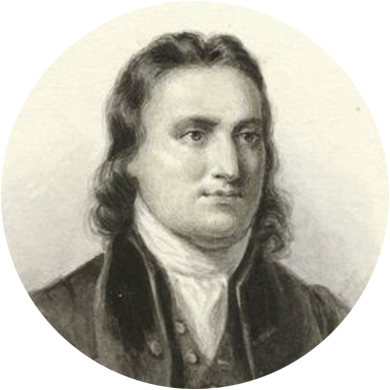

Biography
Not all the signers of the Declaration of Independence were native-born Americans. Button Gwinnett did not arrive in the colonies until he was 30 years old. He was born in Gloucester, England, in 1735, the son of a minister of the Church of England. It is likely that he attended school in Gloucester Cathedral, although no record exists of his education.
His first known position was as an apprentice to his uncle, a greengrocer in Gloucester, but later he moved to Staffordshire where he was again apprenticed, this time to an ironmonger, that is, a merchant who sold tools and household implements. At the age of 22, he married Ann Bourne, the daughter of a greengrocer, and, in 1762, the couple emigrated to America. They settled first in Charleston, South Carolina, but, after a few years, the Gwinnetts moved to Savannah, Georgia.
Gwinnett was never particularly successful in his business ventures. In 1765, he opened a store in Savannah that failed. He then borrowed money to purchase St. Catherine’s Island and a great number of slaves, hoping to become a planter. He ultimately had to turn his property over to creditors, but, during his time on St. Catherine, he was befriended by a New Englander named Lyman Hall, who had moved to Georgia from Connecticut. It was Hall who spurred Gwinnett’s interest in politics. Despite never making his fortune, Gwinnett was well-liked, and he managed to become a Justice of the Peace. Soon afterward, in 1769, he won a seatin the colonial assembly.
Although financial difficulties consumed much of his attention over the next five years, his interest in colonial politics and in the relationship between the colonies and Britain did not fade. He had doubts that a successful resistance to a powerful empire could succeed. But, in 1775, Lyman Hall persuaded him to change his view and Gwinnett became a vocal advocate of colonial rights. With Hall, Gwinnett traveled to Philadelphia as a delegate to the Second Continental Congress. He took only a minor role in the great debate over independence, but John Adams was impressed with both Georgians. As Adams put it, “Hall and Gwinnett are both intelligent and spirited men, who made a powerful addition to our Phalanx.” Gwinnett voted for Lee’s resolution and signed the Declaration of Independence on August 2, 1776. At the end of the month, he returned to Savannah, hoping to be named commander of Georgia’s continental battalion. He was to be disappointed. His archenemy, Lachlan McIntosh, won the position.
The animosity between McIntosh and Gwinnett festered. In May of 1777, McIntosh went before the Georgia assembly and denounced Gwinnett as a “scoundrel and lying rascal.” In response, Gwinnett challenged McIntosh to a duel. On May 16, in a pasture near Savannah, the two men stood 12 feet apart and fired pistols at each other. Both men were wounded, but Gwinnett died on May 19 from a gangrene infection of his wound. He was only 42 years old. McIntosh was charged with murder but acquitted at his trial.
Signer of the Declaration of Independence
Lyman Hall
1724–1790, Georgia
Summary
Lyman Hall was a doctor who signed the Declaration of Independence. The British burned his hometown during the war. He later became Georgia's governor.
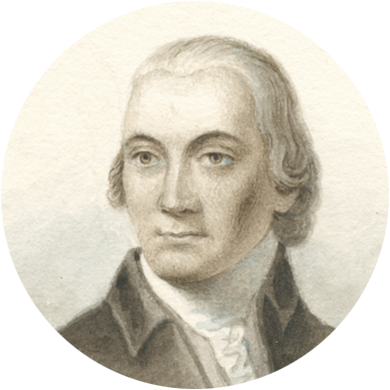

Biography
Lyman Hall, the son of John and Mary Street Hall, was born on April 12, 1724, in Wallingford, Connecticut. His father was a minister; his mother the great- grand daughter of a minister and his uncle a minister as well. After graduating from Yale College in 1747, Lyman would follow in the family tradition and in 1749 was ordained by the Fairfield West Consociation of the Congregationalist church. In 1751, however, he was dismissed by the Consociation following charges of immoral conduct. He confessed to his sin, declared his intention of repentance, and was restored to the pulpit. But he decided after two years to give up his ministry and studied medicine to receive the necessary degree.
In 1752, Hall married his first wife who died the following year. In 1757 he married once more, this time to Mary Osborne. Together they moved to South Carolina where a group of Congregationalist worshippers had created a community in Dorchester, near the city of Charleston. Here, Hall established his first medical practice. When the community decided to move to Georgia, Hall went with them. He soon became a prominent figure in the newly created town of Sunbury.
In the years leading up to the Revolution, the parish in which Sunbury was located was an anomaly in an otherwise highly conservative colony. Loyalist sentiment ran high in Georgia and the colony did not send any delegates to the First Continental Congress. Hall used his influence to persuade his parish to send a delegate to the Second Congress—and he was chosen to serve. Until two more delegates from Georgia were chosen, Hall abstained from voting on any resolution or proposal that was to be decided by a vote of colonies, but when Button Gwinnett and George Walton arrived, the three delegates readily signed the Declaration of Independence.
In January 1779, Sunbury was burned by the British. Hall and his family fled north and did not return until the British defeat and their evacuation in 1782. The Halls settled in Savannah. Lyman was elected governor of the state in 1783 and served for one year before resuming his medical practice. During his term he advocated chartering a state university; and in 1785 the University of Georgia was established.
In 1790, Hall moved to a plantation near the South Carolina border. It was here that he died at the age of 66. His wife and their only son died within the following year. On his gravestone, he was described as a patriot and a “True Christian and an Honest Man.”
Signer of the Declaration of Independence
George Walton
1741–1804, Georgia
Summary
The Georgia Assembly appointed George Walton as one of its Continental Congress delegates. British forces took Walton prisoner after seizing Savannah; he was later freed.
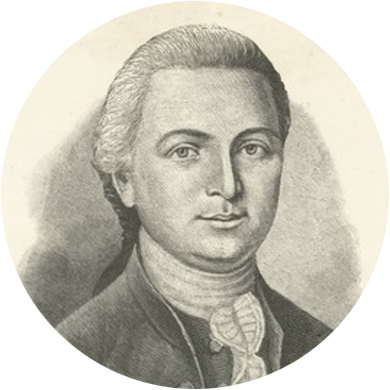

Biography
George Walton was born near Farmville, Virginia, but the exact year of his birth is unknown. He was unusual among the signers of the Declaration of Independence in that his parents were poor. Both had died by the time he was twelve, and he was apprenticed at an early age to a carpenter. His master was a man with limited education who worked Walton hard, and he would not even provide the boy with a candle so that he could read at night. But Walton was determined to provide himself what education he could from books.
In 1769, Walton moved to Georgia where he pursued the study of the law with a Savannah barrister. In 1774, at the age of 33, he was admitted to the bar and began his own practice of law.
As the country moved closer to revolution, Walton, like Button Gwinnett and Lyman Hall, found Georgia to be dragging its feet about independence. It sent no delegates to the First Continental Congress and was the only colony not represented at those Philadelphia meetings. But Walton had clearly committed himself to independence, serving as the President of the colony’s Council of Safety. Finally, in 1776, the Georgia Assembly appointed delegates to the Second Continental Congress. One was the former carpenter’s apprentice, George Walton. He, Gwinnett, and Hall signed the Declaration of Independence.
In 1778, with the war well underway, Walton received a colonel’s commission in the militia. Walton joined the defense of Savannah when the British moved to seize the city, and, during the fighting, he was wounded in the thigh. He fell from his horse, and, when the enemy took the city, they made him a prisoner of war. He was finally freed in an exchange of prisoners in September 1779. Soon after his release, he was elected Governor of Georgia but held the office for only two months, preferring to return to Congress in 1780.
Walton became involved in a bitter struggle for political dominance between Lachlan McIntosh and Button Gwinnett. He allied himself with McIntosh, and Walton was frequently a casualty of this struggle. He was driven out of office on several occasions and indicted for alleged criminal activities on others.
Walton was in Philadelphia in 1783 when he learned he was censured by the Georgia legislature for his involvement in the duel between McIntosh and Gwinnett that ended in Gwinnett’s death. Despite this, he was appointed Chief Justice of the state and, in 1789, was again elected Governor. In 1795, he was sent to the U.S. Senate but retired from politics the following year when he was not reelected. Although he continued his judicial duties, he did not run for or accept any further office. Instead, he took up farming.
He returned to Georgia, moving to Augusta after it became the new state capital, and devoted himself to civic improvement projects, particularly focused on education. He died on February 2, 1804, leaving behind a widow, Dorothy Camber Walton, and one son.
Signer of the Declaration of Independence
William Hooper
1742–1790, North Carolina
Summary
William Hooper was a social conservative deeply concerned about the rights of the colonies. Hooper worked with Thomas Jefferson on the committee to draft the Declaration of Independence.
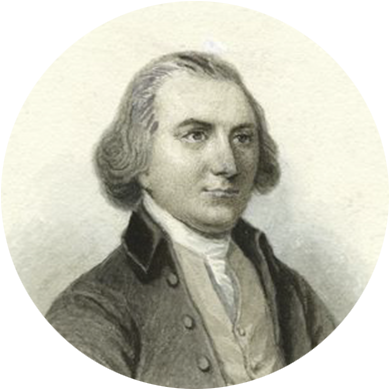

Biography
William was born in Boston, the oldest child of Scots immigrants. He was raised as an Anglican, and his parents hoped he would become a clergyman. He did not share their hopes, however, although he did earn an M.A. in theology from Harvard. Instead, he began the study of the law under the famous [or infamous] James Otis. He was admitted to the Massachusetts Bar in 1764 but moved to Wilmington, North Carolina, where he established a successful legal practice. By 1770, he was appointed Deputy Attorney General for the colony.
Hooper was a social conservative and a law-and-order-man; when the backcountry farmers of North Carolina organized the Regulator Movement in opposition to what they considered excessive colonial government taxation, excessive legal fees, and general political corruption, Hooper supported the Royal Governor’s efforts to squash this rebellion. In 1770, during Regulator riots in Hillsborough, Hooper was dragged through the streets by angry rioters. Yet by 1774, he was deeply concerned about the rights of the colonies whose protests against Parliament’s taxation policies and the Crown’s efforts to suppress colonial protest mirrored, to a great degree, the Regulator protests between 1768 and 1771.
In 1773 Hooper was elected to represent Campbellton [later Fayetteville] in the North Carolina colonial assembly. In 1774 he was one of his state’s three delegates to the First Continental Congress. Along with fellow delegate Joseph Hewes, he traveled 450 miles over rough roads to get to Philadelphia for the opening of the congress in September of 1774. Even before the congress convened, however, Hooper had predicted independence. In a letter to his friend James Iredell that April, Hooper wrote that “The Colonies are striding fast to independence, and ere long will build an empire upon the ruins of Great Britain.” This prediction earned him the epithet, “Prophet of Independence.”
During his term in the Second Continental Congress, Hooper worked with Thomas Jefferson on the committee to draft the Declaration of Independence. He signed the final document, on August 2nd, but left Congress in 1777 when he contracted yellow fever. Already weakened by recurring bouts of malaria that he had contracted in North Carolina, he knew he could not continue to serve as a congressional delegate. In formally resigning his seat on April 29 of that year, he wrote “The situation of my own private affairs…did not leave me a moment in suspense whether I should decline the honor intended me” to continue in national politics.
During the revolution Hooper donated much of his legal earnings to the war effort. There were other costs as well, for his support of the revolution separated him from his brothers who remained loyal to the Crown. He also earned the particular enmity of the enemy. When the British military took Wilmington in 1781, they burned Hooper’s home, forcing his wife and two children to flee for their lives.
After the revolution secured American independence, Hooper’s conservative inclinations returned. In his legal practice, he acted to protect the rights of former Loyalists, supporting their efforts to recover property confiscated from them and working to remove the restrictions placed upon them as traitors. His call for moderation in the treatment of these men put him at odds with some of his old friends and neighbors. His social elitism and his fear of mob rule led many North Carolinians to distrust him when he declared his support for ratification of the Constitution.
Although he had retired from national politics, Hooper remained active in his state’s government, serving in North Carolina’s General Assembly between 1777 and 1780. But his health continued to deteriorate, made worse by his heavy drinking, and on October 4, 1790, Hooper, who John Adams called one of three great orators of the Congress, died at the age of 48.
Signer of the Declaration of Independence
Joseph Hewes
1730–1779, North Carolina
Summary
Joseph Hewes offered the Olive Branch reconciliation petition to King George III, which led to the King to officially declaring the colonies in rebellion. Hewes then voted for independence.
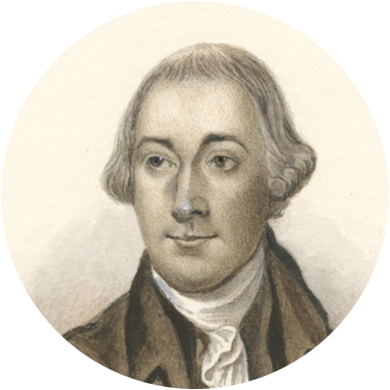

Biography
Joseph Hewes was born in New Jersey, the son of Quaker parents, Aaron and Providence Hewes. Aaron was a successful farmer, and this ensured that Joseph would receive a good early education at the Kingston Friends Grammar School. Joseph did not want to follow his father’s career as a farmer; he wanted to become a merchant. To this end, he moved to Philadelphia and apprenticed himself to the owner of a thriving import business and then began his own mercantile company.
In 1754, Hewes moved to Edenton, North Carolina, a prospering port town he had visited when he was an apprentice. Here he formed a partnership first with Charles Blount and later with Robert Smith. With Smith, his business grew; the two men owned a store on Main Street, offices and three warehouses, a wharf and five ships. On his own, Hewes also opened a ship repair and ship building yard as well as a factory for braiding rope. By 1760, his prosperity was recognized by his election to the North Carolina assembly.
When colonial leaders created a continental congress in 1774 to discuss the deteriorating relationship between Britain and America, Hewes was chosen to represent North Carolina in its deliberations. He and his two fellow delegates were given very specific instructions by the provincial congress: they were to argue for colonial rights and they should support a boycott of British goods, but they had no authority to endorse or even debate independence.
Hewes was also elected to the Second Continental Congress that convened in August 1775. Hewes worked on preparing a reconciliation proposal addressed to the King that came to be called the Olive Branch Petition. George III not only rejected it, he officially declared the colonies in rebellion. Aware that war might come, Hewes accepted the chairmanship of the committee responsible for fitting out the first American warships. In a letter to Samuel Johnston he wrote "I see no prospect of a reconciliation. Nothing is left but to fight it out."
In April of 1776, North Carolina at last authorized its delegates to “concur …in declaring independency.” Writing to James Iredell on June 20th, Hewes faced the prospect of war and independence squarely, saying "...On Monday the great question of independency and total separation from all political intercourse with Great Britain will come on. It will be carried, I expect, by a great majority, and then, I suppose we shall take upon us a new name.” Yet Hewes hesitated when Richard Henry Lee’s resolution that the colonies were and ought to be independent came to a vote. John Adams claimed to have seen the moment when Hewes finally threw off his doubts and voted for independence. “He started upright,” Adams said, “and lifting both his hands to Heaven, as if he had been in a trance, cried out, ‘It is done! and I will abide by it!’” Whether Hewes’s decision to vote for independence was as dramatic as Adams portrayed it, it is true that Joseph Hewes signed the Declaration of Independence.
It is also true that Hewes and John Adams locked horns when it came time to select the first naval captains. Adams insisted that all these leadership positions go to New Englanders since a Southerner had been chosen to lead the continental army. Hewes, however, strongly supported a captaincy for his friend John Paul Jones who had risen from ship boy to master of a Brigantine. Hewes had confidence that John Paul deserved a commission – and he proved right. John Paul Jones became the most honored naval hero of the Revolution.
The events of July 2 and 4 exhausted Hewes physically and emotionally. On July 8, he wrote “I had the weight of North Carolina on my shoulders within a day or two of three months. The service was too severe. I have sat some days from Six in the morning till five, and sometimes Six in the afternoon without eating or drinking. My health is bad, such close attention made it worse. ...Duty, inclination and self preservation call on me now to make a little excursion in the County to see my mother. This is a duty which I have not allowed myself to perform during almost nine months that I have been here."
In 1777 Hewes took a seat in the North Carolina General Assembly. The state’s new constitution prohibited him from accepting reelection to the Continental Congress since it did not allow multiple office holding. However, after a two year absence, he was once again on his way to Philadelphia for a term in Congress. He took his seat on July 22, but by August 17, he wrote to a friend of “a continual head ach [sic] attended with a kind of stupor which renders me unfit for business of any kind.” On October 25th, he tendered his resignation from Congress to the North Carolina assembly. Hewes was bedridden from October until his death on November 10 of that year.
Joseph Hewes had no immediate family to mourn him. He had been engaged in his thirties, but his bride-to-be died before the wedding, and he remained a bachelor all his life. But his funeral was attended by many friends and colleagues whose respect he had earned over his career including members of Congress and of the Pennsylvania General Assembly and the Minister Plenipotentiary of France. Ordinary citizens also came to pay their respects. In his honor, members of Congress wore black crape around their left arms for a month. In its obituary, The Pennsylvania Packet attributed his death to his devotion to the country. “His mind,” they wrote “was constantly employed in the business of his exalted station until his health, much impaired by intense application, sunk beneath it.”
Signer of the Declaration of Independence
John Penn
1741–1788, North Carolina
Summary
John Penn was a lawyer from North Carolina who immediately made his commitment to independence clear at the Second Continental Congress.
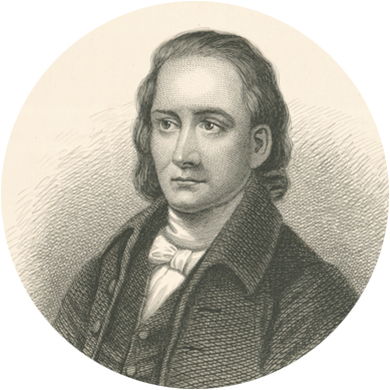

Biography
John Penn was one of the rare men with little early education who was able to rise to membership within North Carolina’s political and social elite. He was a native of Virginia, whose father died when John was eighteen, leaving him a comfortable estate. Growing up, John relied on the library of his uncle, Edmund Pendleton, for his education, since his own father put little store in formal schooling. As one historian put it, John practically lived in Pendleton’s library. He then studied law with Pendleton and, at the age of 21, received a license to practice in Virginia. Twelve years later, he and his wife, Susanne Lyme of Granville, North Carolina, moved to her place of birth.
In moving to Granville, Penn was following a number of his relatives who had already relocated there. But there were other, more pressing reasons for the move. In 1774, Penn was brought to court in Virginia on charges of disrespectful and possibly treasonous remarks about King George III. A jury found him guilty, but the judge, less intimidated by the authorities than the jury members, imposed a fine of only one penny. Penn refused to pay this fine on principle. An equally-compelling reason for the move was that his position in the vanguard of the call for independence conflicted with Pendleton’s hesitation on a break with Britain. Penn wanted to avoid a public dispute with his benefactor.
Whatever his motives for the move, it proved a wise one. His legal practice in Granville flourished, and this success led to a role in public affairs. Soon after settling in North Carolina, he was elected both to the First Continental Congress and to the North Carolina Provincial Congress. In the provincial government, he took on key assignments including the effort to win over citizens wary of joining the American struggle against British policies and the task of writing a new state constitution. In the Continental Congress, he immediately made his commitment to independence clear, declaring, “My first wish is for America to be free.”
Years after the revolution, around 1820, the elderly Thomas Jefferson wrote to his aging counterpart John Adams about the North Carolina delegation to the Continental Congress. As he recalled, William Hooper revealed definite Tory hesitations about independence, while Joseph Hewes frequently changed his position on the question of a permanent break with the Mother Country, but John Penn was steady in his support for revolution. In the end, however, all three of these men signed Jefferson’s Declaration of Independence.
Penn continued to be outspoken in his political views and tireless in his efforts to support the war effort. He served on his state’s Board of War and earned the praise of John Taylor of Caroline who described Penn’s accomplishments during those difficult years: “He was surrounded by discouraged friends, helpless citizens, or inveterate foes—but he had a task to discharge—and an arduous one. But nature had formed him for the effort. Indefatigable, cheerful, extremely courteous in his manners, firm in his political principles, and invigorated by an inextinguishable ardor, he went through the crisis with honor to himself, to the satisfaction of the state, and rendered service inestimable to the prosecution of the war.” Yet one of Penn’s “inveterate foes,” Thomas Burke, who took Penn’s seat in the Continental Congress in December of 1776, was moved by jealousy of Penn’s achievements and talked the state legislature into abolishing the Board of War.
One of Penn’s fundamental philosophical commitments became public in 1779 when the influential Pennsylvania Packet attacked Congress for alleged ineptitude in economic matters. The Packet coupled this criticism with charges that some members of that body were using their positions to make fortunes on wild speculations that undermined continental currency. This criticism enraged Elbridge Gerry of Massachusetts who demanded the publisher of the newspaper be brought to court for slander. Penn disagreed. He took the floor of Congress in defense of the Packet’s editor’s right to express his views, both on ethical and practical political grounds. “Gentlemen,” he said, “talk of imprisoning the printer or author is foolish…If you have the power, which I doubt, and were to imprison the editor for six months, he would come out a far greater man than when he went in.”
By 1781, the toll of public service caught up with John Penn. His health was poor, and he was weary of the strain of his wartime responsibilities. He went home to his wife and to his law practice, free of political duties. He died on September 14, 1788, at the age of 47.
Signer of the Declaration of Independence
Edward Rutledge
1749–1800, South Carolina
Summary
At 26, Edward Rutledge was the youngest signer of the Declaration of Independence. He persuaded South Carolina to support independence after first opposing it.
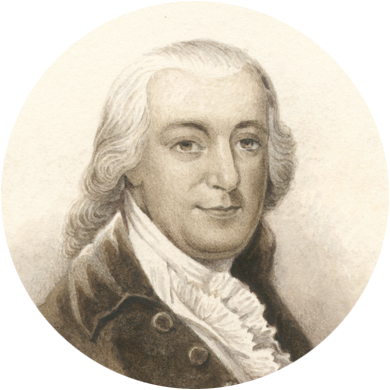

Biography
Edward Rutledge was born in South Carolina in 1749. Edward was the youngest of the seven children of Dr. John Rutledge and Sarah Hext Rutledge. Edward’s father was an Irish immigrant who became not only one of the first men to practice medicine in his parish but also a wealthy owner of land and slaves.
As the son of a member of the colony’s elite, Edward received a classical education, first from his father and later from a tutor. In 1772, he followed two older brothers to England where he continued his studies at Oxford University. He then studied law at the Inns of Court in London and was admitted to the English bar in 1772 at the age of 23. The next year, he returned to South Carolina and entered into a profitable law practice with fellow South Carolinian Charles Cotesworth Pinckney.
Rutledge quickly earned a reputation as a gifted orator and a talented attorney. At the age of 24, he successfully defended a printer who had been imprisoned for printing an article critical of the members of the upper house of the province’s royal government. By 1774, he had acquired a plantation, 50 enslaved men and women, and a wife, Henrietta Middleton. Like most members of the Southern planter elite, he married within the small and tight circle of his social class. Henrietta was the sister of Arthur Middleton, another South Carolinian who would sign the Declaration of Independence.
Rutledge entered the political arena while still in his twenties. He served as a delegate to the Continental Congress for the critical years of 1774 to 1776, and also as a state legislator from 1775 to 1776. Serving with him was his older brother John, also a lawyer and landowner, and his brother-in-law, Arthur Middleton.
Rutledge was not a social radical. In fact, during the Revolution, he would work to have African American soldiers expelled from the Continental Army. Nor was he, at first, a political radical, for he hoped for a reconciliation with Britain that would preserve colonial rights. In his diary, John Adams credited himself with persuading the South Carolina delegation to the Continental Congress to support the growing move for independence, but Rutledge remained unconvinced of the wisdom of this course of action. When, on June 7, 1776, Richard Henry Lee’s motion, “Resolved, that these united colonies are, and of right ought to be free and independent states,” was introduced, Rutledge stood firmly against Lee and with those he called “the sensible part of the house.”
Writing to New Yorker John Jay, Rutledge explained the position he, and men like John Dickinson, Robert R. Livingston, and James Wilson were taking: “No reason could be assigned for pressing into this measure, but the reason of every Madman, a shew of spirit….” In short, neither Rutledge nor his colleagues from South Carolina would take part in what they considered a foolish show of bravado.
Yet on July 1st, when the South Carolinians voted “no,” it was Rutledge who persuaded them to support the independence resolution. On July 2, their no became a yes. At 26, Rutledge was the youngest signer of the Declaration of Independence.
Rutledge was next appointed to the committee to draft the country’s first constitution. He proved wary of giving this government too much power for he feared it would be dominated by New Englanders. Writing again to John Jay, he declared that “if the Plan now proposed should be adopted nothing less than Ruin to some Colonies will be the Consequences of it.” He favored the protection of “provincial distinctions ,” especially the institution of slavery.
In November of 1776, Edward Rutledge took a leave from Congress to join in the defense of South Carolina. He fought in several battles against the British army in the Charleston Battalion of Artillery and became a captain. He also took a seat in the state’s House of Representatives where he focused on military preparedness and on imposing harsh sanctions against those loyal to the Crown.
The state sent him back to Congress in 1779, but he took a leave once again in 1780 as the British mounted a third invasion of South Carolina. This time, he was captured by the enemy. The British granted him parole, but soon arrested him again, this time for allegedly plotting with other Charleston residents to organize resistance to the occupying enemy. He was held prisoner in St. Augustine, Florida, and his property was seized. He was freed in a prisoner exchange in July 1781.
The following January, he returned to the state government, serving in its House of Representatives for the next thirteen years. During these postwar years, he worked to promote the economy of his war-torn state.
In 1788, he was a leader in the state ratifying convention, supporting the adoption of the Constitution but also endorsing proposed amendments to it. On two occasions, the country’s first president, George Washington, asked Rutledge to serve on the nation’s Supreme Court, but Rutledge declined.
His personal health was fragile and the loss of his wife in 1792 was a blow, although he married again that year. In 1796, he began a term in the South Carolina Senate and in 1798, he was elected governor.
He died in office in January 1800, after suffering a stroke. He was only 50 years old.
Signer of the Declaration of Independence
Thomas Heyward, Jr.
1746–1809, South Carolina
Summary
Thomas Heyward voted for independence despite objections from his father, a wealthy plantation owner. He was held prisoner by the British for eleven months during the war.
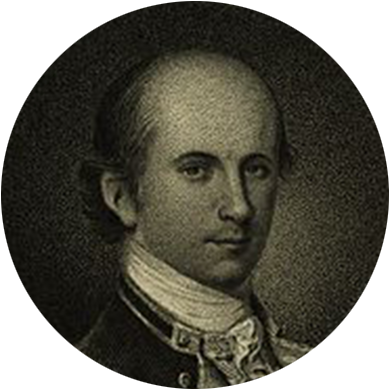
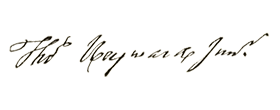
Biography
Thomas Heyward Jr, [the Jr added to distinguish him from his uncle] was the son of a wealthy South Carolina family that had been in the colonies for five generations. His father, Daniel Heyward, had earned his fortune growing what Carolinians called “the golden seed from Madagascar”: rice. He owned thousands of acres of land to which Thomas was the heir and was one of the largest slaveholders in British North America.
Like many sons of the Southern planter elite, Thomas was tutored at home and then sent to England to study. He attended Cambridge University and then read law at the Middle Temple. He was called to the bar by the Inns of Court in London in the Spring of 1770. While studying in England, Thomas became acutely aware that colonists were looked down upon by English-born citizens and that English-born officeholders in the colonies showed little concern for Americans’ rights. He returned to South Carolina longing to be free of British rule.
But before heading home, Thomas toured Europe for several years. Here he observed what he considered the indolence and haughtiness of the luxury-loving people he encountered in his travels. This added to his dislike of Britain’s attitude toward Americans, made him eager to abandon all dependency on who he called the Old Country. He was one of the earliest South Carolinians to resist Britain’s new taxation policies beginning with the Stamp Act. After the battle of Lexington and Concord he openly opposed any reconciliation proposal that required absolute submission to the Mother Country’s will. When the royal governor of South Carolina abdicated, he proved eager to serve on the colony’s Committee of Safety.
Thomas’s father retained his loyalty to the Crown and frowned upon his son’s attendance at the Second Continental Congress. Despite his father’s disapproval, Thomas Heyward Jr voted for independence. He left Congress when his father died in October 1777 but returned in time to vote for the Articles of Confederation the following year.
During the early years of the war, Heyward served as a judge of Charleston’s criminal courts. In this role, he presided over the trials of several people charged with treason on behalf of the British army. The execution of these men made Heyward particularly obnoxious to the British government. When the enemy captured Charleston, he was seized as a prisoner of war and imprisoned as a leader of the rebellion. Along with fellow signer of the Declaration of Independence Edward Rutledge, he was taken to the British fort at St. Augustine and held prisoner for eleven months. The story has been told that during his time in prison Heyward wrote a parody of the British anthem God Save the King, calling it God Save the Thirteen States, and it became popular throughout the states.
Heyward’s wealth suffered severely during his years of imprisonment. The British army confiscated all his enslaved workers, transporting 130 of them to the sugar plantations of Jamaica. His properties were badly damaged. He almost lost his life as well, for on his release from prison he fell overboard from the ship carrying him home. He saved himself by clinging to the ship’s rudder until he could be rescued.
After the war Heyward returned to Charleston and served as a state judge. He was also a delegate to the state convention that adopted the South Carolina constitution in 1790. Much of his time and energies, however, were spent restoring his family’s plantations. Although he built a new plantation home he divided his time between it and his Charleston homes. When President George Washington came to Charleston he rented one of Heyward’s residences for his week-long visit.
Thomas Heyward Jr died in April of 1809 at the age of 63. He was remembered by Dr. Benjamin Rush of Pennsylvania as “a firm Republican of good education and amiable manners. He possessed an elegant political genius…”
Signer of the Declaration of Independence
Thomas Lynch Jr.
1749–1779, South Carolina
Thomas Lynch Jr. came from a prominent South Carolina family, and he replaced his father at the Second Continental Congress, as one of the youngest signers.
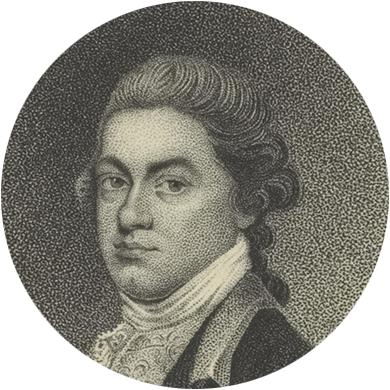

Thomas Lynch Jr. was born in 1749, the only son of a prosperous rice planter. He was raised by a politically-active father who represented South Carolina in the Continental Congress until a cerebral hemorrhage paralyzed him in February of 1776.
Like many sons of wealthy planters, Thomas Lynch Jr was sent to England for a better education than the colonial world could provide. He received a degree from Cambridge University and went on to study law at the famous Inns of Court in London. Here, it was said, he “devoted himself with characteristic zeal to the philosophy of jurisprudence.” But as an American who shared with his father a deep concern about the changes taking place in British colonial policy, he did not feel comfortable in England. He found the haughtiness of British statesmen toward the colonies troubling, and he often expressed a longing to come home. Yet he would remain abroad for more than eight years. He returned at last as an accomplished and clever young man, with graceful manners that made his father proud.
Despite his legal training, Lynch decided against setting up a practice. Instead, he followed in the footsteps of his father as a planter. He followed his father’s example in politics as well. As war drew closer, he became a captain in South Carolina’s militia. On a military recruiting excursion to North Carolina, he came down with malaria and could not recover his health. Yet when he was elected to fill his ailing father’s seat in the Second Continental Congress, he did not hesitate. Thomas Lynch Sr and Jr were the only father and son to serve in Congress.
Thomas Lynch Jr signed the Declaration of Independence before his 27th birthday. He held out hope that his father would recover enough from the effects of the cerebral hemorrhage to sign the Declaration as well, but in this he was disappointed.
Lynch returned home from Philadelphia, never to play a role in politics again. The malarial fever he had contracted in North Carolina remained, wracking his body and leaving him weaker with every passing day. In 1779 his doctors advised him to travel to France, where therapeutic help might be available. Because the revolutionary war was still raging, he and his wife boarded a ship bound for the West Indies in hopes of finding transportation across the ocean from the port in St. Eustasius. After only a few days their ship vanished. It is likely that a storm struck the vessel and its passengers and crew drowned. The “Bermuda Triangle” had taken the life of the second-youngest signer of the Declaration of Independence.
Signer of the Declaration of Independence
Arthur Middleton
1742–1787, South Carolina
Summary
Arthur Middleton took his father’s place in the Continental Congress to sign the Declaration in 1776. He fought against the British, was captured and later released.
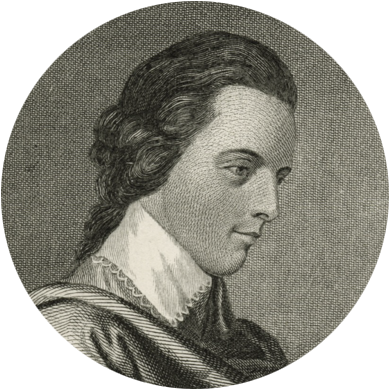

Biography
Arthur Middleton was the eldest son of the Honorable Henry Middleton and Mary Williams Middleton. His mother was the daughter of a wealthy landowner and a member of the South Carolina Assembly. His father’s wealth came from Arthur’s great grandfather who emigrated to the low country and became a large landowner. His father increased the fortune and became one of the most influential and politically active men in the province. As the eldest son, Arthur could expect to inherit the lion’s share of Henry’s 20 plantations that covered 50,000 acres and were worked by about 800 enslaved men and women. Henry held royal offices until his opposition to British policy led him to resign and become a leader of the colonies’ independence movement. He served in the First Continental Congress but soon wanted to go home, confident that his son Arthur would take his place when he left.
Arthur Middleton, as befit his social status, was tutored at home and sent to private schools in Charleston. But at the age of twelve he was sent to England to complete his education. He was a student at two prestigious schools and graduated from Cambridge in 1760 at the age of eighteen. He was a serious scholar who avoided the rowdy behavior of many of his classmates. He went on to study law at the Middle Temple and then toured Europe for two years. There, he developed a taste for music, painting, sculpture, and architecture.
He returned to South Carolina in 1763 as the first signs of discontent toward British policy appeared. He married Mary Izard the following year. Mary, whose own family boasted distinguished and socially elite members, was, a friend wrote, “a lady who is one of the first of her sex for sense, politeness and every female accomplishment.”
Middleton’s public service began in 1765 when he became a member of the colony’s House of Commons (the legislature). He served here until 1768, but, in 1770, he and his wife left for a three-year tour of Europe. On his return, he served once more in the House of Commons where he had a reputation as a leader of “the American Party”. This marked him as far more radical than his father. As the protest against Britain grew, Arthur Middleton supported tarring and feathering opponents of independence and the confiscation of the estates of men loyal to the Crown who fled South Carolina in fear of imprisonment or physical harm.
Middleton helped draft the state’s first constitution and designed South Carolina’s state seal. As expected, he took his father’s place in the Continental Congress and spoke frequently and forcefully for independence. After signing the Declaration of Independence, he returned home to serve as an officer in the state militia.
The British army’s campaign in South Carolina led to the destruction of Middleton’s estate. It stole everything of value and destroyed what they could not carry away. Middleton and his family escaped arrest by fleeing to Charleston, but when Charleston fell, he and fellow Signers Edward Rutledge and Thomas Heyward were captured and imprisoned for almost a year in St. Augustine, Florida. In July 1781, Middleton was freed in a prisoner exchange, and he quickly reentered politics as a State Senator. In 1783, Middleton retired at last. He died of a fever in 1787 at the age of 44.
The State Gazette of South Carolina eulogized him as a “tender husband and parent, . . . steady unshaken patriot, the gentleman, and the scholar.” Benjamin Rush of Pennsylvania described Middleton “as a man of cynical temper but upright intentions toward his country.” Others called him a capricious aristocrat but a public-spirited one.
Signer of the Declaration of Independence
John Hancock
1737–1793, Massachusetts
Summary
John Hancock was one of the wealthiest men in colonial America. As President of the Continental Congress, Hancock was the first to sign the Declaration of Independence.
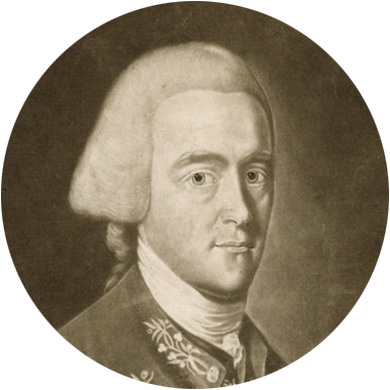

Biography
John Hancock was born in Braintree, Massachusetts, the son of Colonel John Hancock Jr. and Mary Hawke Thaxter Hancock. The family was financially comfortable though not wealthy. When John was only seven years old, his father died, and he was sent to live with his childless uncle and aunt, Thomas and Lydia Hancock. Thomas was a highly successful merchant who made his money importing British goods and exporting New England’s rum, whale oil and fish. This thriving business made him one of the richest Bostonians. Thomas saw to it that his young ward was well educated and, when John graduated from Harvard in 1754, he was taken into the business by his uncle.
John Hancock found the life of a wealthy man very appealing. And he was soon to become one. In August of 1764, Thomas Hancock died and, having no children of his own, he left John his business, his elegant manor house, two or three enslaved people, and thousands of acres of land. Overnight, John Hancock became one of the wealthiest men in colonial America.
His newfound wealth opened the door to political office. Just as tensions were developing between Mother Country and his home colony of Massachusetts, Hancock was elected one of Boston’s five selectmen. He, like many Bostonians, resented the newly imposed Stamp Act and joined the boycott of British goods designed to pressure Parliament into repealing the stamp tax. His stance made him a popular figure in Boston, and he was rewarded with a seat in the colony’s assembly when the Act was repealed in 1766.
Hancock’s rise to political prominence was aided by support from Boston’s leading radical, Samuel Adams. The two men shared little in common except their opposition to Britain’s new policies. Adams, who was 15 years older than Hancock, was neither rich nor inclined to luxury; compared to the extravagance of Hancock, Adams seemed austere and puritanical. Nevertheless, the two men bonded.
In 1768, the British Customs Service targeted Hancock who, in fact, was well known to be a smuggler of foreign goods. Customs officers seized Hancock’s ship, the Liberty and charged him and five other importers with avoiding payment of duties on imported wine. Bostonians protested and ultimately the charges were dropped. But it is no surprise that, from then on, Hancock’s opposition to British rule grew. Still, he walked a fine line when it came to events like the Boston Tea Party; although he privately approved of it, he refused to openly support the destruction of private property.
On December 1, 1774, the Provincial Congress of Massachusetts elected John Hancock as a delegate to the Second Continental Congress. At almost the same time, it re-elected him president of their Provincial Congress. On May 24, 1775, the Continental Congress also chose Hancock to preside over their sessions. His commitment to independence was obvious by this time. At a 1774 commemoration of the alleged Boston Massacre he had declared ”Some boast of being friends to government; I am a friend to righteous government, to a government founded upon the principles of reason and justice; but I glory in publicly avowing my eternal enmity to tyranny.”
During a break in the sessions of the Continental Congress, Hancock married Dorothy Quincy. This marriage reflected the complexity of the relationships within Boston’s small and tightly knit social elite. Dorothy was the sister of Esther Quincy Sewall who had married Jonathan Sewall, the colony’s leading Loyalist propagandist in 1764. Thus, two of the most vocal men on opposing political sides were now brothers-in-law.
As President of the Continental Congress, Hancock was the first to sign the Declaration of Independence. His signature, large and bold, dwarfed the signatures of his congressional colleagues. When, in October of 1777, Hancock requested a leave of absence from his duties, George Washington arranged a military escort for him as he returned to Boston. Hancock was not greeted warmly by Samuel Adams who now thought Hancock’s self-importance and penchant for luxury were unbecoming of a republican leader.
Yet Hancock’s popularity survived. He sustained the goodwill of the local population through his philanthropy and in 1780, Massachusetts elected him in a landslide vote as the first Governor of the state. He was re-elected many times for the remainder of his life.
John Hancock did not attend the Constitutional Convention that met in Philadelphia in 1787. When the Constitution was presented for ratification, he was uncomfortable with its lack of a bill of rights, and he did not favor the shift of power away from state governments [and governors] that the Constitution would require. Although he was elected to preside over Masssachusetts’ ratifying convention, he remained silent during its intense debates. In the end however he broke his silence and gave a speech in favor of ratification.
By the 1790s, John Hancock’s health was failing and on October 8, 1793, he died at the age of 56. His funeral fit his lifelong love of luxury and extravagance, for it was the most lavish and grandest of that era.
Signer of the Declaration of Independence
Samuel Chase
1741–1811 , Maryland
Samuel Chase signed the Declaration directly below John Hancock’s sprawling one. Chase later survived an impeachment trial as a Supreme Court justice.
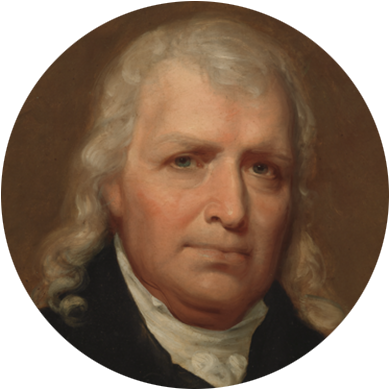

National Portrait Gallery, Smithsonian Institution

Samuel Chase was the only child of Reverend Thomas Chase and Matilda Walker Chase of Maryland. His mother died in childbirth, leaving Thomas alone to raise his son. Thomas was the rector of a large parish in Baltimore County. Although his stipend was barely enough to sustain him and his son, Thomas wished to be seen as the social equal of his wealthy parishioners, and he lived far beyond his means. Unfortunately, as an adult Samuel Chase would replicate his father’s desire for social recognition and the indebtedness it incurred.
Chase was educated at home, but at 18 he went to Annapolis to read law with a local attorney. Although he could not claim membership in the local elite by birth or income, he—like his father before him—was eager to be accepted socially by those who did belong. His marriage in 1762 to Ann Baldwin did not help him achieve his social goals as she was neither wealthy nor socially established. He did manage to gain admission to the prestigious Forensic Club, the local social and debating society, but was expelled in 1762 for what was only described in general terms as “extremely irregular and indecent behavior.” This would not be the last time Chase’s social climbing would lead him into trouble.
After Chase was admitted to the bar, he set up his own legal practice in Annapolis. In his early years of practice, he had to take cases that more established attorneys rejected, often working pro bono or for small fees. Yet in November of 1764, Chase decided to run for a seat in the Maryland General Assembly’s lower house. He proved a skilled campaigner, able to mobilize both the politically disaffected and his following among the middle class who depended on him for legal aid. He won the election and thus became a prominent, if divisive, figure in Annapolis politics. He remained in the General Assembly until 1784.
Chase had entered politics just as Britain began its decade-long efforts to alter the relationship between Mother Country and colonies. When Parliament passed the Stamp Act requiring, among other things, that lawyers use stamped paper for their documents, Chase refused. With his friend William Paca, he answered a call to organize a Sons of Liberty group in Annapolis, and this added to his reputation as a leading figure in Maryland politics. In 1773, he was a founding member of Maryland’s Committee of Correspondence. By 1774, when a provincial convention endorsed a boycott of British goods, Chase was solidly in opposition to continued British rule. He was elected a delegate to the First Continental Congress and quickly formed alliances with men like John Adams, who became a lifelong friend.
Debate in the Congress focused on the key question: reconciliation or independence. By 1775, Chase believed Britain had to make a choice: it “must either give up the Right of Taxation, or force obedience by the Sword.” Chase doubted Britain would give up any power. Writing to New York delegate James Duane, he said: When I reflect on the enormous Influence of the Crown, the System of Corruption introduced as the Art of Government, the Venality of the Electors (the radical Source of every other Evil), the open and repeated violations, by Parliament of the Constitution . . I have not the least Dawn of Hope in the Justice, Humanity, Wisdom or Virtue of the British Nation. I consider them as one of the most abandoned and wicked People under the Sun …Our Dependence must be on God and ourselves.”
Chase returned to the Second Continental Congress, firm in his commitment to independence. On April 28, 1776, he advised John Adams that Massachusetts should prepare for war. “Do not spend your precious Time on Debates about our Independency,” he wrote, for “In my Judgement You have no alternative between Independency and Slavery, and what American can hesitate in the Choice, but don’t harangue about it, act as if it were [independent]. Make every preparation for War, take all prudent Measures to procure Success for our Arms, and the Consequence is obvious.”
Chase was not at the Congress when the vote for independence was taken. He was in Annapolis, caring for his wife who was seriously ill. [She was dead by 1779] But on August 2, he signed the Declaration, his small signature directly below John Hancock’s sprawling one. He then returned to Annapolis, to take up his law practice and to help write the Maryland Constitution.
Chase played no role in writing the US Constitution. When he first read it, his opinion was negative. He believed the convention had exceeded its authority and that the government they proposed would “swallow up the hitherto sovereign states.” But Maryland’s political leaders thought otherwise. They were strongly Federalist and saw to it that the Maryland ratifying convention voted yes on the adoption of the Constitution. Chase’s adamant opposition to the Constitution had consequences: after 1788, Samuel Chase never held legislative office again.
Gradually, Chase’s views on the new government softened, and his Antifederalist position was forgiven by Maryland’s Governor, who appointed him Chief Judge of the General Court. In 1795, James McHenry urged President Washington to appoint Chase to the next vacancy on the Supreme Court. By January of 1796, Washington agreed. The Senate confirmed his appointment, although some Senators could not forget or forgive Chase’s original opposition to the Constitution.
When Jefferson won the presidency, he planned to transform the courts into a Republican stronghold. To hurry along the replacement of judges, he turned to impeachment rather than waiting for men to die or retire. He decided to test impeachment on Samuel Chase. All he needed was an excuse. He found it in May 1803 when Chase pressured a Baltimore Grand Jury not to defend a Maryland law granting universal male suffrage. Eight articles of impeachment were drawn up and presented to the House of Representatives, but it did not act before Congress adjourned. Chase knew his impeachment would be on the agenda when Congress reconvened in early 1804.
The trial lasted six days and Chase was acquitted. Chase remained on the court, but he appeared a defeated man. He was ill, crippled by arthritis and gout, and deeply in debt, and the disgrace of impeachment lay heavily on his spirits. By 1807 he had begun to miss sessions of the court, and in June of 1811 he died of what his doctors called the “ossification of the heart.”
In 1807 Joseph Story had described Chase as “a rough, but very sensible man . . . I suspect he is the American Thurlow— bold, impetuous, overbearing, and decisive. I am satisfied that the elements of his mind are of the very first excellence; age and infirmity have in some degree impaired them. His manners are coarse, and in appearance harsh; but in reality, he abounds with good humor. He loves to croak and grumble, and in the very same breath he amuses you extremely by his anecdotes and pleasantry.” In 1820, John Quincy Adams wrote what might be considered a eulogy for Chase in his diary: “I considered Mr. Chase as one of the men whose life, conduct, and opinions had been one of the most extensive influences upon the Constitution of this country… He was a man of ardent passions, of strong mind, of domineering temper. His life was consequently turbulent and boisterous.”
Signer of the Declaration of Independence
William Paca
1740–1799, Maryland
Summary
William Paca was a lawyer who became a vocal critic of British policies. He supported Richard Henry Lee’s resolution for independence.
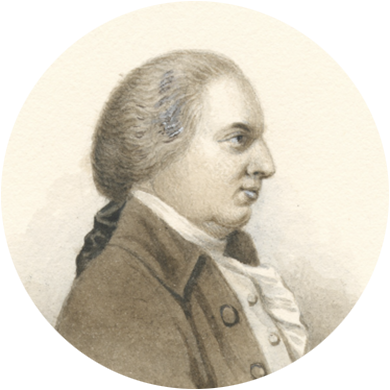

Biography
William Paca was the third child and second son of John and Elizabeth Smith Paca. His father was wealthy, and, by the time William was four years old, John Paca had become a justice of the Baltimore County Court. Although William’s older brother would be heir to the family estate, their father saw to it that he received a good education. At the age of 12, William entered the Philadelphia Academy and Charity School before attending the College of Philadelphia [now the University of Pennsylvania]. He went on to study law with a Maryland lawyer, and in 1761, he was admitted to the bar. In 1763, he set up a private practice in Annapolis.
In the same year that Paca began to practice law, he married. His wife, Ann Mary Chew, was related to many of the most prominent families in the colony. She had been raised in the home of her stepfather, Daniel Delaney, one of the colony’s richest and most politically connected men. Through his marriage, Paca gained entrée into the elite political circle of men like Delaney and Samuel Chase.
As the tensions between Britain and the colonies grew, Paca became a vocal critic of British policies, writing newspaper articles and letters urging that British policies should be resisted. He opposed the Stamp Act and was one of the founders of a chapter of the Sons of Liberty. His reputation as a defender of colonial rights grew, and by 1767, Paca had won a seat in the lower house of the assembly. He was also chosen a delegate to both the First and Second Continental Congress.
During the First Continental Congress, Paca was befriended by John Adams who praised Paca for acting “generously and nobly” during the debates. Benjamin Rush also spoke admiringly of Paca, describing him as “beloved and respected by all who knew him.” Maryland returned Paca to Congress when it met for the second time, and, when Richard Henry Lee’s resolution came to the floor, Paca voted in favor of independence. Along with his good friend Samuel Chase, Charles Carroll of Carrollton, and Thomas Stone, William Paca signed the Declaration of Independence.
During the war years, Paca served in the Maryland Senate and became a judge of the Court of Appeals in Cases of Capture. In 1782, he was elected governor of Maryland, a position he held until 1785. Although he had favored independence, Paca did not support the creation of what 18th-century men called an “energetic government” for the United States. He preferred power to remain with the state governments. Thus, at the Maryland ratifying convention, he was an Anti-Federalist, opposing the acceptance of the Constitution. At the convention, he advocated 28 amendments to the document, including many such as the protection of freedom of religion and freedom of the press that would be codified in the Bill of Rights.
Paca proved willing to accept a role in the new federal government once it was established. In 1790, President Washington appointed him to the U.S. District Court for the District of Maryland. He served until his death in October of 1799, a few weeks shy of his 59th birthday.
Paca fared less well in his private life than in his political career. His first wife, Molly, died in 1774, leaving him with three children; his second wife, Ann Harrison, the daughter of a wealthy, prominent Philadelphia merchant, died in 1780, after a long illness, leaving him with one additional child. But Paca was the father of two additional children, both illegitimate. One was the daughter born to a “mulatto” woman named Levina, born in 1775; the other born to Sarah Joyce of Annapolis around 1777. Paca saw to the welfare and education of both of these children.
Signer of the Declaration of Independence
Thomas Stone
1743–1787, Maryland
Summary
Maryland sent Thomas Stone to Philadelphia with instructions to vote against independence. But Maryland then allowed Stone to vote for it on July 2, 1776.
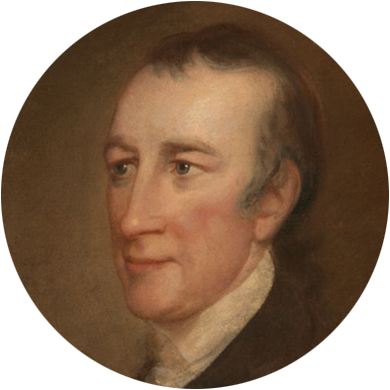

National Portrait Gallery, Smithsonian Institution; gift of Judith March Clement
Biography
Thomas Stone, son of David and Elizabeth Jenifer Stone, was born into a distinguished Maryland family. Little is known of his early life but he attended a private school at which he studied Greek and Latin. Afterward, he studied law with Thomas Johnson in Annapolis. He was admitted to the bar at the age of 21 and began a practice in Frederick, Maryland. Here, he gained a reputation as a cautious and deliberate man, and a fine lawyer.
In 1768, 25-year old Thomas Stone married 18-year old Margaret Brown. Six years later, he entered the world of Maryland politics. By this time, the tensions between the Mother Country and the colonies had neared a breaking point, and Maryland was beginning to build connections to allies in other colonies through committees of correspondence. Stone was chosen to serve on the Charles County committee in 1773 and in 1774, he was a member of Maryland’s provisional government known as the Annapolis Convention. In 1775, soon after the battles of Lexington and Concord, the convention sent Stone to the Second Continental Congress. However, he and his fellow delegates were given strict instructions to “arrive at a happy settlement and lasting amity” with the Mother Country and they were not to vote for any proposition declaring independence.
Stone personally hoped that peace was still a possibility. Toward that end he supported a letter to the King in July 1775, assuring the monarch that the colonies were loyal and asking that their grievances be heard. The King never read this Olive Branch petition; instead he declared the colonies in rebellion.
By 1776, Stone conceded that war was likely. “You know,” he wrote to a friend in April of 1776, “my heart wishes for peace upon terms of security and justice to America. But war, anything, is preferable to a surrender of our rights.” As the debates began over independence he admitted that “The Dye is cast. The fatal Stab is given to any further Connection between this Country & Britain, except in the relation of Conqueror and vanquished, which I can’t think of without Horror & Indignation.”
A few days before the vote on Richard Henry Lee’s resolution, the Maryland government lifted its restrictions against independence. Stone, along with his fellow Maryland delegates, were free to vote yes on the resolution---and they did.
They would also sign Jefferson’s Declaration of Independence.
On July 12, Stone wrote to the Maryland Council of Safety: “May God send Victory to the Arm lifted in support of righteousness, Virtue & Freedom, and crush even to destruction the power which wantonly would trample on the rights of mankind.”
Stone remained in the Congress, serving on the committee to draft the Articles of Confederation. But, he left when his wife, who had joined him in Philadelphia, suffered a bad reaction to her inoculation for smallpox. He returned to Maryland where he accepted an appointment to the Maryland Senate.
In the 1780s, Margaret’s condition worsened and she was bedridden for many of the last years of her life. To care for her, Thomas gave up public life entirely. He gave up the practice of law as well. By 1787, her condition was critical. Writing to a friend, Stone explained that “The illness of a wife I esteem most dearly preys most severely on my Spirits, she is I think God something better this afternoon and this Intermission of her Disorder affords me time to write to you. The Doctor thinks she is in a fair way of being well in a few days. I wish I thought so….” Sadly, the doctor was wrong. Margaret died that June at the age of 36, leaving Thomas grief-stricken. In the autumn of that year, Stone’s doctors recommended that he take a sea voyage to ease the pain of his loss. He traveled to Alexandria, planning to sail from there for England. But on October 5, just four months after Margaret’s death, Thomas died. Friends believed he had died of a broken heart.
A fellow member of the Maryland Senate wrote of Thomas Stone: “he appeared to be naturally of an irritable temper, still he was mild and courteous in his general deportment, fond of society and conversation, and universally a favorite from his great good humor and intelligence…”
Signer of the Declaration of Independence
Charles Carroll of Carrollton
1737–1832, Maryland
Summary
Charles Carroll did not hesitate to sign the Declaration despite the risk to his enormous wealth. He was the only Catholic whose name appears on the document.
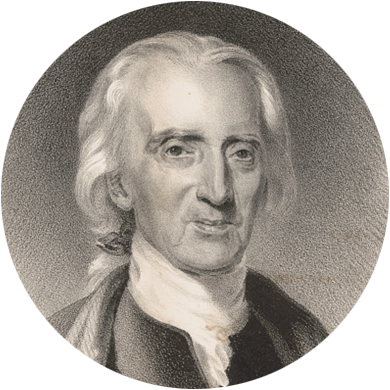

Library of Congress, Prints and Photographs Division
Biography
Born in Annapolis, Maryland, Charles Carroll was the only son of Charles and Elizabeth Brook Carroll. He was the third in his family to carry the name, and, to distinguish him from his father, he would be referred to as Charles Carroll of Carrollton.
His father was a prominent member of the gentry and a fierce advocate for Catholic equality. He sent his son to Europe when he was only eleven years old to receive the Catholic education that would be denied to him by Maryland law. In France, the boy attended several prestigious universities, but he crossed the English channel to study law. In London, Charles witnessed the shift in British attitudes and policies toward the American colonies. When he returned home at the age of 28, he found the colonists growing alienated from their Mother Country.
In 1768, Charles married a distant cousin, Mary Darnell, but both she and his father died fourteen years later in 1782. His father’s death made him heir to a vast agricultural estate that made him the wealthiest man in the colonies. His manor, Carrollton, was a 10,000-acre estate that housed about 300 enslaved workers.
Carroll was barred from political office by his religion, but he could not be prevented from giving voice to the growing mistrust of Britain and its colonial officers. In 1773 , he wrote a series of public letters under the pseudonym “First Citizen” opposing the royal governor’s imposition of fees for office holding and warning that this was a step toward tyranny. His opponent in this exchange of views was Daniel Dulany, son of a powerful political father of the same name and a loyal supporter of the Crown. During their debate, Dulany resorted to ad hominem attacks. Carroll responded with restraint, noting that Dulany turned to “virulent invective and illiberal abuse” when his arguments failed. Many of his fellow Marylanders agreed with Carroll. He was on his way to becoming a leader of Maryland’s independence movement.
Carroll was apparently blunt in his opposition to Britain’s colonial policies. In 1774, when Boston held its famous tea party, Carroll was asked for advice on how to deal with the British vessel arriving in Chesapeake Bay with the hated tea. He is said to have answered, “Gentlemen, set fire to the vessel and burn her, with her cargo, to the water’s edge.”
In 1775, Carroll broke through the religious barrier to become a member of an anti-British Committee for Public Safety. This marked the first time since 1715 that a Catholic had held a public office in Maryland. In 1776, he was elected a delegate to the Second Continental Congress. Although he arrived in Philadelphia too late to vote in favor of the Declaration of Independence, he did not hesitate to sign it despite the risk to his enormous wealth. He was the only Catholic whose name appears on the document.
Carroll remained in Congress until 1778. He served on the war board, charged with finding supplies for the American army. In 1778, he returned to Maryland and helped in the drafting of the state’s constitution. He also continued to break barriers as a Catholic by his election to the state senate in 1781 and later to the U.S. Senate. When Maryland passed a law forbidding a man to serve in both the state and federal government, he resigned from the U.S. Congress, preferring to serve in his state government. He continued in the Maryland Senate until 1800.
In 1800, Charles Carroll lost reelection and retired from politics. He devoted his energies to the building of infrastructure, including railroads and canals, and to the establishment of the First and Second National Banks. He honored his faith by funding the construction of a church basilica in Frederick, Maryland, and providing funding for the creation of Georgetown University, a Catholic school of higher learning.
Carroll died in 1832 at the age of 95, having outlived four of the five first U.S. presidents. His contribution to independence and to the war effort was honored in the third stanza of a state song, “Maryland, My Maryland”: “Thou wilt not cover in the dust / Maryland! My Maryland! / Thy beaming sword shall never rust / Maryland! My Maryland! / Remember Carroll’s sacred trust / Remember Howard’s warlike thrust / And all thy slumberers with the just / Maryland! My Maryland!”
Signer of the Declaration of Independence
George Wythe
1726–1806, Virginia
Summary
George Wythe taught the law to Thomas Jefferson, and he embraced the view that independence was necessary at the Continental Congress in 1776.
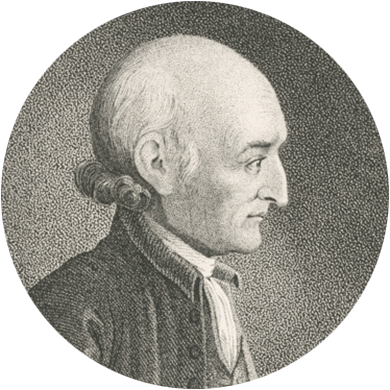

Biography
George Wythe was born in 1726 on a Virginia plantation to a slaveholding family. His father died when he was young and his older brother, Thomas, became his guardian. Wythe received little formal education, although his mother had taught him Latin and Greek, and he likely attended a grammar school run by The College of William and Mary. As a teenager, George was sent to read law with an uncle, and at the age of 20, he was admitted to the Virginia bar. At 21, he married his law partner’s sister, Ann Lewis, but his young wife died the following year.
In 1755, Wythe’s brother Thomas died, and the family estate came to George. Rather than living on the plantation, however, Wythe decided to make his home in Virginia’s capital, Williamsburg. Now a wealthy man, he made his entrance into politics by winning a seat in the House of Burgesses, the lower house of Virginia’s government. He served until 1775. In 1768, he also took on the role of Mayor of Williamsburg, and in 1769, added a seat on the governing board of the College. During these busy years, Wythe made time to direct the legal studies of younger men, including Thomas Jefferson. The two men formed a bond and became political allies.
Wythe’s journey toward support for independence began in 1764 with his concern about Parliament’s plan to impose a Stamp Act on the colonists. He drafted an opposition paper so intense that his colleagues in the House of Burgesses thought it best to modify it. But Wythe could not accept the new policies that were likely to follow, and early on, he embraced the possibility of a colonial separation from the Mother Country. In 1776, his fellow members of the Continental Congress came to share his view that independence was necessary.
In 1776, Wythe was joined by his former student Jefferson and Wythe’s courtroom rival Edmund Pendleton in a project to revise Virginia’s legal code. Two years later, Wythe was chosen to be one of three judges of the newly created Virginia high court of chancery. Wythe served for 28 years, and during his long career on the bench, he shaped the course of the state’s jurisprudence.
Wythe’s mentoring of young lawyers demonstrated his love of teaching. In 1779, Jefferson and other members of the governing body at The College of William and Mary created the first chair in law in an American college and appointed George Wythe to hold it. As a professor of law, Wythe educated future leaders like John Marshall and James Monroe.
It came as no surprise to any Virginian that the 61-year old Wythe would be chosen as a delegate to the Constitutional Convention. William Pierce, who wrote brief sketches of all the delegates, showed his admiration for Wythe, “the famous Professor of Law” who was well known as “one of the most learned legal Characters of the present age.” Pierce went on to praise Wythe for acquiring “a compleat knowledge of the dead languages and all the sciences,” and for his “exemplary life.” He declared, “No Man it is said understands the history of Government better than Mr. Wythe,– nor any one who understands the fluctuating condition to which all societies are liable better than he.” Even so, Pierce believed Wythe lacked the cynicism needed to be a great politician.
In fact, Wythe contributed little to the debates swirling around him at the Convention, and he left Philadelphia before the delegates’ work was finished. Thus, his signature was absent from the Constitution. Perhaps Wythe participated more comfortably in Virginia’s political world, for he was a leader in the Federalist push to ratify the constitution.
In 1791, at the age of 65, George Wythe resigned his professorship and moved to Richmond, the state capital since 1780, in order to more easily perform his duties on the chancery court. Reluctant to abandon teaching completely, he opened a private law school there. Henry Clay was one of his last students.
At the age of 80, Wythe died under mysterious circumstances. Wythe’s grandnephew and would-be heir, George Wythe Sweeney, allegedly poisoned him, putting arsenic in Wythe’s morning coffee on May 25, 1806. Wythe, his housekeeper, and Michael Brown, a free African American, all became violently ill after drinking the coffee. After a week, Brown died, and a search of Sweeney’s room turned up the arsenic. It is possible that Brown was a target as well as Wythe since Wythe had left part of his fortune to Brown in his will. Realizing what Sweeney had done, and that his own death was imminent, Wythe had revised his will, revoking all bequests to Sweeney. Sweeney was tried for murder, but the jury acquitted him because both Brown and Wythe’s autopsies were mishandled, and Lydia Broadnax was not allowed to testify because of her race. Sweeney fled Virginia, never to be seen there again.
News of Wythe’s death spread, carried by newspapers across the country.Thomas Jefferson, Wythe’s former student, friend, and political colleague, wrote a brief sketch of Wythe as his own life was nearing its end. Jefferson offered this epitaph: “No man ever left behind him a character more venerated than G. Wythe.”
Signer of the Declaration of Independence
Richard Henry Lee
1732–1794, Virginia
Summary
Richard Henry Lee presented the motion in the Second Continental Congress for independence, which passed on July 2, 1776.
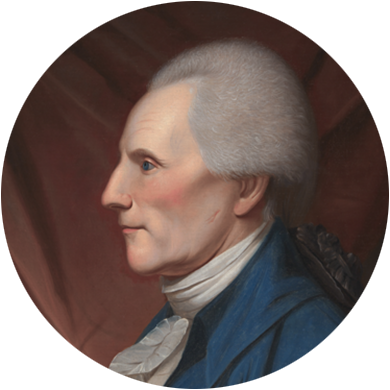

National Portrait Gallery, Smithsonian Institution; gift of Duncan Lee and his son, Gavin Dunbar Lee
Biography
Richard Henry Lee was the fourth of eight surviving children of Thomas and Hannah Harrison Ludwell Lee. Like his brothers Francis Lightfoot Lee and Arthur Lee, Richard grew up at Stratford Hall, the home built by their successful planter and land speculator father. When Richard was 16, Thomas sent him to Wakefield Academy in Yorkshire England. While he was there, tragedy struck: at 18, Richard was an orphan. His older brother, Philip, who was also in England, made plans to return to Virginia, but Richard refused to join him. He was engaged to an English woman and did not want to abandon her. Philip managed to bring an end to this relationship, but a defiant Richard spent a year touring Europe rather than sailing home. When he did return to Stratford Hall, Richard began a dispute with Philip over the distribution of their father’s property. A stubborn nature and a tendency to defy authority would carry over into Richard Henry Lee’s political life.
In 1758, Lee entered the Virginia legislature, known as the House of Burgesses, where he would serve until 1775. He made powerful enemies here, many of whom he inherited from his father’s land speculation enterprises. Among these enemies was John Robinson, the head of a rival land company, whose mishandling of tax monies led Richard Henry Lee to severely criticize him. Lee’s attacks on Robinson angered several leading Virginians. It would not be the last time Lee spoke his mind despite the danger of creating enemies.
Britain’s Proclamation of 1763, which put a temporary stop on land acquisition and settlement west of the Appalachian Mountains, led to tensions between Virginia colonists and the Mother Country. Lee took a leading role in the protest against this policy. The imposition in 1765 of the Stamp Act further inflamed Virginia’s political leadership, and it was Richard Henry Lee who drafted a letter to King George III warning him not to impose such direct taxes.
Over the next several years, Lee’s personal life was as fraught with troubles as his political life. He had married in 1757, and begun a family, but in 1768 his wife, Anne Aylett, died of “a severe pleurisy.” That same year, as Lee was hunting on his property, his rifle exploded. He lost four fingers on his left hand, and for the rest of his life, he wore a black silk glove on his damaged hand.
By 1774, Lee was in Philadelphia as a delegate to the First Continental Congress. Here he met John and Samuel Adams, two of the most vocal advocates for independence, and the three men formed an alliance that dominated Congress for several years. By this time, Lee was a declared radical; he supported the economic boycott of British goods and spoke passionately against the Quebec Act which, among other things, stripped away Virginia’s claim to the land of the Ohio River Valley and gave that territory to Quebec.
Lee was a delegate to the Second Continental Congress that met in 1775. Lee and the Adamses bided their time while the more moderate delegates sought a way to reconcile with Britain. When their efforts failed, these three independence advocates entered the debate. On June 7, 1776, Richard Henry Lee presented his now famous motion: “Resolved, that these united colonies are, and of right ought to be, free and independent states.” The debate that immediately followed was so heated that the presiding officer of the Congress, John Hancock, tabled Lee’s motion. He scheduled the debate to resume on July 1, 1776. On July 2, Lee’s motion passed, and on July 4, Jefferson’s Declaration of Independence was approved.
Lee’s role in moving the country toward independence and war earned him new enemies. John Hancock and Robert Morris, a delegate from Pennsylvania, spread the story that the three radicals planned to oust George Washington as commander-in-chief of the Continental Army. Lee was also accused of trying to devalue Virginia’s currency. Neither accusation was ever proven.
By 1778, Lee’s brother Arthur was also under attack for suggesting that Silas Deane of Connecticut was using his assignment to win French support for the war to further his own business interests. Richard leapt to his brother’s defense and led a successful movement to have Deane recalled. The Deane affair divided the Congress, and Deane’s allies pursued a scheme to ensure that Virginia’s western boundary was severely reduced. Lee led, and won, an exhausting battle to preserve the existing boundary, but by 1779, he had resigned from Congress and returned home.
Four years later, he was again a delegate to Congress. He served as its president for a year, from 1784 to 1785, but once again resigned, citing poor health. He was back in Congress in 1787 and submitted a short list of amendments to the Constitution written by a special convention in Philadelphia. That October he wrote “Observations on the Plan of Government Proposed by the Convention”; it revealed his opposition to replacing the Articles of Confederation by a government with greater powers. He admitted that the Articles were flawed, but insisted that “To say a bad government must be established for fear of anarchy is really saying we should kill ourselves for fear of dying.”
Having declared himself opposed to ratification, in 1788 he withdrew from all public debate. Yet once the Constitution was ratified, Lee accepted appointment as a Senator in the first federal Congress. He refused a second term in the Senate, citing his deteriorating health. He had, he told Virginia’s legislature, “grown gray in the service of his country,” and now suffered from “infirmities’ that could only be relieved by a quiet retirement. Richard Henry Lee died at home in June of 1794.
Signer of the Declaration of Independence
Thomas Jefferson
1743–1826, Virginia
Summary
Thomas Jefferson was one of the youngest delegates to the Second Continental Congress, where we wrote the Declaration of Independence. Jefferson later served as vice president and president of the United States.
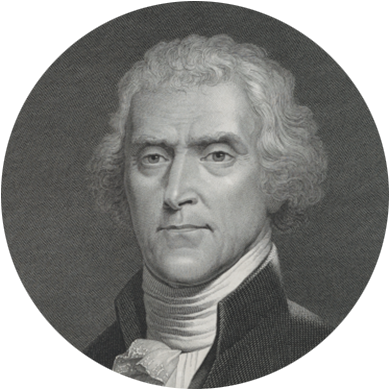

National Portrait Gallery, Smithsonian Institution
Biography
Thomas Jefferson was born at the family’s Shadwell Plantation, the third of ten children in this elite family. His father, Peter Jefferson, died in 1757 and fourteen-year-old Thomas was put under the guardianship of John Harvie Sr, who would watch over the 5,000 acres the boy had inherited. Jefferson would gain legal authority over this land when he turned 21. Thomas was well educated, studying mathematics, ancient languages, metaphysics and philosophy in locally- run schools. At 18 he entered the College of William & Mary, where he studied mathematics, metaphysics, and philosophy. At college he was introduced to the theories of John Locke, Isaac Newton, and Francis Bacon. After college he went on to read law with the distinguished attorney George Wythe. He was admitted to the bar in 1767 and, although he himself owned many slaves, he took at least seven cases of enslaved people seeking their freedom.
By 1769 he had entered the colonial government as a member of the House of Burgesses. Much of the following few years was spent constructing his own estate, Monticello, where he held many hundreds of enslaved persons over the course of his lifetime. On January 1, 1772, he married his third cousin, Martha Wayles Skelton, a widow of twenty-three. Together, the couple had six children. When Martha’s father died, Thomas took on his enslaved population and his many debts. Martha, who suffered from diabetes, died soon after the birth of her last child in 1782. She won from Jefferson a pledge to never marry again, and the grief-stricken Jefferson kept this pledge.
At the age of 33, Jefferson was one of the youngest delegates to the Second Continental Congress. Together with his newfound friend, John Adams, he served on a committee of five chosen to write a Declaration of Independence. Although the other members of the committee thought Adams should draft the Declaration, Adams persuaded them that Jefferson was the better choice. Although the Congress did not pass Richard Henry Lee’s resolution supporting colonial independence until July 2, 1776, Jefferson had been working on a formal public declaration since June 11. He presented it to the full Congress who edited it, removing a fourth of Jefferson’s original draft. They did not remove his powerful preamble, which spoke eloquently of individual and human rights. Its assertion that all men were created equal served as a driving force decades later for excluded groups like African Americans and women in their struggle to gain an equal political voice. On July 4, 1776, Congress ratified the Declaration, and on August 2 most of the delegates signed it, aware that they were committing treason in the process.
Jefferson was elected to the newly-created Virginia House of Delegates in September of 1776, and there he worked on the state constitution. He was disappointed that his effort to ensure religious freedom in the state did not pass.
In 1778 he accepted the task of revising the Virginia state laws. In this role, he led the state government to abolish what he called “feudal and unnatural distinctions” that favored the powerful landed gentry, including entail and primogeniture which vested a landowners eldest surviving son with all a father’s land and power.
As the war continued, Jefferson took on the duties of governor of his state. He was elected for one-year terms in 1779 and 1780. While in office, he transferred the state capital from Williamsburg to Richmond and introduced several reforms in public education and religious freedoms. But in 1781, Benedict Arnold, now an officer in the British military, led an invasion of Virginia. Jefferson narrowly escaped capture. He was accused by his political opponents of cowardice for taking flight. The General Assembly conducted an inquiry into Jefferson’s actions and although they did not find fault with his decision, he was not re-elected to the governorship.
In 1783, Jefferson reentered the national stage; he was elected as a Virginia delegate to the Confederation Congress. His central achievement was to author the Land Ordinance of 1784 by which Virginia ceded all the land it had claimed northwest of the Ohio River to the national government. Jefferson insisted that these lands become states and wrote an ordinance that banned slavery from all the nation’s territories. Congress, however, rejected this ban on slavery. Three years later the Northwest Ordinance of 1787 ensured that no part of the vast northwest territory would ever be colonized by the original 13 states.
In May of 1784, Jefferson was sent by Congress to Paris to join Benjamin Franklin and John Adams, who were negotiating treaties with Britain and several European countries. Less than a year later, he was tapped to replace Franklin as Minister to France. When a French official commented to Jefferson that he had heard this, Jefferson replied, “I succeed. No man can replace him.” For five years, Thomas Jefferson remained in Paris. During that time he fell in love with a married Englishwoman and soon afterward began a relationship with a young enslaved girl named Sally Hemings who had accompanied Jefferson’s daughter to France. She was, in fact, the half-sister of Jefferson’s wife Martha, born to an enslaved woman and Martha’s own father. While in Paris, Sally became pregnant. She won a promise from Jefferson that any children by him would be freed. The relationship continued when the two returned to Monticello in 1789.
Jefferson’s next service to his country was as Washington’s first Secretary of State. Conflict with Washington’s Secretary of the Treasury, Alexander Hamilton, began early in their terms and lasted until Jefferson resigned. At the heart of the conflict was Jefferson’s fierce opposition to Hamilton’s economic programs for the new country and the disagreement between the two men over whether an alliance with Britain or France best served America’s future.They also disagreed about whether the Constitution should be loosely interpreted— as Hamilton believed—or strictly interpreted ,as Jefferson insisted. Where Hamilton saw implied powers, Jefferson saw none. By 1792, Jefferson and James Madison had become the leaders of an opposition party, pitting their vision for America as Democratic-Republicans against the Federalist vision embraced by Hamilton and, to a great degree, by Washington himself.
The 1794 Jay Treaty with Britain proved the breaking point for Jefferson and his party, and in 1796, Jefferson ran for President. He lost the election to his one-time friend, John Adams, who had served as Washington’s vice president. Now, in 1796, Jefferson’s loss made him Vice President to Adams. The division between Federalists and Democratic Republicans now played out in Congress and in the local politics of every state. When the Adams administration passed the Alien and Sedition Acts, Jefferson and Madison responded with the Kentucky and Virginia Resolution that, in effect, claimed the states had the right to nullify a federal law they deemed unconstitutional. While this did not lead to violence or secession, it was a forerunner of the Civil War.
In the election of 1800, Jefferson defeated Adams. Both campaigns had engaged in what historians could rightly call lies and libel. Jefferson and his running mate Aaron Burr received the same number of electoral college votes, so the final decision fell to the Federalist-dominated House of Representatives. Hamilton lobbied for Jefferson, believing he was a lesser political evil than Burr. One of the most important aspects of the election of 1800 was the peaceful transfer of power from one party to another.
Jefferson abandoned the formal etiquette of his two predecessors and imposed a more casual style on the Presidency. He tried to soothe troubled political waters by saying in his inaugural address that “we are all Republicans, we are all Federalists,” but Jefferson’s victory—and Madison’s after him—spelled the end of Federalist political domination and led to the demise of the Federalist party. Jefferson dismantled as much of Hamilton’s economic program as he could, but he found he could not abolish the First Bank of the United States, a signature achievement of his political enemy Hamilton. Jefferson’s own signature achievement was the Louisiana Purchase, which added over 800,000 square miles to the US. Jefferson went ahead with this Purchase despite the fact that he had to rely on implied powers—the right to govern territory implied the right to acquire it—to justify his action.
Jefferson was elected to a second term, but his popularity declined. His effort to negotiate a neutral path between the two enemies, Britain and France, by an Embargo Act of both countries led to economic chaos in the US. In addition, Aaron Burr’s plot to create an empire in western lands forced Jefferson to arrest his former vice president. Jefferson openly tried to influence the verdict in Burr’s trial by proclaiming Burr guilty beyond question. He also refused to testify at the trial, claiming the novel argument of executive privilege. Burr was acquitted, but Jefferson appointed Burr’s co-conspirator James Wilkinson to be Governor of the Louisiana Territory.
Jefferson left national office in 1809, replaced as President by his ally James Madison, who in turn was replaced by a fellow Virginian, James Monroe. Thus created what has been called the Virginia Dynasty. Jefferson maintained contact with both of his successors. A mutual friend, Benjamin Rush, managed to smooth the way for a correspondence between the one time friends and long time political enemies, John Adams. Over 14 years, beginning in 1812, these two major figures in the birth of a new nation exchanged 158 letters discussing their political differences and the role of the American Revolution in world history. When Adams died on July 4, 1826, his last words were said to be “Thomas Jefferson survives,” but Jefferson had died a few hours before the New Englander.
Signer of the Declaration of Independence
Benjamin Harrison
1726–1791, Virginia
Summary
Benjamin Harrison was from a wealthy Virginia plantation family. He chaired the debate over the Lee Resolution and the adoption of the Declaration of Independence in July 1776.
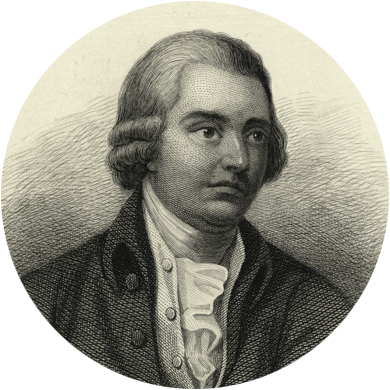

Biography
Benjamin Harrison was born at the family homestead, Berkeley Plantation. As the fifth son who carried that name, he was often designated Benjamin V. He came into a large inheritance when his father was struck by lightning while closing a window during a storm. Both he and the young daughter he was holding in his arms died in this freak accident.
Thus, at the age of 19, Benjamin V became a very wealthy man, as he received the bulk of his father’s vast estate, including several plantations and thousands of acres of land. He also acquired numerous enslaved people. Tradition held that, as he was the eldest son, he ought to have inherited the entire estate, but Benjamin IV departed from that tradition, leaving six plantations and some enslaved people who worked their fields to the remainder of his children.
As befit a man of great wealth, Benjamin V served for three decades in the Virginia legislature known as the House of Burgesses. He was one of that colony’s earliest opponents of the new British policies that followed its costly 1763 victory in the French and Indian War. Harrison was particularly incensed by the Townshend Acts of 1767 that taxed a number of British items imported into the colonies, including tea.
In 1770, he signed the Virginia Association, which called for a boycott of British goods until the Tea Act tax was repealed. Early in 1772, he joined Thomas Jefferson and six other Virginia Burgesses in preparing an address to the King calling for an end to the importation of enslaved people into Virginia. Their motive was less humanitarian than economic; as tobacco prices fell and many planters shifted to the production of wheat, they hoped to reduce their workforce by selling slaves to new plantations across the Appalachians or south to the Carolinas and Georgia. As long as the flow of new slaves continued, the sale price they could demand would remain low. This request was ignored, but Jefferson would later include this issue in his draft of the Declaration of Independence.
In 1774, Harrison joined with other Burgesses in issuing an invitation to other colonies to convene a Continental Congress. He was selected to serve as one of seven delegates to this congress in August of that year. Many of the political leaders in this First Continental Congress were strangers to one another. John Adams’s early impression of Harrison was not positive. In his diary, Adams wrote that this tall and heavily built Southerner was, like other Southern planters, just “another Sir John Falstaff,” obscene, profane, and impious. Yet, Adams did concede that Harrison’s sense of humor often “steadied rough sessions” during the congressional debates.
In the Second Continental Congress, Harrison played the important role of chairing the final debate over both the Lee Resolution and the adoption of the Declaration of Independence. Pennsylvania delegate Benjamin Rush recalled how relieved he was when Harrison interrupted “the silence and gloom of the morning” as the delegates, one by one, signed a Declaration they knew might well be their death warrant.
In 1777, Harrison became a member of Congress’s Committee of Secret Correspondence. Its task was to establish secure communication with American agents in Britain. He was also named Chairman of the Board of War. His good humor failed him when he and George Washington argued over whether the Marquis de Lafayette should be paid, as Washington insisted, or should serve as an honorary officer without compensation, as Harrison demanded. He also favored an unpopular cause: the right of Quakers to refuse to bear arms. And, during the debate over membership in the legislature of the Articles of Confederation government, Harrison argued that Virginia deserved greater representation because it was larger and more populous than its neighbors.
Harrison retired from Congress in October of 1777, a victim of the war. His estates had been ravaged by armies and his fortune had been severely reduced. Worse was soon to come. In 1781, Benedict Arnold led a British force to Virginia that seized Harrison’s Berkeley Plantation and removed and burned all the family portraits hanging on its walls. Most of Harrison’s possessions were destroyed. Yet in that same year, Virginians honored him by making him governor of the state. He served in that role until November of 1784.
In 1785, Harrison returned to the legislature, and later, in 1788, was chosen as a delegate to the state’s ratifying convention. At this contentious convention, he joined Patrick Henry and other Anti-Federalists in opposing the Constitution on the grounds that it did not contain a Bill of Rights.
In his last years, Harrison was plagued by gout and continuing financial troubles. He died in April of 1791. The cause of his death is unknown, but it is suspected that his excessive weight played a role in his demise.
Signer of the Declaration of Independence
Thomas Nelson, Jr.
1738–1789, Virginia
Summary
Thomas Nelson supported Richard Henry Lee’s resolution for independence at the Second Continental Congress. He later commanded his state militia at Yorktown.
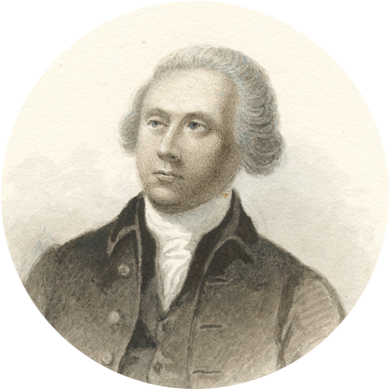

Biography
Thomas Nelson was born at Yorktown, Virginia, to William and Elizabeth Burwell Nelson. He was thus not named for his father, but “Junior” was added to distinguish him from his uncle, Thomas Nelson, who also lived in Yorktown. Thomas, like most sons of prosperous Southern families, was tutored at home in his early years but sent to England to complete his education. He attended the famous Eton School when he was fifteen. He went on to Christ College at Cambridge. His education thus completed, at the age of twenty-three he returned to Virginia and to his family’s mercantile business. His social status destined him to participate in politics, so it was not especially odd that he was elected to the House of Burgesses, the colony’s legislature, while he was still aboard the ship carrying him home.
A year after his return, Nelson married Lucy Grimes, a cousin of several influential Virginians including Peyton Randolph, the Lee family, Carter Braxton, Benjamin Harrison, and Thomas Jefferson. For Nelson, Braxton, Harrison, and the Lees would be familiar faces when he joined them in the Continental Congress.
Nelson entered politics while American colonists were still loyal citizens of the British empire, but soon enough Parliament’s new taxation policies and the extreme punishment meted out for Boston’s tea party led him to join the growing opposition to British rule. In 1774, the royal governor of Virginia, frustrated by the legislature’s resolutions censuring and condemning the closing of the port of Boston, dissolved the House of Burgesses. In response, members of the Burgesses reconvened as the first Virginia convention, and proceeded to ban commerce with Britain and suspend all debts to British merchants. With this decision, they demonstrated their opposition to British policy while also giving Virginia’s planter class a much desired break from their consumer debts. Nelson, however, took a radical step in support of American resistance: he spent his own money to send needed supplies to Boston. He then arranged a Yorktown tea party and took satisfaction in personally throwing two chests of tea into the York River.
Nelson formed a deep commitment to independence. As the debate over separation from Britain began in the Constitutional Congress, he proposed to the Virginia legislature that “our delegates in Congress be enjoined in the strongest and most positive manner to exert their ability in procuring an immediate clear and full statement of independency.” Firebrand Patrick Henry seconded this motion and it was quickly adopted. Nelson himself became a delegate to this second Continental Congress where he supported Richard Henry Lee’s resolution. Soon afterward, he signed the Declaration of Independence.
Nelson was forced to resign from congress in May of 1777 because of a severe asthma attack. He returned to Virginia, recovered, and led his state’s militia into battle. During the siege of Yorktown, Nelson, now Governor of Virginia, again commanded the state militia, this time against Cornwallis’s army. He personally organized and supplied his men. This use of his personal fortune ruined him financially, since he was never reimbursed by any government. Legend has it that Nelson ordered his artillery to fire on his own house which Cornwallis had commandeered. Though this story is probably untrue, the house, which is still standing, does have two cannonballs in its brick walls.
Nelson’s health had suffered badly from his time on the battlefield. By November of 1781, illness forced him to resign from the Governorship. Years after the war ended, he had not fully recovered. In early January of 1789, he died while visiting his son ‘s home in Hanover County. He was 51 years old. A doctor attending Nelson suggested that depression or despair rather than disease was the cause of his friend’s death. He wrote: “From his unexampled patriotick exertions during the late war he had exhausted a fortune….sinking from affluence, almost to poverty. He could not bear it. I attended him in his last illness and saw that the exquisite tortures of the mind were the disease that destroyed his body.”
Signer of the Declaration of Independence
Francis Lightfoot Lee
1734–1797, Virginia
Summary
Francis Lightfoot Lee served in the Second Continental Congress, where he shared his brother Richard Henry Lee’s view that independence was necessary.
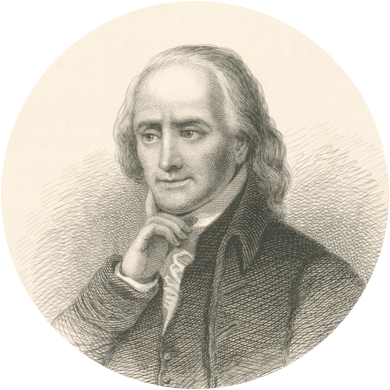

Biography
Francis Lightfoot Lee, or Frank as he was called, got his middle name from Francis Lightfoot, the best man at his parents’ wedding. He grew up in a large Virginia plantation home, Stratford Hall, along with five brothers and two sisters. Three generations before Frank was born, the Lee family had established its fortune selling furs, tobacco, and English-made goods and using the profits to purchase huge tracts of land in colonial Virginia.
Frank’s parents died when he was 16, and their property was divided among their sons. Frank inherited “Coton,” an estate in northern Virginia and, when the area was named Loudoun County, his brothers nicknamed him “Loudoun.” Later in life, he would build a new home, called “Menokin,” near Warsaw, Virginia.
Frank’s temperament set him apart from his controversy-prone brothers, Richard Henry and Arthur. Arthur described him as “calmness and philosophy itself” although his politics were as radical as theirs. By 1758, he and brothers Philip and Richard Henry had formed a family voting bloc in Virginia’s colonial government.
And, despite his philosophical bent, in 1766, 32-year-old Frank signed Richard Henry’s Westmoreland Resolutions that challenged the King’s authority and condemned the Stamp Act. These resolutions, binding its signers to protect any colonist deprived of liberty or property by the Stamp Act, were among the first seditious declarations against the Crown. In 1773, as British taxing policies prompted more resistance in the colonies, Frank joined his brother on Virginia’s Committee of Correspondence.
In 1775, Francis was elected to serve in the Second Continental Congress. By then, he shared Richard’s certainty that independence was the only course of action for the colonies. On June 7, 1776, when Richard presented his resolution that the colonies “are, and of right ought to be, free and independent States,” Francis wholeheartedly agreed. When Richard Henry was called back to Virginia to help write its constitution, Francis kept him abreast of developments in the Congress: “This day the resolve for independency was considered & agreed to in Comtee of the whole…Tomorrow it will pass the house with the concurrence of S. Carolina…if our people keep up their spirits, & are determined to be free; whatever advantages the Enemy may gain over us This summer & fall; we shall be able to deprive them of it in the winter…Yet I confess I am uneasy, least any considerable losses on our side shou’d occasion such a panic in the Country, as to induce a submission.” Francis added a note of frustration with the continuing debate in,Congress over independence, telling his brother, “[W]hen all our attention, every effort shou’d be to oppose the Enemy, we are disputing about Government & independence.”
Early that July, the Declaration of Independence was written, and Francis Lightfoot Lee eagerly signed it. In 1777, with the Continental Army freezing at Valley Forge, Lee became the chair of a special congressional committee to support Washington’s troops. He remained in Congress until 1779 when he returned to his wife, Rebecca, and their home in Richmond County. Lee died of pleurisy in January 1797, four days after his wife passed away. The couple had no children, so Lee left his sizeable estate to Richard Henry’s second son Ludwell who shared his uncle’s interest in politics.
Although suspicion and scandal followed his brother Arthur and political enemies plagued Richard Henry Lee, Francis was never controversial. The 19th century writer, Mark Twain [Samuel Clemens] wrote of him: “He did no brilliant things, he made no brilliant speeches; but the enduring strength of his participation was manifest, his fearlessness in confronting perilous duties… was patent to all, the purity of his motives was unquestioned, his unpurchasable honor and uprightness were unchallenged.” Perhaps the epitaph offered by Lee’s niece Nancy Shippen put it best: “Thou sweetest of all the Lee race / That ever adorned our shore.”
Signer of the Declaration of Independence
Carter Braxton
1736–1797, Virginia
Summary
Carter Braxton of Virginia signed the Declaration of Independence, but he was sent home from Congress after criticizing John Adams in a pamphlet.
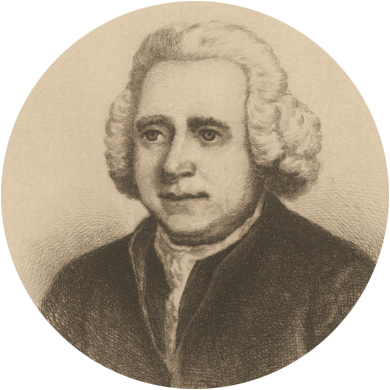

Biography
Carter Braxton was the younger of two sons of George and Mary Carter Braxton. He was born at Newington, the Virginia estate of his grandfather, a prosperous merchant, planter, and slaveholder. His mother, who died seven days after giving birth to him, was the youngest daughter of the fabulously wealthy Robert “King” Carter, whose name Braxton carried.
Braxton married at the age of 19 while still a student at the College of William and Mary. His bride, Judith Robinson, was the niece of the powerful speaker of the House of Burgesses. Sadly, she, like his mother, died giving birth only two years later. Braxton, mourning her loss, set sail for Europe, where he remained for two or, perhaps, three years. In 1760, he married once again, this time to Elizabeth Corbin, daughter of a member of the Royal Governor’s Council. Carter and Elizabeth had ten sons and six daughters. Elizabeth outlived her husband by 17 years.
When his older brother died in 1761, Carter Braxton inherited the remainder of the family estate. But both brothers had lived extravagantly, and Carter found himself burdened with large debts. Although he had to sell land to satisfy some of his creditors, he still owned a vast estate of more than 12,000 acres and held 165 enslaved people.
As a member of the landed elite of Virginia, Braxton was expected to hold public office. Early on, he served as justice of the peace and a parish sheriff. He was then elected in 1761 to the House of Burgesses and served most terms until 1775. He proved to be far more conservative than many of his colleagues, although he did support the nonimportation of British goods in 1769.
By 1775, Parliament’s policies drove Braxton into the opposition camp. Still, he strongly opposed Patrick Henry’s radical tactics in protesting the policies of the Royal Governor, Lord Dunmore. Henry, leading a band of volunteer militia men, marched on Williamsburg to protest the royal governor’s seizure of the colony’s gunpowder. Braxton averted the crisis by pledging to have the powder paid for out of his father-in-law’s account. But if he prevented a violent confrontation, he also made an enemy of Henry for years to come.
Braxton may not have been ready for a break from Britain, but he agreed to serve on Virginia’s Committee of Safety, which oversaw the necessary preparations for war. Then, in early 1776, he took his seat in the Continental Congress. There, he resisted the obvious sentiment for independence.
Writing in April 1776, he observed that “Independence is in truth an elusive bait which men inconsiderably [sic] catch at, without knowing the hook to which it is affixed.” He was also wary of republics, which he noted often came to unhappy ends. A republic’s advantages “existed only in theory and were never confirmed by the experience, even of those who recommend it.” Yet, by July, he had accepted the need for separation from Britain, and he supported Lee’s motion and signed the Declaration of Independence. Still, he could not embrace what he considered the radically democratic ideas of men like John Adams. When he published a pamphlet challenging Adams’s views, Congress sent him home.
Carter Braxton returned to Virginia in the Autumn of 1776. The Revolutionary War that followed left him financially ruined, but he continued to serve in government, taking a seat in the newly created legislature known as the House of Delegates. He served for almost ten years in that office, chairing several important committees. In late 1785, he was elevated to the governor’s executive advisory board, the Council of State, a position that carried both prestige and a salary. By the time he became a Council member, Braxton and Patrick Henry had made their political peace, and they worked together well during Henry’s term as governor of the state.
Braxton did not attend the Constitutional Convention in Philadelphia or his state’s ratifying convention, but he did support the adoption of the Constitution.
Signer of the Declaration of Independence
Robert Morris, Jr.
1734–1805, Pennsylvania
Summary
In 1775, Robert Morris was likely the richest man in America. He signed the Declaration and was considered the financier of the Revolution. He also attended the 1787 Constitutional Convention.
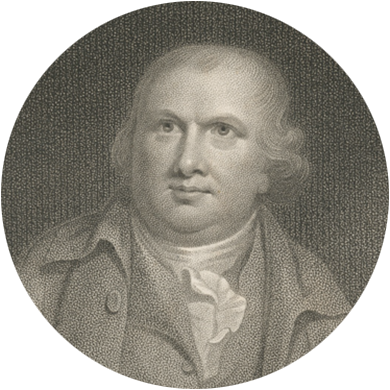

Biography
Robert Morris, Jr. was born in Liverpool, England. There is some suspicion that he was born out of wedlock. He was raised by his maternal grandmother until he reached the age of thirteen, when his father, who was building a fortune in the tobacco trade, brought him to Oxford, Maryland. After two years, Robert, Jr. was sent to live in Philadelphia and was apprenticed to Charles Willing’s shipping and banking firm. In 1750, his father died from an infected wound, leaving most of his large estate to his son. By 1757, Robert Morris was a full partner in the Willing firm. Among the imports by the Willing, Morris & Company in 1762 were 200 enslaved persons, sold at auction. The firm also held auctions for other importers of Africans. By 1775, Robert Morris, Jr. was likely the richest man in America.
At the age of 35, Morris married 24 year old Mary White, the daughter of a wealthy lawyer and landowner. The couple had seven children, but Morris had also fathered an illegitimate daughter half a dozen years earlier. He supported her and remained in contact with her and his younger half-brother, who Morris, Sr. had sired out of wedlock as well. This boy, Thomas, was later made a partner in Morris’s shipping firm.
Morris was not a firebrand; in fact, although he opposed British policies in the 1760s and 70s, he preferred reconciliation with the Mother Country rather than a serious break with the Crown. When he was elected to the Continental Congress, he aligned himself with its least radical faction. He did, however, agree to serve on the “Secret Committee of Trade” which supervised the procurement of arms and ammunition, a decision that later on would make him vulnerable to attacks of mismanagement from several fellow delegates.
By 1776, as efforts to draft a state constitution began, Pennsylvania’s leaders grew frustrated with Morris’s conservative stance. At the same time, Congress itself was seriously debating American independence. By July of that year, Pennsylvania’s delegation was the only delegation opposed to declaring independence. Morris refused to cast a vote for separation from Britain, but he and one fellow delegate agreed to excuse themselves so that those favoring independence could constitute a majority in the Pennsylvania delegation. With all the delegations voting in favor, Richard Henry Lee’s resolution declaring independence was passed on July 2.
Despite Morris’s obvious reluctance to support independence, Pennsylvania sent him back to Congress. In August, Robert Morris signed Jefferson’s Declaration. He explained his capitulation to Horatio Gates that October: “I am not one of those politicians that run testy when my own plans are not adopted. I think it is the duty of a good citizen to follow when he cannot lead.” He added, “I do not wish to see my countrymen die on the field of battle nor do I wish to see them live in tyranny.”
In September 1777 Morris asked for, and received, a leave of absence from Congress, but wound up spending much of his time defending himself against the attacks that he had mismanaged the procurement of arms and ammunition and committed financial improprieties on the secret committee of trade. He thus played little role in the drafting of the Articles of Confederation, but signed it when it was completed.
Morris returned to Congress in the Spring of 1778, but his mind was on his own business affairs and he took on very few assignments. Even after he left Congress permanently, he was hounded by Henry Laurens, Tom Paine, and others who again alleged he had used his position in Congress for his own financial benefit. In 1779, this cloud over his head was finally lifted when a congressional committee cleared him of all charges.
Home in Pennsylvania, Morris joined forces with James Wilson to organize a Republican Society. This political club wanted to replace the highly democratic state constitution with a more conservative one. They argued for a bicameral legislature, an executive with veto power, an independent judiciary, and a separation of powers that would appear in 1787 when the new national constitution was written. Although men like Dr. Benjamin Rush, Thomas Mifflin, and Wilson supported this goal, Morris was clearly its leading proponent. Not surprisingly, he was not reelected to Congress.
Morris was restored to popularity when, in 1780, he led a group who created a Bank of Pennsylvania to fund the purchase of supplies for the struggling army. The following year, as Congress faced a financial crisis and a mutiny by near- starving troops, he was appointed by them to be the Superintendent of Finance. His mission was to resolve the financial crisis that led to drastic shortages of military supplies for Washington’s army. Morris instituted several reforms aimed at boosting the American economy. Most bore the mark of the economic ideas of English theorist Adam Smith who urged laissez-faire policies in his 1776 book, The Wealth of Nations. Soon after accepting the committee assignment, Morris convinced Congress to establish the Bank of North America. The bank, built on the ideas of Morris and his colleague Gouverneur Morris, was a private institution governed by its investors but run under the supervision of the Superintendent of Finance. It was designed to lend money to Congress and issue bank notes. Morris believed it would help finance the war and stabilize the nation’s currency. Until the bank was operational, Superintendent Morris would purchase all the supplies for the army. He came to be considered the financier of the Revolution.
After the British surrender at Yorktown, Morris issued a “Report on Public Credit” that called for the full payment of the country’s war debt through new revenue measures. Writing to the governors of every state, he argued that it was “high time to relieve ourselves from the infamy we have already sustained.” We must, he said, “rescue and restore our national credit” by bringing in revenue through tariffs. Although all the states except Rhode Island agreed, one dissent was enough to block this proposal. When the new federal government began, its Secretary of the Treasury, Alexander Hamilton, issued a report on public credit that echoed Morris’s earlier proposals.
By 1784, Morris was ready to end his role in government. He resigned from Congress in November of that year. But in 1787, he was once again deeply involved in national affairs for he was chosen to serve as a delegate to the convention meeting in Philadelphia. Here his proposal that George Washington serve as chair of the convention was passed by unanimous vote. Morris said little during the debates that followed but he did sign the Constitution. After the Constitution was ratified, Pennsylvania sent Robert Morris as one of its first representatives in the U.S. Senate. Here, he pressed the government to adopt many of the same policies he had advocated as Superintendent of Finance, including a federal tariff, a national bank, a federal mint, and the funding of the national debt. All of these policies became reality.
Meanwhile, Morris began to suffer personal financial problems. Lawsuits plagued him and forced him into bankruptcy. He turned increasingly to land speculation to recoup his fortune but suffered losses, especially when war in Europe ruined the market for land. The company he ran collapsed. The Panic of 1797 left Morris selling his household furniture at public auction. All he had left in his once elegant Philadelphia home was some bedding, some clothing, a few bottles of wine, and kitchen supplies like sugar coffee and flour. Morris hoped to evade angry creditors by moving to his country estate, but his creditors caught up with him. In the end, he was arrested and imprisoned for debt from February 1798 until August 1801. His release from debtors prison came only after Congress passed the Bankruptcy Act of 1800, enacted in large part to secure his release. The man who had once owned the western half of New York State now owned little more than an old gold watch that had belonged to his father. He left the watch to his son Robert.
Robert Morris, friend of George Washington and other leaders of the new nation, died of the asthma that had often incapacitated him on May 8, 1806. John Adams described him when they both served in the Continental Congress as a man who had “a masterly understanding”, and French Minister M. De Chastellux remembered him as “a large man, very simple in his manners, his mind…subtle and acute, a zealous republican…[who] always played a distinguished part in social life and in affairs.”
Morris was one of two people, along with Roger Sherman, to sign three of the most important documents of the Revolutionary era: the Declaration of Independence, the Articles of Confederation, and the Constitution.
Signer of the Declaration of Independence
Benjamin Rush
1746–1813, Pennsylvania
Summary
Benjamin Rush had a medical practice in Philadelphia and became a professor of chemistry. Rush consulted with Thomas Paine during Paine’s writing of Common Sense. He signed the Declaration in 1776.
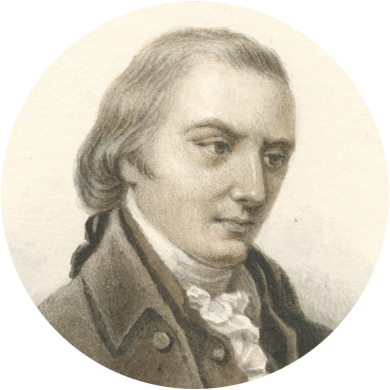

Benjamin Rush was born in Byberry, twelve miles from Philadelphia. His father died when Benjamin was not yet six years old, and when he was eight his mother placed the boy in care of his maternal uncle, the Rev. Dr. Samuel Finley. Finley saw to Benjamin’s early education, and, in 1759, he was enrolled in the College of New Jersey [later Princeton University]. He graduated in 1760 with a Bachelor of Arts degree and for the next five years was apprenticed to Dr. John Redman in Philadelphia. Redman encouraged Rush to further his medical training at the University of Edinburgh, and it was there, in 1768, that Benjamin Rush received his M.D. degree. Rush must have had an ear for language, because, when he returned from a tour of Europe in 1769, he was fluent in French, Italian, and Spanish.
Rush set up his medical practice in Philadelphia and became a professor of chemistry at his old alma mater, the College of Philadelphia, now the University of Pennsylvania. He was well-liked in the city, in large part because of his medical care of the poor. His popularity extended to his classroom teaching, and, ultimately, he would publish the first American textbook in chemistry.
Despite his popularity, Rush was not without his flaws; he was a gossip and often judgmental of others. He was overly confident of the correctness of his own opinions and often unscientific in practice. He relied heavily on bleeding his patients, believing it was a cure for almost any ailment. When others abandoned the practice of bleeding, he refused to give it up. In 1793, as yellow fever raged throughout Philadelphia, he relied on bloodletting despite the advice of French doctors who had used more effective treatments during the frequent outbreaks of the disease in the West Indies.
Rush’s political views were well established by the early 177 0s, when he joined the Sons of Liberty. Thomas Paine consulted with Rush during the writing of his influential book, and it is claimed that it was Rush who suggested its title Common Sense. By 1776, Rush was a member of Pennsylvania’s provincial conference which was charged with sending delegates to the Continental Congress; Rush himself was chosen to attend. He joined the Congress after it had voted for independence. Even so, he still signed the Declaration.
In 1811, Rush recalled the signing of the Declaration of Independence in a letter to fellow signer John Adams: “The pensive and awful silence which pervaded the house when we were called up, one after another, to the table of the President of Congress, to subscribe what was believed by many at that time to be our own death warrants. The silence and the gloom of the morning was interrupted I well recollect only for a moment by Colonel Benjamin Harrison of Virginia, who said to Elbridge Gerry at the table ‘I shall have a great advantage over you Mr. Gerry when we are all hung for what we are now doing. From the size and weight of my body I shall die in a few minutes, but from the lightness of your body you will dance in the air an hour or two before you are dead.’”
Not surprisingly, Rush served on the Congress’s medical committee, but he also joined the Philadelphia militia during the battles for control of the city. He thus witnessed the horrors of war. He was with Washington at Trenton in December of 1776, and recorded the events of December 24th. “I spent a night at a farmhouse near to him [Washington] and the next morning passed near an hour with him in private. He appeared much depressed, and lamented the ragged and dissolving state of his army in affecting terms.”
The horrors of war became personal that November when Rush’s father-in-law, Richard Stockton was taken prisoner by Loyalists, being dragged from his bed in the bitter cold of winter, dressed only in a nightshirt and breeches. He would spend five weeks locked in irons and starving before General Washington managed his release. Writing to his friend Richard Henry Lee while Stockton languished in prison, Rush declared that “every particle of my blood is electrified with revenge, and if justice cannot be done him in any other way, I declare I will, in defiance of the authority of Congress…drive the first rascally Tory I meet a hundred miles, barefooted, through the first deep snow that falls in our country.” Fortunately, Stockton was freed in January 1777.
While still in Congress, Rush took on the role as surgeon-general of the middle department of the Continental Army and did his best to diminish the deaths of fighting men from typhoid, yellow fever, and other deadly camp diseases. But his under-reporting of patient deaths and his failure to actually visit the hospitals under his command led to his resignation from the post in 1778.
Before resigning as surgeon general, Rush began to criticize Washington’s conduct of the war. He complained to Virginia Governor Patrick Henry about Washington’s alleged incompetence, comparing General Horatio Gates’s “well regulated” army with Washington’s undisciplined, mob-like force. Later, Rush regretted his attack on Washington; he praised the General in a letter to John Adams in 1812 and pleaded with Washington’s first biographers to remove his association with the stinging words against the General.
After independence was won, Rush supported the creation of a stronger central government than the Articles of Confederation provided. He issued an address supporting the proposed new constitution in 1787 and voted for its ratification at the Pennsylvania ratifying convention. He served as the treasurer of the U.S. Mint from 1797 to 1813, but devoted much of his time to civic and educational projects. He embraced social reform causes like abolition, prison reform, and the end to capital punishment. After the Revolution, he advocated better education for women and helped found the Young Ladies Academy of Philadelphia. Yet he did not give up his commitment to “heroic medicine,” and when the Lewis and Clark Expedition set out, he advised Meriwether Lewis to employ a medical kit that included emetics to induce vomiting, laxatives that contained mercury, and blood letting.
Rush is perhaps best remembered as the man who brought John Adams and Thomas Jefferson together after the bitter election of 1800 drove them apart. Although Adams had once described Benjamin Rush as “too much of a talker to be a deep thinker,” in the 19th century he praised him to Jefferson, writing that he “knew of no character living or dead, who has done more really good in America.”
Rush died at the age of 67 when he contracted typhus while treating patients during the typhus epidemic of 1813. His wife, Julia Stockton Rush, was buried beside him when she died in 1848.
Signer of the Declaration of Independence
Benjamin Franklin
1706–1790, Pennsylvania
Summary:
Benjamin Franklin was active in public affairs, politics, business, and a celebrated writer and inventor. After signing the Declaration, he served as a diplomat and a delegate at the 1787 Constitutional Convention.
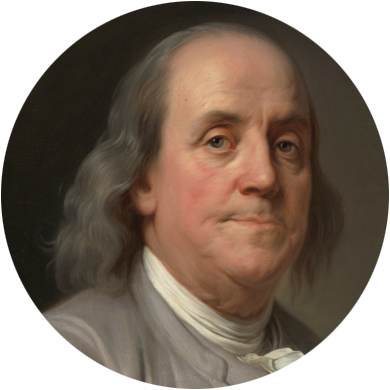

National Portrait Gallery, Smithsonian Institution; gift of the Morris and Gwendolyn Cafritz Foundation
Biography
Benjamin Franklin was born in Boston, the son of tallow handler, soaper, and candlemaker Josiah Franklin and Abiah Folger Franklin. His father had 17 children from his first wife and Benjamin’s mother; Ben was his mother’s eighth of ten children. Josiah Franklin did what he could to see that Ben was educated, but he could only afford to give him two years at the Boston Latin School. From age ten onward, Franklin educated himself. At 12, he was apprenticed to his older brother James, a printer, and thus learned the printing trade. James was clearly ambitious, and three years after Ben arrived at his print shop he founded the third newspaper of Boston, The New-England Courant.
Ben, equally ambitious, was soon sending letters to the newspaper, claiming to be a middle-aged widow named Silence Dogood. James was not happy when he learned, finally, that his apprentice brother was the author of the Dogood letters. Tensions between the brothers prompted Franklin to run away before his apprenticeship term had ended. At the age of 17, he was technically a fugitive.
Franklin’s destination was Philadelphia, the largest of the colonial cities and home to several print shops and newspapers. One of Franklin’s first acts was to propose marriage to the daughter of the boarding house operator where he found lodgings. Deborah Read was only 15, and her mother refused to allow the marriage. Later, in 1730, the two would establish a common law marriage. Deborah Read Franklin agreed to raise Franklin’s illegitimate son William along with her two children.
In 1728, Franklin set up his own printing house, and in 1729 he published The Pennsylvania Gazette, filling it with essays and observations focused on local reforms. His dream, which he partially fulfilled, was to create an intercolonial network of newspapers. By 1753, eight of the fifteen English language newspapers in the colonies were published by Franklin or his partners.
In 1732, Franklin achieved considerable fame by publishing Poor Richard’s Almanac under the pseudonym Richard Saunders. The almanac, filled with folksy proverbs like, “Fish and visitors stink in three days,” was an instant success, and he sold about ten thousand copies each year. The almanac established his distinctive style—plain, practical, but with a sly, self-deprecating tone that allowed tongue in cheek wit and satire in pieces like “Advice to a Friend on Choosing a Mistress.”
Franklin was more than a humorist and more than a printer. From his earliest years in Philadelphia, he proved to be a social innovator and community activist. He created the first volunteer firefighting company, a self-improvement club called the Junto, and proposals for a college and a charity school. He embraced the Enlightenment and its emphasis on science, and in 1743 he founded the American Philosophical Society, where men of science could discuss their discoveries and their theories. By the 1740s, he was, in essence, America’s Renaissance man, active in public affairs, in politics, in running a successful business, and as a celebrated writer and inventor. To Franklin, we owe the Franklin stove, bifocal glasses, the lightning rod, and the urinary catheter. Although he never attended college, his achievements brought him honorary degrees from Harvard and Yale in 1753.
In 1757, Franklin was sent to England as a colonial agent of the Pennsylvania Assembly; his mission was to represent the anti-proprietary party in its struggle with the Penn family. While in London in 1765, Franklin made a rare political mistake: he assumed the new Stamp Act would be obeyed and recommended a friend to be stamp distributor. Pennsylvanians were outraged and threats were made to destroy his home in Philadelphia. Realizing the colonists were ready and willing to resist the tax, he went to the House of Commons to testify and to support the act’s repeal. Suddenly Benjamin Franklin became the voice of American interests and views, and three other states appointed him their agents to the Crown. In 1766 he told Parliament that Americans had, indeed, contributed their share to the defense of the empire during its wars with France. By the time he returned home to America, Franklin had won a reputation in England as a troublemaker.
But politics did not consume all his time. His interest in science led him to join a number of English societies devoted to what the 18th century called natural philosophy. His involvement led to an honorary degree from Oxford University in 1762, making a man with little formal education able to call himself Dr. Franklin. Franklin also took advantage of his time abroad to travel to Scotland, Ireland, Germany, and Paris, meeting noted scientists and political leaders and developing a sophistication few colonists enjoyed.
In May of 1775, after his last mission to Britain, Franklin returned to America. By then, shots had been fired at Lexington and Concord, colonial leaders had organized a Continental Congress, and local activists had formed committees of safety and built a communications network across colony lines. When the second Continental Congress met, Franklin was there, representing Pennsylvania. He was appointed to the committee to draft the Declaration of Independence and although Jefferson did most of the writing, Franklin made small but important edits to the document. It is said that, at the signing, Franklin had replied to John Hancock’s comment that the signers must all hang together by saying, “Yes, we must, indeed, all hang together, or most assuredly we shall all hang separately.”
In October of 1776, Congress appointed Franklin as its commissioner for the United States to France. This began his second major diplomatic experience. He took Paris by storm, charming the women who dubbed him “Papa” and impressing the men with his scientific achievements [including his experiments with electricity] and his diplomatic skills. He was successful in securing a military alliance with the French in 1778 and, at war’s end, he helped secure the favorable terms in the Treaty of Paris that ensured American independence.
Franklin returned home in 1785. Next to George Washington, he was the most widely-known and most widely-praised champion of American liberty. He was unanimously elected president of the Supreme Executive Council of Pennsylvania—the equivalent of Governor—and when the Constitutional Convention met to draft a new constitution for the country, he was a delegate. By this time, severe pain caused by gout and kidney and bladder stones limited his participation at the Convention. But history – or historical myth—has recorded his prophetic words to a woman who asked Franklin what kind of government the Convention was proposing. “A republic, madam,” he replied, adding “if you can keep it.”
Franklin had now entered his ninth decade. He was overweight, plagued by gout and kidney stones, and on April 17, 1790, he died of an acute attack of pleurisy. His funeral was attended by almost 20,000 people, and in France, a three-day mourning period was declared. Memorial services were held across America. Preparing for his death, Franklin had composed his own epitaph, although it was not used on his grave stone: It read: “The body of B. Franklin Printer; Like the Cover of an old Book, Its Contents torn out, And stript of its Lettering and Gilding, Lies here, Food for Worms. But the work shall not be wholly lost: For it will, as he believ’d appear once more, in a new & more perfect Edition, Corrected and Amended By the Author.”
Signer of the Declaration of Independence
John Morton
1725–1777, Pennsylvania
Summary
John Morton cast the deciding vote among Pennsylvania delegation at the Second Continental Congress in 1776 in favor of separation.
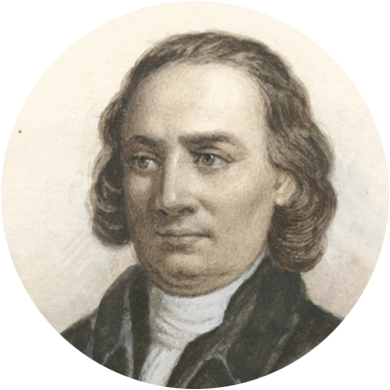

Biography
John Morton had little opportunity to know his father, for John Morton Sr. died the year his namesake was born. His mother remarried an Englishman, John Sketchley, who willingly took on the duty of educating his stepson, teaching him all the skills he needed to become a surveyor, including reading and math. John showed his appreciation later in life by naming one of his own sons Sketchley.
Morton earned the respect of his neighbors by overseeing their books and maps and surveying their property. By 1757, however, he had decided to take up the law as his profession. Although there is no record of him being admitted to the bar, at the age of 31, he became a Justice of the Peace; by 1767, he was the High Sheriff of Chester County. On the eve of the revolution, he was Associate Judge of the Supreme Court of Pennsylvania and presiding officer of the province’s Orphan’s Court.
At the same time that he began his rise within the legal and judicial realms, John Morton entered the political arena as a member of the Pennsylvania Provincial Assembly. From the start, he was a supporter of the growing protests against Britain’s new policies regarding the regulation of American trade and the imposition of new taxes. He served as a delegate to the Stamp Act Congress in 1765, and, in 1769, he was elected speaker of the Provincial Assembly. In 1774, he was sent to represent Pennsylvania in the First Continental Congress.
In 1775, he was again a delegate, this time to the Second Continental Congress. There, the Pennsylvania delegation split over the issue of independence, and it was left to Morton to cast the deciding vote. Although he, like many American political leaders, had earlier hoped for reconciliation with Britain and feared independence would set “Parents against Children, & Children against Parents,” by the time he was asked to cast his vote, he knew that a separation from the Mother Country was necessary. As he wrote to the merchant Thomas Powell in June of 1775, Britain had put “the Halter about our Necks, & we may as well die by the Sword as be hang’d like Rebels.” On July 2, 1776, Morton voted in favor of separation from Britain, and he signed the Declaration of Independence on August 2 with other members of the Congress.
Morton remained in Congress to chair the committee writing the Articles of Confederation, but he did not live to see the country’s first constitution adopted. He died, probably of tuberculosis, on June 18, 1777, at the age of 52, leaving behind his wife Ann and nine children.
Signer of the Declaration of Independence
George Clymer
1739–1813, Pennsylvania
Summary
George Clymer was a successful businessman from Philadelphia with no formal education. He signed the Declaration and also attended 1787 Constitutional Convention.
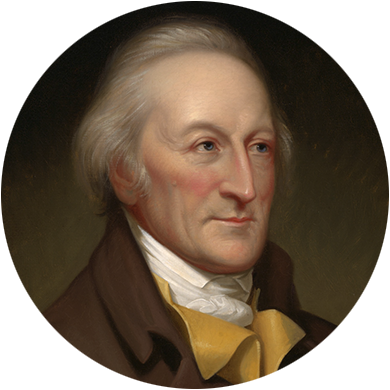

National Portrait Gallery, Smithsonian Institution; gift of W.B. Shubrick Clymer
Biography
George Clymer was born in Philadelphia, the son of a sea captain and a woman disowned by the Quakers for marrying outside of the faith. George was orphaned when he was still a child, and his father left him little more than a few personal items and an enslaved man who died soon afterward. But George was raised by his mother’s sister and her husband, William Coleman, and both Coleman and Clymer’s grandfather provided generously for George in their wills. Thus, George Clymer became a wealthy young man.
George had no formal education but was an avid reader. He began his career as an apprentice to Coleman, but by 1759, he had created a trading firm of his own. When his firm merged with a larger enterprise, he married the senior partner’s daughter, Elizabeth Meredith, in 1765. Soon afterward, Clymer entered local politics, becoming a City Councilman, and later a City Alderman. Britain’s novel taxing policies in the 1760s and its tightening control over colonial trade had provoked Clymer’s concern about colonial rights. This became evident in the same year he married, when he joined 400 fellow Philadelphia merchants in signing a non-importation agreement as a response to the Stamp Act. When the Townshend Acts appeared in 1767 and 1768, he would help organize a new boycott designed to force their repeal.
The Tea Act intensified his radicalism, and he was known to complain that Philadelphia and New York merchants were too cautious when compared to those of Boston. He was pleased when lines of communication between Boston radicals and sympathetic Philadelphia merchants finally developed after the 1773 Boston Tea Party. By the time fighting broke out at Lexington and Concord, he was firmly committed to independence. He threw himself into the campaign to break ties with the Mother Country and served on a number of local revolutionary committees in the years before the Declaration of Independence was signed.
Clymer was not a member of Pennsylvania’s delegation to the Continental Congress when independence was voted on July 2nd. He was, however, part of the Pennsylvania constitutional convention that met soon afterward, and on August 2, he and the other members of that convention immediately signed the engrossed copy of the Declaration that awaited Pennsylvanian approval.
Clymer served in the Continental and Confederation Congresses in 1776 and 1777 and again in 1780 through 1782. He spoke little in congressional sessions, but was an effective member of several committees. Between his congressional terms, he worked on important projects, including the drafting of the new Pennsylvanian state constitution. The British were aware of Clymer’s active role in the struggle for independence, and when their troops marched into Philadelphia, they made a detour to vandalize Clymer’s Chester County home. His wife and children found refuge by hiding in the nearby woods.
Between 1778 and l780, Clymer took time off from political office to see to his personal affairs. He had inherited large tracts of land from his relatives, but inflation was threatening to destroy his mercantile business. Yet, even in these years out of office, he took pains to support the revolutionary cause. He led a group of Philadelphia merchants in chartering a private bank that raised funds to purchase much needed supplies for the military.
Although after the war he moved his family to a new home near Princeton and declared himself officially retired from political officeholding, he did not remain retired long. By 1784, he had moved back to Philadelphia where he served in the state legislature. He then participated in the Constitutional Convention that met in 1787, rarely missing a meeting. As usual, he said little on the Convention floor but proved himself a workhorse on many of its committees. In 1789, he was elected to serve a single term in the House of Representatives of the new federal government.
Finally retired by 1796, he devoted time to community organizations like the Philadelphia Society for Promoting Agriculture and the Pennsylvania Academy of Fine Arts. He died in 1813, at the age of 73 after a brief illness. He was one of only six men who signed the Declaration and the Constitution. He was remembered by William Pierce, who offered sketches of many of the founders, as “a respectable man, and much esteemed.”
Signer of the Declaration of Independence
James Smith
1719–1806, Pennsylvania
Summary
James Smith was a lawyer who signed the Declaration and then rode to with a printed copy of it to read publicly in York’s town square on July 6, 1776.
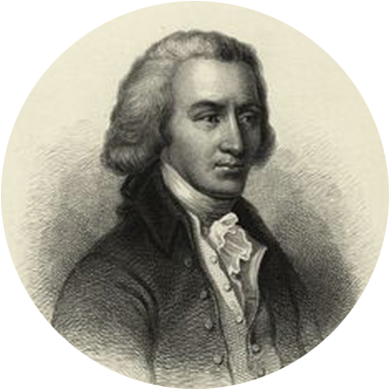

Biography
James Smith was born in Ireland but emigrated with his family when he was ten or twelve years old. His father became a successful farmer, and this made it possible for James to receive a classical education from a local minister. He went on to attend the Philadelphia Academy (later to become the University of Pennsylvania) and to study law with his older brother George. He was admitted to the bar in 1745 and set up his own practice near Shippensburg.
Because this was a frontier area, Smith spent much of his time as a surveyor rather than practicing law. By 1750, he had moved east to York. There, he still had trouble building his practice, although he was the only lawyer in town until 1769. In an attempt to diversify his source of income, he began an iron factory, but the two partners he chose in this venture proved dishonest. One, he noted, “was a knave” and the other “a fool.” As a result, Smith lost a great deal of money.
By the 1770s, Smith had grown increasingly concerned about the colonial relationship with Britain. In 1774, he was elected to the provincial assembly, and, there, he first revealed his concern about what he considered Britain’s dangerous overreach of authority in the colonies. He expressed this view in a paper entitled “Essay on the Constitutional Power of Great Britain over the Colonies in America.” In this paper, he recommended a boycott of British goods and the creation of a General Congress of the Colonies in order to defend colonial rights. Both these steps were ultimately adopted.
In January 1775, Smith attended Pennsylvania’s state convention, where he supported the convention’s open opposition to Britain. “If the British administration should determine by force to effect a submission to the late arbitrary acts of the British parliament,” the convention declared, “we hold it our indispensable duty to resist such force, and at every hazard to defend the rights and liberties of America.”
Smith was elected to serve in the Second Continental Congress. Although he did not arrive in Philadelphia in time to participate in the debates over Richard Henry Lee’s resolution or the draft of the Declaration of Independence, Smith did sign the Declaration. And on the evening of July 6, 1776, he and two fellow supporters of independence rode to York with a printed broadside copy of the Declaration and read it to the public in York’s town square.
Smith retired from Congress after two years. He left with a reputation among his congressional colleagues as a wit, a good conversationalist, and an eccentric. He was elected to serve once again in 1785 but declined, declaring himself too old. Instead, until his retirement in 1801, he practiced law. On July 11, 1806, James Smith died York. He was 86 years old.
Signer of the Declaration of Independence
George Taylor
1716–1781, Pennsylvania
Summary
George Taylor was sent to Philadelphia to replace delegates who had refused to sign the Declaration. Taylor signed the engrossed copy on August 2, 1776.
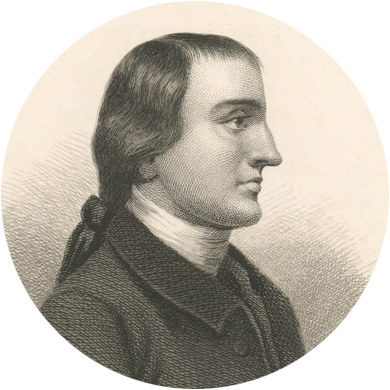

Biography
George Taylor is one of the rare examples of rags to riches in 18th century colonial history. He was born in Northern Ireland, the son of a minister. Little is known of his life before he emigrated to the colonies as a 20-year-old indentured servant in 1736. His passage to America was paid by an ironmaster at Coventry Forge near Philadelphia. In exchange, Taylor agreed to work off this debt over several years. But he rose from a simple laborer, shoveling coal for his master, to become a clerk in the furnace office. When his benefactor died in 1741, Taylor married his widow and took over management of the company. Under his leadership, the furnace company grew considerably more profitable.
Taylor’s success led to public recognition. He was appointed a captain of the militia group that Benjamin Franklin had organized to protect frontier residents from violence. In 1753, he and his wife moved to Durham where George had leased an iron works. There, he became active in public affairs and was given a two-year appointment as a Justice of the Peace in 1757, and again in 1761 and 1763.
George’s success led the Taylors to resettle in Easton, where once again he became active in civic affairs. In 1764, he entered the political sphere as a delegate to the provincial assembly.
In 1768, Ann Taylor died, and George returned to Durham in 1774. He expanded his business interests, leasing mines, quarries, forges, and blast furnaces in Pennsylvania and New Jersey. But the political situation was much on his mind.
In April of 1775, Americans and British troops exchanged fire at Lexington and Concord, and there was as much talk of independence as there was hope of reconciliation. Taylor took a stand short of calling for independence. As a member of the Pennsylvania Assembly in 1775, he helped draft the instructions to the province’s delegates to the Continental Congress that ordered them to “dissent from, and utterly reject any propositions, should such be made, that may cause or lead to a separation from our mother country, or a change of the form of this government.”
Yet by July 20th of that year, the Assembly had changed its position and so too had George Taylor; the delegates who voted against a break with Britain were recalled and in their place five men willing to approve independence were sent to Philadelphia. George Taylor was one of those men sent to Philadelphia. He, along with George Ross, George Clymer, Dr. Benjamin Rush, and James Smith, signed the engrossed copy of Jefferson’s document when it was ready on August 2, 1776. Taylor was one of three men born in Ireland whose signatures appear on the Declaration of Independence.
In January of 1777, Taylor was chosen by Congress to preside over an Indian Treaty Conference in Easton. In March of that year, he was elected to the new Pennsylvania Supreme Executive Council, but illness prompted his retirement from office. He would not return to political life again. He died in February 1781.
When he died, it was clear that Taylor’s wealth had been greatly diminished by his support for the Revolution. He was never adequately paid for the grapeshots, cannon balls, and cannons produced at his furnace that he willingly provided to the Continental Army. In the late 1770s, he almost lost the Durham Iron Works he had leased until 1779, since the owner of the property, Joseph Galloway, had been declared a traitor for his loyalty to the King. Only the intervention of the Supreme Executive Council saved Taylor from being evicted.
In his will, Taylor left 500 pounds to his eldest grandson, and 500 pounds to Naomi Smith, his housekeeper. The rest of his estate was to be divided equally between his grandchildren and the five children he had fathered with Naomi Smith. Yet none of these bequests were ever fulfilled because his estate was judged insolvent. An inventory of his possessions revealed how drastically he had been reduced by his patriotism. His property included two slaves – one of whom was sold for 280 bushels of wheat, the other, a crippled man, sold for far less, one horse, three cows, and a 24-hour, eight-day clock with a walnut case.
Signer of the Declaration of Independence
James Wilson
1742–1798, Pennsylvania
Summary
James Wilson was born in Scotland, and he embraced the Scottish Enlightenment. Wilson played a significant role at the 1787 Constitutional convention, and he also proposed the Electoral College.
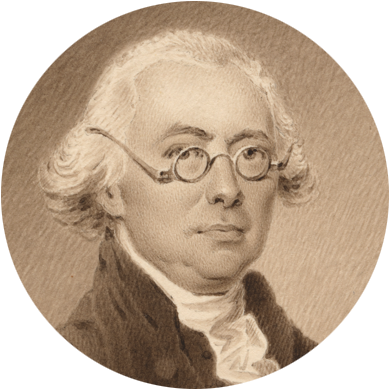

National Portrait Gallery, Smithsonian Institution
Biography
James Wilson was born in Scotland, the son of farmer William Wilson and Alison Landall Wilson. He studied at the universities of St Andrews, Glasgow, and Edinburgh but did not receive a degree from any of the three. At the universities, he was exposed to, and embraced, Scottish Enlightenment ideas, which he carried with him when he emigrated to America in 1765. He arrived in Philadelphia with letters of introduction that allowed him to teach at the College of Philadelphia. The College granted him an honorary Master of Arts degree in 1766, and years later, in appreciation for his political and legal achievements, they awarded Wilson an honorary legal degree.
While he taught, he also studied law under John Dickinson. He was admitted to the bar only two years after arriving in Pennsylvania and established a practice in Reading, Pennsylvania. He was quickly successful, and by 1771, he felt he was established enough to marry. His wife Rachel Bird Wilson died in 1786, and in 1793 he married Hannah Gray.
Wilson had arrived in the colonies just as a changing British colonial policy had frayed the ties that bound mother country and colonies together. By 1774, colonists had established committees of correspondence to spread news throughout the colonies and created a Continental Congress to ensure collective action against what many Americans considered Parliament’s unfair taxation and regulation. In 1774, Wilson published a pamphlet he had drafted in 1768. This pamphlet, “Considerations on the Nature and Extent of the Legislative Authority of the British Parliament,” won him widespread recognition as it insisted that Parliament lacked authority to legislate for the colonies. By this time, Wilson was certain that war was inevitable, and in preparation he became an officer in the Pennsylvania state militia.
In 1775, Wilson was a Pennsylvania delegate to the Second Continental Congress. Although he was a firm supporter of independence, he was also a firm believer that his constituents should have a voice in his vote. Thus when he was elected again in 1776, he delayed committing himself until he was certain they were ready to declare independence. Assured, he signed the Declaration of Independence. He remained in Congress through 1777, and made a major diplomatic contribution by establishing how Congress would relate to the Native American border tribes.
Wilson did not approve of the prosecution or persecution of colonists who remained loyal to the Crown. In 1779, he opposed Pennsylvania’s attempt to seize the property of Loyalists and exile them from the state. His defense of these Loyalists in court angered many, and a mob marched on his house that October. Thirty-five of Wilson’s colleagues barricaded themselves with him in his home and fought off the attackers. Six men died and over 17 were wounded. Only the arrival of Philadelphia cavalry troops and Continental Light Dragoons would rescue Wilson and his defenders.
Wilson’s reputation as one of the most outstanding legal minds of his day grew and was enhanced by his role at the 1787 convention that drafted the Constitution. During the Convention, he was one of three central speakers—along with James Madison and Gouverneur Morris—who led the key debates on the structure of the proposed government. Like Madison and Morris, Wilson advocated a strong national government, but he stood out for his advocacy of popular control of that government. He wanted representation in both houses of the Congress to be based on population and direct election by the people. Although he owned a household slave, Wilson quietly argued against the continuation of slavery. He was constrained from pressing the issue by the fear that the southern delegates would bolt the convention. But he did press for what was termed the Three-Fifths Compromise that would count 3/5 of a state’s enslaved population in determining that state’s number of representatives in the lower house. As the Convention continued, he came to regret this compromise, but it remained.
Wilson’s role in shaping the executive branch was critical. He was the first and most ardent supporter of a unitary executive rather than a triumvirate representing the three regions of the new country. It was also Wilson who begrudgingly came up with the Electoral College as the means to elect the President. He had come up with this workable, if awkward, solution early in the Convention, but it was not greeted warmly. Over the months, no solution met with the Convention’s approval. As the Convention drew closer to its end, Wilson and a committee aptly named “the Committee of Unfinished Parts” returned to the question: how should the president be chosen? Wilson’s electoral college, with some tweaking, now seemed the only viable answer.
Wilson threw himself into the campaign for ratification of the Constitution when the Convention ended. On October 6, 1787, he delivered a speech in the courtyard behind Independence Hall, arguing cogently for the virtues of the Constitution. His speech was widely reproduced in newspapers, and George Washington distributed it in an effort to win over Virginians to the ratification cause. In the speech, Wilson explained that there were three possible forms of government: monarchy, aristocracy, and a republic. The constitution, he said, ensured that the people would retain supreme power by creating a republic. “By adopting this system,” he declared, “we shall probably lay a foundation for erecting temples of liberty in every part of the earth.”
Wilson hoped that he would be chosen to be the first Chief Justice of the United States once the Constitution was ratified. But Washington chose New Yorker John Jay instead. The new President did, however, nominate James Wilson to be an associate justice, and the Senate confirmed his appointment. He was sworn in on October 5, 1789. Like the other members of the high court, Wilson spent much of his time circuit riding, traveling the country to oversee cases being tried in lower courts. Wilson sat on the Supreme Court for several early precedent-setting cases, among them Chisholm v. Georgia [1793], which gave federal courts the power to hear disputes between private citizens and states, and Hylton v. United States, which clarified the power of Congress to levy taxes. Wilson served on the Supreme Court until his death in August 1798.
Throughout the war years, Wilson had expanded his business interests, especially his speculation in western lands. He had served as a member or an officer in a number of land companies that purchased hundreds of thousands of acres. But an economic panic in 1796 reversed his fortunes and left him deeply in debt.
He was briefly imprisoned in a debtors' prison in New Jersey. After his son paid the debt and Wilson was freed, he fled to North Carolina to escape other creditors. In 1798 he came down with malaria and then died of a stroke while visiting a friend in Edenton, North Carolina. He was only 55 years old.
Signer of the Declaration of Independence
George Ross
1730–1779, Pennsylvania
Summary
George Ross served for a dozen years as Pennsylvania’s Crown Prosecutor. However, Ross embraced the notion of independence and did not hesitate to sign the Declaration.
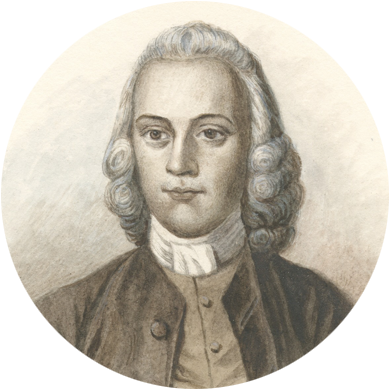

Biography
George Ross was born in New Castle, Delaware. His father was a minister, educated at the University of Edinburgh, and George and his many siblings all received a sound classical education under the guidance of their father. At the age of 18, George chose the law as his profession, and he moved to Philadelphia to apprentice under his older brother John. Two years later, he was admitted to the Pennsylvania bar and soon established his own successful practice in the town of Lancaster.
In the years before the crisis between Crown and colonies came to a head, George Ross served for a dozen years as the colony’s Crown Prosecutor [Attorney General] and was a loyal supporter of the King and Parliament. But in 1768, he was elected to Pennsylvania’s provincial legislature, and, there, he came to better understand the growing colonial dissatisfaction with British rule. He was not yet ready to advocate breaking the bonds of loyalty to the Mother Country, but this changed in 1774 when Pennsylvania named him one of its delegates to the First Continental Congress. He soon embraced the notion of independence, and, in 1776, when he was again elected as one of his colony’s delegates to Congress, he did not hesitate to sign the Declaration of Independence. Knowing that war was inevitable, Ross also accepted a commission as a Colonel in the Continental Army.
Ross was sent to the Congress once more in 1777 but had to resign his seat due to poor health. In March of 1779, he was appointed to a judgeship in his state’s Court of Admiralty, but was only in office for three months before he died, probably from a severe case of gout, in July of that year. Thus, he did not live to witness the American victory in the Revolutionary War and the birth of the new nation.
George Ross was a patriot for the cause of independence, but ironically, he is far less well known than his nephew John’s wife, Betsy Griscom Ross, who has gone down in history as the seamstress who sewed the first American flag.
Signer of the Declaration of Independence
Caesar Rodney
1728–1784, Delaware
Summary
Caesar Rodney road overnight on his horse from Delaware to vote for independence in Philadelphia. During the war, Rodney served as Delaware’s governor.
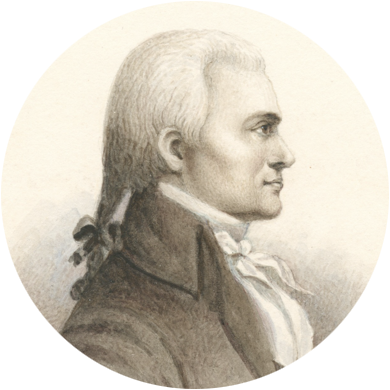

Biography
Caesar Rodney was born on his family’s plantation, “Byfield,” the eldest son of Caesar and Elizabeth Crawford Rodney. The Rodneys were members of the local gentry, whose 849-acre farm was worked by enslaved labor. His parents provided Caesar with early education at The Latin School, run by the College of Philadelphia [now the University of Pennsylvania], but his father’s death in 1746, when his namesake was 17, ended his formal studies. In 1763, his mother died and the 35-year-old Rodney inherited Byfield.
Even before he became the owner of Byfield, Caesar Rodney had taken his first steps into public service. In 1755, he was elected sheriff of Kent County, tasked with supervising elections and choosing the grand jurors who set the county’s tax rates. This gave him considerable influence in his community and, not surprisingly, he garnered new political positions when his term as sheriff ended. During the French and Indian War, he held a captaincy in the militia, and despite his lack of legal training, he was appointed in 1769 as a judge of the Supreme Court of the Lower Counties.
In the political contest between Delaware’s Court and Country Parties, Rodney’s county of Kent largely supported the majority Court Party that favored reconciliation with Britain despite the imposition of new taxes by Parliament. But Rodney sided with the Country Party’s strong opposition to Britain and supported its advocacy of independence. He aligned himself with the Country Party’s leader Thomas McKean and together these two men attended the Stamp Act Congress in 1765. Rodney was a member of the Delaware Assembly and, on several occasions, served as its speaker. The gavel was in his hands on June 15, 1776, when the Country Party persuaded the Assembly to sever all ties with Parliament and King George III.
Rodney and McKean, along with their political enemy, George Read, were chosen as delegates to the Continental Congress from 1774 through 1776. When the debate over independence began, Rodney was not present; he was in Dover, dealing with his duties as a Brigadier General in Delaware’s militia. This meant Read and McKean were representing their state when Lee’s resolution was on the table, and the two men were deadlocked on the vote. McKean sent word to Rodney that his vote on independence was urgently needed, and, late in the evening on July 1st, Rodney set out for Philadelphia. He gave this account of his midnight ride to his brother Thomas:” I arrived in Congress (tho detained by thunder and rain) time enough to give my voice in the matter of independence….We have now got through the whole of the declaration and ordered it to be printed so that you will soon have the pleasure of seeing it.”
John Adams, who could be counted on for commentary on most of the political figures of his day, described Caesar Rodney as “the oddest looking man in the world; he is tall, thin and slender as a reed, pale; his face is not bigger than a large apple, yet there is sense and fire, spirit, wit and humor in this countenance.”
Adams might not have known that Rodney suffered from severe asthma or that his odd looks were the result of an ongoing battle with facial cancer. In 1768, a doctor had operated on Rodney’s nose and left him disfigured. As he reported to his brother Thomas, the procedure had “left a hole, I believe, quite to the bone, and extends for length from the corner of my eye above half way down my nose.” This explained why, it is said, Rodney rarely appeared in public without a scarf on his face.
The cancer may have contributed to Rodney’s deepest heartbreak: his failure to win the affection of Mary Vining. Rejected by his “Molly,” Rodney remained a bachelor all his life. But if his personal life was unsatisfying, his political career flourished. During the war, he served as Delaware’s governor, as well as a major general in the state’s militia. In these capacities, he protected Delaware from the British army and controlled Loyalist activity. In 1777, Rodney was returned to the Congress, and then, in 1778, he was elected President of Delaware. In 1781, soon after Cornwallis surrendered at Yorktown, he resigned his office because of ill health.
When Delaware called on Caesar Rodney again in 1782 to serve in its General Assembly, he was too ill to comply. In 1783, the state’s Legislative Council showed their respect for Rodney by electing him their Speaker. But his cancer caused his health to rapidly decline, and he died before the Council’s session ended. He was 55 years old.
Signer of the Declaration of Independence
George Read
1733–1798, Delaware
Summary
George Read at first preferred reconciliation to revolution, but he became a firm advocate of the Declaration after Lee’s resolution was passed.
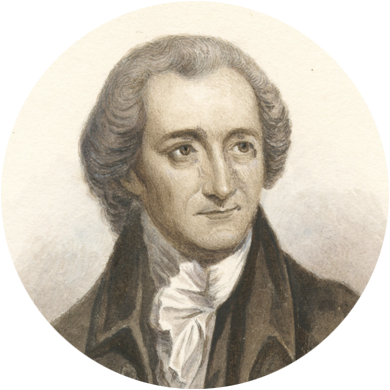

Biography
George Read was born on his family’s farm in Maryland in 1733, the son of John and Mary Howell Read. His father was born in Dublin, the son of a wealthy Englishman, but he had emigrated to America when his wife died. He purchased a large estate in Cecil County, Maryland, and he and several associates founded the city of Charlestown on Chesapeake Bay. When his son George was an infant, John moved his family to Delaware. As the son of a wealthy man, George Read received a good education, studying first at an academy in New London, Pennsylvania, and then reading law with a well-known attorney. He was admitted to the Pennsylvania bar in 1753 at the age of twenty.
Read returned to Delaware to set up his law practice. Ten years later, in 1763, he married Gertrude Ross Till, a widow who was the sister of another man who would eventually sign the Declaration of Independence, Pennsylvanian George Ross. In the same year that he married, Read took his first step into the public sphere, becoming the Crown Attorney General for three Delaware Counties. As a Crown Attorney, he took it upon himself to warn the British government that it was dangerous to attempt to tax the colonists without giving them direct representation in Parliament. His contacts in Britain ignored his warning that taxation would lead to rebellion.
In 1765, Read was chosen to serve in the colonial assembly. His reputation now well established, in 1775, he was elected a delegate to the First Continental Congress. Read came to the Congress as a member of Delaware’s “court party,”
a political faction made up primarily of wealthy Anglicans who preferred reconciliation to revolution. This put him at odds with Delaware’s two other delegates to the Congress, Caesar Rodney and Thomas McKean, members of the opposing “country party,” whose pro-independence leaders were drawn from the Scots-Irish residents of Delaware. It is not surprising, therefore, that George Read voted against Richard Henry Lee’s resolution, arguing that it was too “hasty.” Yet once the majority approved the resolution, Read signed the Declaration of Independence.
Read then became a firm advocate of the revolution, going so far as to introduce the following resolution to the Congress: “that anyone who shall willfully break this agreement [i.e. the Declaration] shall have his name published in the Public Newspaper as a betrayer of the civil rights of America and forever be deemed infamous and a traitor.”
Meanwhile, Delaware’s General Assembly had anticipated the break with Britain, and on June 15, 1776, it had declared a separation from the British government. Once the Continental Congress approved independence, the assembly called a convention to draft a state constitution. Read was elected to this convention and was made its president. Despite any competition that had existed between the court and country parties, Read now helped pass Thomas McKean’s draft of the Delaware constitution.
In 1777, the British captured Delaware’s governor and Read took over the executive office. He led his state until March of 1778, when his former rival, Caesar Rodney, was elected to replace him. Read then served in the legislative council until 1779, when illness forced him to resign from all official duties. When he recovered his health, he returned to the Assembly until 1782 and to the Legislative Council that same year. At the end of 1782, he was elected judge of the Court of Appeals in Cases of Capture. Ultimately, he became the Chief Justice of the State, a position he held until his death in 1798.
Read was called back to political service in 1786 to be a delegate to the Annapolis Convention, a precursor of the Constitutional Convention called the next year in Philadelphia. Read was chosen to attend that Convention, as well. One fellow delegate to the Constitutional Convention observed that Read was an able interpreter of the law but “his powers of oratory are fatiguing and tiresome…his voice is feeble and his articulation so bad that few can have patience to attend him.”
At the Convention, Read argued against any effort to amend the existing government, the Articles of Confederation, and urged instead the creation of a strong central government. At one point he suggested abolishing the state governments altogether. When this radical suggestion went nowhere, he worked to protect the small states against any infringement by their larger neighbors. He feared that large states like Pennsylvania and Virginia would swallow up smaller ones – and tiny Delaware would become nothing but a cipher in the new union. To prevent this, he became a vocal advocate of equal representation of the states in the Senate. He also favored giving Congress the power to veto state laws, making the federal legislature immune to popular whims by giving senators long terms in office, and granting the U.S. President broad appointive powers. At one point, he threatened to lead the Delaware delegation out of the Convention if the rights of the small states were not specifically ensured in the new Constitution.
Once he was certain that protections had been granted to the small states, George Read became an ardent defender of the Constitution. He led the ratification movement in Delaware and was responsible, in large part, for his state becoming the first to ratify – and to do so unanimously.
Read was elected to serve in the first U.S. Senate in 1789. He was reelected in 1791, but he resigned before that term was up. As a Federalist, he supported Hamilton’s plans for the assumption of state debts, the establishment of a national bank, and the imposition of excise taxes to help pay off the national debt. He resigned from the federal government when he was appointed chief justice of the Delaware Supreme Court.
George Read died from heart problems on September 21, 1798. His colleagues remembered him as a dignified man, courteous, and a person of sound judgment.
Signer of the Declaration of Independence
Thomas McKean
1734–1817, Delaware
Summary
Thomas McKean was a staunch supporter of the Declaration, and he played a crucial role in Delaware’s decision to support independence.
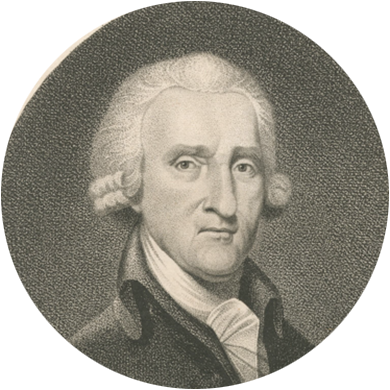

Biography
Thomas McKean was born in Chester County, Pennsylvania, the son of Letitia Finney and William McKean. His father was an innkeeper and a farmer, but after the death of his wife Letitia in 1742, William became an alcoholic and could not take care of his family. Eight-year-old Thomas was sent to board at the home of the founder of the New London Academy, Delaware’s first public school. George Read and John Dickinson would also attend this “free school,” and Read and McKean became good friends. When his education ended, in 1750 McKean moved in with his uncle, an affluent lawyer, and began to study law with Finney’s son. He was admitted to the Delaware bar in 1754 at the age of twenty. He then went abroad to study at the Middle Temple in London. On his return to America, he practiced law not only in Delaware but in Pennsylvania and New Jersey.
McKean was an ambitious man and by the age of 18 he had entered the political world of Delaware, becoming the recorder for the probate of wills in New Castle County. At 22 he was a deputy attorney general of Sussex County, and by 1765, a justice of the peace. He was elected to the Delaware legislature in 1762, and served until 1779. He was a member of the colony’s “country party,” the minority party made up primarily of Scotch-Irish residents. Unlike the dominant “court party,” McKean’s group were early supporters of resistance to Britain rather than reconciliation. His political affiliation set him in opposition to his old friend George Read and made him an ally of Caesar Rodney.
McKean attended the Stamp Act Congress in 1765. Here his radicalism set him at odds with the more cautious members who did not want to sign the Congress’s Memorial of Rights and Grievances. He challenged Timothy Ruggles, the president of the Congress so vigorously that his opponent challenged him to a duel. Fortunately, Ruggles left the next morning and no duel took place.
McKean helped to organize Delaware’s resistance to the Townshend Acts only a few years later. He would lead Delaware’s movement to declare independence from Britain a few weeks before the Continental Congress issued its Declaration. Although by 1776 McKean was living in Philadelphia, he was elected to serve as a Delaware delegate to the Second Continental Congress. Here, the always observant John Adams described him as “one of the three men in the Continental Congress who appeared to me to see more clearly to the end of the business than any others in the body.”
Although McKean’s two Delaware colleagues signed the Declaration of Independence, on August 2, McKean seemed to have been absent when this signing took place. In 1796 he challenged the idea that he had not signed when the other delegates did. “[T]he fact is,” he insisted, “that I was a member of congress for the state of Delaware, was personally present in congress, and voted in favor of independence on the 4th of July 1776, and signed the declaration after it had been engrossed on parchment, where my name, in my own hand writing, still appears.” Despite this, most historians believe that he, along with five other delegates, did not sign until months—or, in his case, years— following the August date.
McKean had likely left the Congress before the August signing to join the Pennsylvania militia as a colonel. He was with Washington’s army when it failed to successfully defend New York from a British takeover.
Meanwhile, the conservatives in the Delaware General Assembly refused to reelect McKean or Rodney to the Continental Congress in October of 1776. But by 1777, McKean was once again a delegate and he helped draft the Articles of Confederation. He served in Congress until 1781.
By 1777 McKean was chief justice of Pennsylvania, a position he held until 1799. When the US Constitution came before the voters for ratification, McKean was a member of Pennsylvania’s ratifying convention, voting for the more-empowered federal government that replaced the Confederation. In a speech to the state convention, he spoke passionately in the constitution’s favor. “The objection of this constitution,” he said, “having been answered, and all done away, it remains pure and unhurt; and this alone is a forcible argument of its goodness” adding that “The law, sir, has been my study from my infancy, and my only profession. I have gone through the circle of offices, in the legislative, executive, and judicial departments of the government; and from all my study, observation and experience, I must declare that from a full examination and due consideration of this system, it appears to the best the world has yet seen.”
Although his stance marked him as a supporter of the Federalist party, by 1796 his opposition to the party’s domestic policies and its preference for alliance with Britain rather than France led him to join the Jeffersonian Republicans. In 1799 he was elected as a Jeffersonian to the governorship of Pennsylvania and served three terms in office. While governor, he ousted Federalists from office, but by his third term, he had fallen out with local Jeffersonians and began to appoint Federalists to positions in his government. This led to his impeachment in 1807, but his allies prevented a trial from occurring.
McKean retired from politics in 1808 and spent his retirement years in Philadelphia, writing and relishing the wealth he had acquired through real estate and other investments. He died in 1817 at the age of 83. With his death, only five other signers of the Declaration remained alive.
Signer of the Declaration of Independence
William Floyd
1734–1821, New York
Summary
William Floyd of Long Island attended the First and Second Continental Congresses. The British confiscated his farm for seven years after Floyd voted for independence.
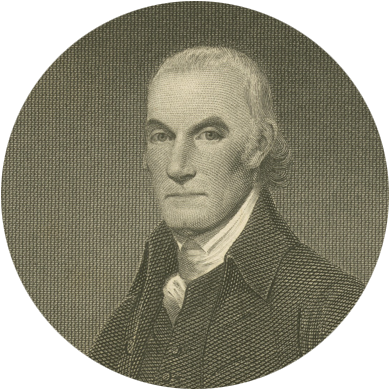

Biography
William Floyd was born in Brookhaven, Long Island into a farming family with Welsh and English roots. He was 21 when his father died, leaving his son the family farm. Although William appeared to have no serious education, he proved an excellent farmer and accounts manager. He produced grains and vegetables, and the farm was well stocked with cattle and fruit trees. His land fronted on the Atlantic Ocean, which gave him ready access to fish, oysters and other seafoods and allowed him to ship what he produced directly from his own dock.
The prosperity of his farm provided Floyd with an entry into local politics. He served three elected terms as a trustee of Brookhaven and was an officer in the local militia. His politics were influenced by his Connecticut friends and relatives and, by 1774, he appears to have been firmly convinced that Britain’s policies posed a threat to the liberties of its colonists. He was elected to serve in both the First and Second Continental Congress and though he rarely spoke during congressional debates he attended reliably. South Carolina delegate Edmund Rutledge described him as one of the “good men who never quit their chairs” to speak but could be counted on to be present to vote on all the major issues. Like his fellow New York delegates, Floyd was constrained by his state’s reluctance to instruct their delegation to vote yes on Richard Henry Lee’s resolution and on Jefferson’s Declaration of Independence. As soon as they were given the necessary approval, Floyd joined his colleagues in signing the Declaration.
A few weeks after the Declaration was signed, the American army was defeated in the battle of Long Island [that is, the battle of Brooklyn] and Floyd’s house and farm were confiscated by the enemy. Floyd’s wife had time to bury the family silver before fleeing to the safety of friends in Connecticut. Her husband took a leave from Congress in October of 1776, explaining that he was “going to try to get some of my effects from the island if it is possible and shall be absent from Congress a few days.” On October 17, 1776, the Governor of Connecticut sent an armed party across the Long Island Sound to retrieve some of Floyd’s possessions. Nevertheless, his farm remained in British hands for seven years.
Floyd continued to serve in Congress until the end of 1776, and then became a member of the New York State Senate from 1777 until 1788. He took a seat in the 1st Congress under the new US constitution in 1789. He was a presidential elector for New York in 1792, voting for George Washington for a second term in office.
In 1794, William Floyd conveyed his Long Island property to his son and moved to a large tract of land in the frontier area of Oneida County, New York. Here , in the town of Westerville, he built a home that was a close copy of his confiscated estate.
Floyd ran unsuccessfully for Lt. Governor of New York in 1795 as a Democratic-Republican, losing to Federalist John Jay. As a state elector in 1800, he cast his vote for Thomas Jefferson and Aaron Burr and in 1804, for Jefferson and George Clinton. He died at the age of 86 on August 4, 1821, leaving behind an estate that included six slaves and two free black servants in residence.
Signer of the Declaration of Independence
Philip Livingston
1716–1778, New York
Summary
Philip Livingston was part of a large and politically influential family. He signed the Declaration, and then British forces took over his Brooklyn estate.
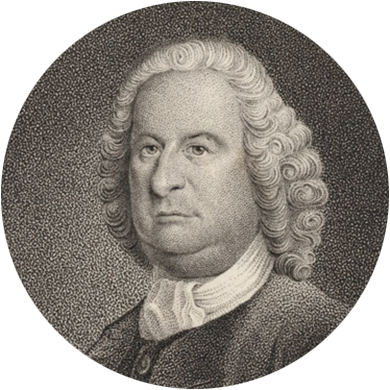

Biography
Philip Livingston was born in Albany, New York, the son of a Dutch mother, Catharine Van Brugh, and a father with Scottish roots. The Livingston family was large and politically-influential—including Philip’s cousin Robert R. Livingston, who served on the Committee of Five (but did not sign the Declaration), and Philip’s brother William, who became the first governor of New Jersey. Philip’s father and namesake owned a sprawling estate north of New York City and was known as the Lord of the Livingston Manor. Philip senior provided his son with the best education available in the colonies, sending him to Yale College in Connecticut. After his graduation, the younger Philip Livingston began an apprenticeship with his father, who was not only a farmer but a merchant. Philip’s ambition soon carried him to New York City, where he began a career in the import business. In his store, he sold a variety of imported goods, from black pepper to Bohea tea, to Jamaica rum and cheese, iron pots, hardware, glass, marble chimney pieces and furs. Among his shipping ventures was the transportation of hundreds of kidnapped Africans to New York as enslaved laborers.
Livingston established a reputation as a central figure in New York philanthropic circles. He played a critical role in the founding of King’s College [now Columbia University] and endowed a Professorship of Divinity at his alma mater, Yale. He also helped organize the New York City Public Library. At the same time, he entered the political sphere, serving first as an alderman for the East Ward of New York City and a delegate to the ill- fated Albany Congress in 1754. Beginning in 1759 he served in the colony’s provincial assembly and by 1768 he had become its Speaker.
Throughout the 1760s, as Britain redefined the relationship between the colonies and the Mother Country, Livingston hoped that a peaceful compromise between the two sides could be hammered out. In the meantime, he would participate in formal protest and in building a communications network among the colonies. But by 1774, he had given up hope that reconciliation was possible. In that year he agreed to represent New York at the Continental Congress. When Jefferson’s Declaration of Independence was approved, Philip Livingston stepped forward to sign it.
In the summer of 1776, the war with Britain came to New York City. General Washington’s army could not defend against the overwhelming military and naval force pitted against them and by the end of August the British occupation had begun. Britain would hold the city until the end of the Revolution in 1783. During this long occupation, Livingston’s Manhattan residence was used as a soldiers barrack and his Brooklyn estate was turned into a Royal Navy hospital. Philip and his family fled to their home in Kingston but the war followed them there. In October of 1777 the British burned this upstate city to the ground as punishment for allowing the constitution of the state of New York to be written and adopted there.
Philip Livingston was a senator at the first meeting of the new legislature created by this state constitution. At the same time, despite increasingly poor health, he continued to serve in the Continental Congress. By June of 1778, he was dead, a victim of the retention of fluid caused by heart failure or lung problems that the 18th century called “dropsy.”
Over the course of his life, Livingston had a reputation for being “somewhat irritable,” and a man who reserved his affection and tenderness for his family and closest friends. As one colleague described him, “There was a dignity, with a mixture of austerity, in his deportment, which rendered it difficult for strangers to approach him. He was silent and reserved, and seldom indulged with much freedom in conversation.” Small wonder that the loquacious and often argumentative John Adams did not like Livingston. Although Adams conceded that Livingston was a sensible man and a gentleman, “there was no holding any conversation with him. He blusters away.”
Signer of the Declaration of Independence
Francis Lewis
1713–1802, New York
Summary
Francis Lewis was one of the most committed political radicals in New York City. Lewis signed the Declaration of Independence and the Articles of Confederation.
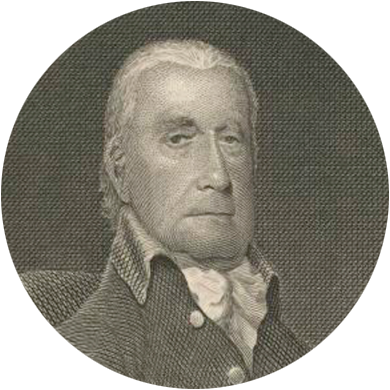

Biography
Francis Lewis was born in Llandaff, Wales. He was orphaned when he was about five years old and was raised by his aunt, a woman of comfortable means. She saw to it that he was educated in London at the notable Westminster School. As a young man he worked in a mercantile house and decided to make a life as a merchant. At 21, he came into some land as his inheritance from his father. He promptly sold this property in order to finance the purchase of goods to sell in the colonies. He arrived in New York in 1734 or 1735, sold some of his goods there, and headed to Philadelphia to sell the rest. He would soon travel to St. Petersburg, Scotland, and Africa to sell or acquire inventory, but he decided to make New York his home.
During the French and Indian War of the 1750s and early 1760s, Lewis supplied uniforms to the British. He was completing a sale at Fort Oswego in August 1756 when French forces attacked. The fort surrendered and Lewis found himself a prisoner of France’s Indian allies. Rather than killing Lewis, the tribal leaders decided to reunite him with his family. The French, however, had other ideas; they took him to France where he remained a prisoner until Britain’s victory in 1763. The British government granted him 5,000 acres of land in New York as compensation for the loss of seven years of his life.
Britain’s generosity did not secure Lewis’s loyalty to the Mother Country. During the postwar years, he became increasingly concerned about the direction Parliament was taking in its policies toward the colonies. He earned a reputation as one of the most committed political radicals in New York City, attending the Stamp Act Congress in 1765, and helping to organize the city’s protest organization, the Sons of Liberty. By 1774, in the wake of the closing of Boston’s port by Parliament, Lewis became a member of the Committee of Fifty, which now effectively ran New York City. He was a member of the provincial convention that set up the colony’s new government. When the Continental Congress was formed in the Fall of 1774, Francis Lewis was one of New York’s delegates.
In 1775, when the Second Continental Congress began its debate over independence, Lewis was present, representing New York along with Philip Livingston, Lewis Morris, and William Floyd. Their delegation was hamstrung by the absence of any clear instructions from New York’s government. Without knowing how they were expected to vote on Richard Henry Lee’s resolution on July 2nd, all they could do was abstain on both the Lee resolution and the adoption of the Declaration of Independence. Fortunately, within a few days after the other colonies had approved the Declaration by a vote of 12-0, the much-desired authorization arrived from their home government. On August 2, Francis Lewis was pleased to join his fellow delegates in Congress as they signed Jefferson’s Declaration of Independence.
Like his fellow signers, Lewis knew that he might be a target of the British army. He did not have long to wait. In the summer of 1776, after the British victory in the Battle of Brooklyn, the Lewis home in Queens was attacked. It was ransacked, with books and personal papers destroyed and furniture broken. Lewis’s wife Elizabeth was arrested and imprisoned. Although she was eventually part of a prisoner exchange, the experience ruined her health, and she died in 1779.
Francis Lewis continued to serve in Congress until 1779, the year of his wife’s death. As a delegate, he signed the Articles of Confederation. At the same time, he rebuilt his mercantile business with his son and namesake as his partner. His old age passed peacefully and was spent in the company of his books and his grandchildren. He died on December 31, 1802.
Signer of the Declaration of Independence
Lewis Morris
1726–1798, New York
Summary
Lewis Morris had to wait for approval from New York’s Provincial Assembly to sign the Declaration on July 9, 1776. The British invasion of New York left his estate in considerable ruin.
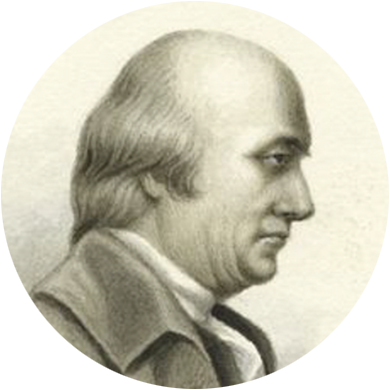

Biography
Lewis Morris, the eldest son of his namesake Lewis and his Dutch mother Katrintje Staats, was born in the elegant manor house of the sprawling New York estate known as Morrisania. He was tutored at home until, at sixteen, he went to Yale. After graduating, he returned to Morrisania to help his father manage the family’s large agricultural enterprise. When his father died in 1762, 36- year- old Lewis became the Third Lord of the Manor of Morrisania. By this time he was married to Mary Walton and seven of their ten children had been born.
Like most wealthy men, Morris was called upon for public service. In 1760, he was appointed a judge of the Court of Admiralty, and in 1769 he took his seat in New York’s Colonial Assembly. Over the course of the 1760s, as Britain revamped its colonial policies and began to impose novel taxes and regulations on the colonists, Morris became increasingly critical of the Mother Country. In 1774 he resigned his judgeship in the royal Admiralty Court and began an active role in the New York Convention which was essentially the government of New York. Although many of his wealthy neighbors remained loyal to the Crown in the 1770s, Morris had made his choice: he would support resistance to British policies. By May of 1775 he was on his way as a delegate to the Second Continental Congress. Here, he was quickly assigned to an important committee dealing with the problems of supplying arms and ammunition to the newly created Continental Army. The Congress then sent him to the western frontier to persuade Native Americans to either support the colonial cause or remain neutral if war with Great Britain began in earnest. By the time he returned to congress in March of 1776 the debate over independence had begun.
Morris was ready to see the colonies separate from Britain, but the New York Provincial Assembly was not. Loyalty to the King was strong among many influential New Yorkers and so political leaders in the assembly dragged their feet. It was not until July 9, 1776, that they agreed to support a declaration of independence. This allowed Morris and his fellow New York delegates to formally approve Jefferson’s Declaration of Independence on July 11th. Morris continued to serve in the Congress until 1777 when his younger brother, Gouverneur Morris, replaced him. He returned to New York to take a seat in the state Senate.
The war that followed was costly to Lewis Morris. The British invasion of New York left his beloved Morrisania in considerable ruin. The fields and their crops were destroyed, the manor house looted, fences burned, and livestock slaughtered or driven away. When peace came, Morris devoted much of his time to restoring his estate. He studied agricultural advances, learned the benefits of crop rotation, and introduced new cross-bred cattle and hogs to replace the livestock he had lost. Still, he made time for duties as a judge in Westchester County and served as a state senator from 1777 to 1781 and again from 1784 to 1788 . When the New York convention met in 1788 to ratify the Constitution, Morris was one of the delegates voting in favor of the new frame of government.
Morris died on January 22, 1798 at the age of 71.
Signer of the Declaration of Independence
Richard Stockton
1730–1781, New Jersey
Summary
Richard Stockton was one of the most eloquent attorneys in the colonies. He was the first person from New Jersey to sign the Declaration.
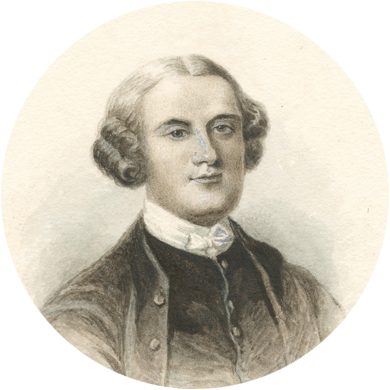

National Portrait Gallery, Smithsonian Institution; gift of Duncan Lee and his son, Gavin Dunbar Lee
Biography
Richard Stockton was born in Princeton, New Jersey, the eldest of eight children of wealthy landowner John Stockton and his wife Hannah. As a boy he received an excellent academy education and went on to study at the College of New Jersey [now Princeton University]. He then studied law with the leading attorney in his colony and was admitted to the bar when he was 24 years old. A few years later, he married Annis Boudinot, daughter of a successful merchant and sister to Elias Boudinot, who married Stockton’s younger sister.
Stockton was acknowledged as one of the most eloquent attorneys in the colonies. Yet he gave up his legal practice in 1766 to visit England, Scotland, and Ireland. Here he was greeted warmly by British aristocrats who appreciated the tall and handsome American visitor’s polished manners. While he was in England he was presented to King George III himself. When Stockton returned to New Jersey in 1767 he came with a personal coat of arms and a motto that read “Omnia Deo Pendent”—all depends on God.
Stockton’s choice of a motto was in keeping with his longstanding aversion to entering public life. “The public,” he said, “is generally unthankful, and I never will become a Servant of it, till I am convinced that by neglecting my own affairs I am doing more acceptable service to God and Man.”
Yet after returning to America in 1767, Stockton’s attitude toward public service and political engagement grew. By 1768 he had been given a seat in New Jersey’s Provincial Council. As the tensions increased between the Mother Country and the colonies, he believed that a compromise must be reached. In 1774, he sent Lord Dartmouth a plan for self-government in America that would make the colonies independent of Parliament, but loyal to the Crown. “If something of the kind was not done,” he warned Lord Dartmouth, “the result would be an obstinate, awful, and tremendous war.”
By 1776, Stockton knew that such a war was necessary. In June, he headed to the Continental Congress. He and his fellow delegate and good friend John Witherspoon arrived in Philadelphia on July 1. They had been delayed by a violent thunderstorm and thus had missed a critical speech John Adams had given favoring independence. Richard Stockton insisted that Adams repeat what he had said. After listening to Adams’ argument for declaring the colonies free, Stockton knew that independence was imminent and that he would choose his native land over the Mother Country.
In late August, Stockton was told that he was tied for the position of Governor of New Jersey. He was not interested in serving however. He also declined to serve as Chief Justice of the state. His place, he believed, was in Congress. He was reelected to the Second Continental Congress that November and was the first person from New Jersey to sign the Declaration of Independence.
That fall he was sent by Congress to inspect the northern army and to determine what supplies it needed. He wrote to Congressman Abraham Clark that his “heart melts with compassion” for the soldiers he met for “There is not a single shoe or stocking to be had in this part of the world.” If those supplies were available, he continued, “I would ride a hundred miles through the woods, and purchase them with my own money.”
Later that same year he was captured on a trip for Congress to Fort Ticonderoga. He was dragged from his bed, put in irons, and treated as a criminal. After five weeks in prison he was released on parole, his health ruined. He returned to his home to find it plundered of its books and furniture by the British army. His horses, cattle, hogs, sheep, and grain had been taken. Stockton’s son-in-law, Benjamin Rush, believed the damage was over five thousand pounds.
Stockton resigned from Congress. When his health seemed to return, he attempted to reopen his law practice. But two years after his parole from prison he developed cancer of the lip and this soon spread to his throat. He did not survive to see victory in the war for independence. He lived in pain until he died in 1781. Stockton’s wife, the poet Annis Boudinot Stockton, survived her husband by nearly twenty years.
In his eulogy Rev. Doctor Samuel Smith, the Vice President of the College of New Jersey, described Stockton as “a man who hath been among the foremost of his country, for power, for wisdom, and for fortune.” And, the New Jersey Gazette declared that Stockton had discharged the duties of his many important offices with “ability, dignity, and integrity.”
Signer of the Declaration of Independence
John Witherspoon
1723–1794, New Jersey
Summary
John Witherspoon was born in Scotland, and he was the only active clergyman and college president to sign the Declaration. He taught James Madison and Aaron Burr.
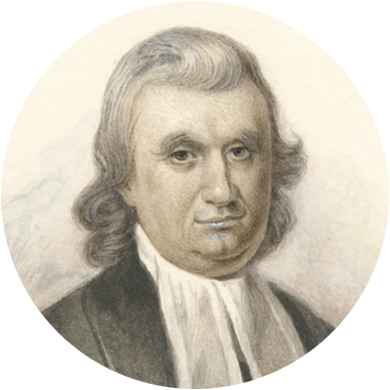

Biography
John Witherspoon was born in Yester, Scotland. He was a precocious young man who went to college at thirteen and earned his Masters of Arts at the University of Edinburgh soon after his 16th birthday. By the age of twenty, Witherspoon was a Doctor of Theology. He was a devoted Protestant and was briefly imprisoned for his opposition to the efforts in the 1740s to restore the Catholic Stuart line of kings to the throne of Britain. He served as a minister in several Presbyterian churches in Scotland, and his reputation led New Jersey political leaders to recruit him to be president of the College of New Jersey (now Princeton University) when he was forty-five. He accepted the position and emigrated to America in 1768.
Witherspoon found the college deeply in debt and suffering from an outdated curriculum. He set about to put it on solid financial grounds, to improve its library, and to reform its curriculum. His governing style was resolute but good-natured, and he was well-liked by both the faculty and the students. In addition to his administrative duties, Witherspoon taught courses in literature, history, divinity, and moral philosophy. Although the college was originally focused on producing clergymen, Witherspoon broadened its purpose to include potential political and cultural leaders. Among his students were a host of men who would play important roles in American political and cultural life including James Madison, Aaron Burr, newspaper editor and poet Philip Freneau, and author Hugh Henry Brackenridge. In fact, thirty seven judges, twelve members of the Continental Congress, 28 senators, 49 Congressmen, and ten cabinet officers studied at the College of New Jersey under the watchful eye of the Reverend Witherspoon.
Witherspoon had arrived in America in the midst of growing tensions between Britain and the colonies. As a Presbyterian minister, he was especially disturbed by the Crown’s efforts to appoint an American Anglican bishop. His concern about this and other efforts of the Crown and Parliament to interfere in colonial affairs could be seen in his 1776 sermon “The Dominion of Providence over the Passions of Men.” When he was elected to serve in the Second Continental Congress he was already convinced that independence was the proper course of action. When objections arose that the country was not ready for such a radical move, he is said to have replied that it “was not only ripe for the measure, but in danger of rotting for the want of it.” He was the only active clergyman and college president to sign the Declaration.
Witherspoon remained in Congress from June of 1777 until November of 1784. He was a member of over one hundred committees, spoke often during debates, and helped draft the nation’s first constitution, the Articles of Confederation.
Witherspoon had married in August of 1748 while he was still in Scotland. He and his wife, Elizabeth Montgomery had ten children, but only five survived to join him when he emigrated to America. Elizabeth died in 1789 and two years later, at the age of 68, John married a 24 year-old widow, Anne Marshall Dill. Soon afterward, Witherspoon suffered several eye injuries and by 1792, he was blind. He died in November of 1794.
Signer of the Declaration of Independence
Francis Hopkinson
1737–1791, New Jersey
Summary
Francis Hopkinson was a biting critic of British policies , and he signed the Declaration on August 2, 1776. His home was looted several times during the war.
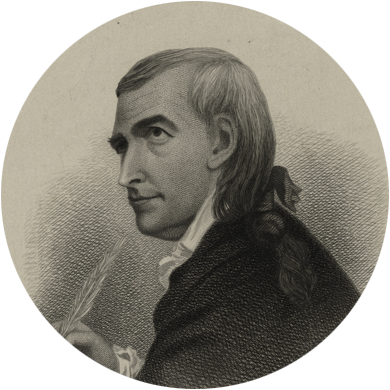

Biography
Francis Hopkinson was born in Philadelphia, the oldest of eight children of Thomas Hopkinson, a prominent political figure in the city. Thomas died when Francis was 14, but his mother, Mary Johnson Hopkinson, was determined to ensure that her son had a good education. Toward this end, she enrolled him in the brand new College of Philadelphia [later the University of Pennsylvania] when he was 16, making him a member of the college’s first class of students. He went on to earn an M.A. degree there, and then to read law with Benjamin Chew, the Attorney-General of the colony.
Hopkinson was admitted to the bar in 1761, but over the next 6 or 7 years, his career floundered. When his law practice failed to grow, he took a position as Customs Collector for the town of Salem, New Jersey. At the same time, he tried his hand at business, but with disappointing results. Unhappy, he sailed to England in 1766 in search of a better opportunity, but he was disappointed in that effort and returned home the following year. In modern parlance, Francis had not found his footing. He would do so on the eve of the Revolution.
In 1768, he married Ann Borden, daughter of a prominent New Jersey leader. He moved to Bordentown in 1774 and, from there, entered political life, becoming an assemblyman for New Jersey’s Royal Provincial Council. However, by that time he was already a biting critic of British policies and of the King himself. In the same year he took his seat on the Royal Provincial Council, he wrote a satire about King George III entitled A Pretty Story and composed other propaganda against British rule. He soon resigned his Crown appointment in favor of serving as a delegate to represent New Jersey at the Second Continental Congress. He voted for Richard Henry Lee’s resolution declaring the colonies free and independent states and signed the Declaration of Independence on August 2, 1776.
Like many of the leaders of the rebellion against Britain, Hopkinson became a target of the British military and of local Loyalists. His home in Bordentown was looted several times. As he told Benjamin Franklin, “I have suffered much by the Invasion of the Goths & Vandals…the Savages plundered me to their Hearts’ content—but I do not repine, as I really esteem it an honour to have suffered in my Country’s Cause in Support of the Rights of human Nature and of civil Society.
Hopkinson did not cut a fine figure among his fellow patriots. In fact, John Adams described Hopkinson to his wife Abigail with notably cruel humor. Hopkinson was, he told her, “one of your pretty little, curious, ingenious Men. His Head is not bigger, than a large Apple….I have not met with any Thing in natural History much more amusing and entertaining, than his personal Appearance.”
Although John Adams found Hopkinson to have a head like an apple, it was a head filled with musical creativity. Hopkinson was an accomplished organist and a harpsichordist, and, as early as 1759, he had composed a song, “My Days Have Been so Wondrous Free,” that is considered the earliest surviving American secular composition. In 1788, in the dedication to the composition of Seven Songs, he proudly declared, “I cannot, I believe, be refused the Credit of being the first Native of the United States who has produced a Musical Composition.” He was an inventor as well, producing a new musical instrument, the Bellarmonic, whose tones of metal balls he used in his compositions. He is believed to have designed the first American flag.
Hopkinson was also a strong supporter of the Constitution and its ratification. In September of 1789, President George Washington appointed him a district court judge for Pennsylvania, a position he held until his death from apoplexy two years later.
Signer of the Declaration of Independence
John Hart
1713–1779, New Jersey
Summary
John Hart of New Jersey was severely critical of Britain’s attitude toward the colonies. Hart signed the Declaration, and his wealth was later diminished by the war.
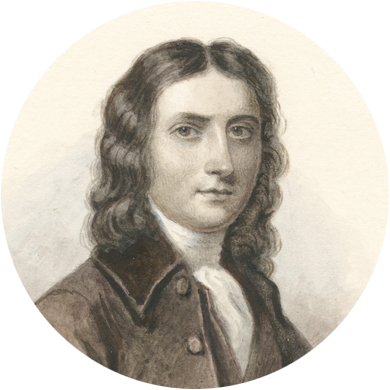

Biography
John Hart was probably born in 1713 in Stonington, Connecticut, or Hopewell, New Jersey, and was the son of a farmer and justice of the peace Edward Hart. John had a minimal education, learning to read, write, and do what the 18th century called “figures” (that is, basic math). As a young man, he was thought to be quite handsome; his black hair and light eyes gave him a striking appearance.
In 1741, he married Deborah Scudder and soon began to acquire property in New Jersey. His first major purchase, in 1740, was 193 acres of land in Hopewell; by the 1770s, he was the largest landowner in town. His success led to public service as a justice of the peace, and, by 1761, he was a member of the Colonial Assembly. In 1768, despite no formal legal education, he was appointed to the Court of Common Pleas. Yet, like so many of the men who would sign the Declaration of Independence, Hart had become severely critical of the arc of Britain’s new attitude toward the colonies.
In 1774, he was elected to the New Jersey committee “to elect and appoint Delegates to the First Continental Congress, and to protest the Tea Act.” From this point onward, he became an open opponent of British rule. In 1775, he served on the colony’s Committee of Correspondence and the Committee of Safety, both radical steps toward independence. In 1776, he was elected one of five New Jersey delegates to the Second Continental Congress. He arrived in Philadelphia in June, a proponent of independence. He signed the Declaration and then left in late August to become the speaker of the newly-created New Jersey General Assembly.
When the British advance reached the vicinity of Hart’s farm in December 1776, Hart’s role as Speaker to the General Assembly made him a target. He had to flee and hide for some time while his farm was raided by the enemy. Then, in June 1778, he took the risk of inviting the American army to camp on his farm. Washington brought 12,000 men with him, and they remained on Hart’s land until the last week in June. Four days after they left on June 24th, Washington’s well rested army fought and won the Battle of Monmouth.
On November 7, 1778, Hart returned home from a session of the Assembly in Trenton. Two days later, he revealed that he was too ill with “gravel” – the 18th century term for kidney stones—to return to the session. For six months, he was in pain until, on May 11, 1779, at the age of 65, John Hart died.
Hart’s wealth had been greatly diminished by the war. At his death, his property had to be sold off to pay his debts. But he was honored for his sacrifices for the Revolution. In his obituary, he was described as a “faithful and upright patriot in the service of his country.” He was remembered in a book in 1977 by an owner of Hart’s homestead. “Far from a legend,” he said of Hart, “he was a very human being . . . a capable, personable, ambitious, yet dedicated man . . . essentially conservative but heroically liberal . . . .” He was, this author declared, “a self-made man in his time.”
Signer of the Declaration of Independence
Abraham Clark
1726–1794, New Jersey
Summary
Abraham Clark was a surveyor, lawyer, and sheriff from New Jersey who supported independence from Britain and signed the Declaration.
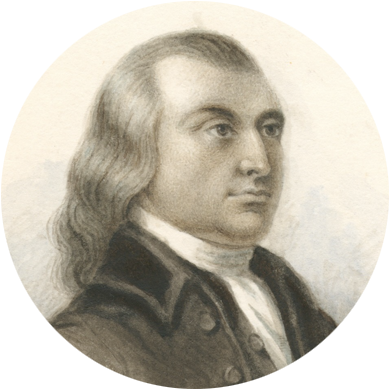

Biography
Abraham Clark was born in Elizabethtown, New Jersey, the only child of Thomas and Hannah Clark. Thomas noticed that his son had a talent for mathematics, so he hired a tutor to teach Abraham surveying. Clark was not content to remain a surveyor, however, so he taught himself law. He set up a practice that did not focus on increasing his wealth. Instead, he earned a positive reputation as “the poor man’s councilor” because of his willingness to defend those who could not afford a lawyer’s fee. His contemporaries said he was “limited in his circumstances, moderate in his desires, and unambitious of wealth.” The truth of this characterization could be seen in more than his pro bono legal work; it could also be found in his disdain for pretense and elitism and in his refusal to wear a wig or ruffles on his shirts.
Nevertheless, his good reputation opened the door to public office. He became clerk of the Provincial Assembly and later was chosen high Sheriff of Essex County. Like his friend John Hart, he came to resent the British policies of the 1760s and 70s and had become highly vocal in his belief that the colonies should seek independence. Other men of influence shared Clark’s view. Thus, when the conservative delegates to the Continental Congress from New Jersey took their stand against independence, the New Jersey convention replaced them with supporters of independence. Both Clark and Hart, along with the like-minded Francis Hopkinson, Richard Stockton, and John Witherspoon, arrived in Philadelphia on June 28, 1776, in time to vote for the Declaration of Independence. In Clark’s view, the Declaration was “the greatest act of patriotism and resistance ever made by men.”
Clark remained in the Continental Congress until the end of 1778 when he returned to New Jersey to serve as a member of the Legislative Council. He was reelected twice, serving from 1780 to 1783, and again from 1786 to 1788. He also supported a stronger national government and attended the Annapolis Convention, a failed precursor to the later Constitutional Convention.
Clark stood out among his fellow political leaders for his support of democracy and his anti-elitism. He valued farmers and mechanics, seeing these occupations as the lifeblood of a virtuous society. He criticized the aristocratic impulses of the lawyers, ministers, physicians, and merchants, who he felt were a danger to the survival of republican government. He encouraged his constituents to petition their representatives whenever they deemed necessary.
Clark’s democratic philosophy could be seen in the bills he supported or proposed in the New Jersey government. For example, he championed a bill in 1784, entitled “An Act for Regulation and Shortening the Proceedings of the Courts of Law” that would make courtroom participation easier and cheaper for ordinary citizens. It came to be known simply as “Clark’s Law.” Clark’s particular dislike of the creditor class’s power over the ordinary citizen could be seen in May of 1786, when he pushed a pro-debtor paper money bill through the New Jersey legislature. This was only a few months before the farmers’ revolt known as Shays’ Rebellion began in Massachusetts. To support this bill, he published a forty-page pamphlet under the pseudonym “A Fellow Citizen.” In that same year, the New Jersey legislature agreed to a bill Clark sponsored that prevented the importation of slaves into the state and authorized manumission of the enslaved to prevent their abuse. Despite his support for this bill, Clark would not manumit the three enslaved persons he owned until he and his wife, Sarah, were dead.
Abraham Clark was elected to the Constitutional Convention in 1787, but he was too ill to attend. He did serve in the House of Representatives for the Second and Third Congresses, from 1791 to the end of 1793. This was his last national political service. He died on September 15, 1794, at the age of 68.
Signer of the Declaration of Independence
Josiah Bartlett
1729–1795, New Hampshire
Summary
Josiah Bartlett represented New Hampshire at the Second Continental Congress, and he cast the first “aye” vote to approve separation from Britain.
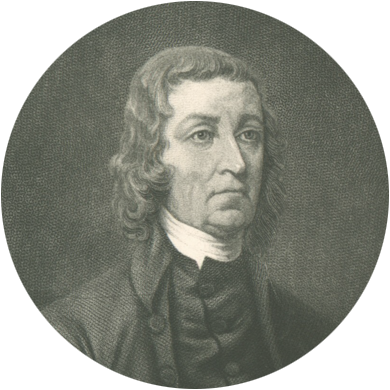

Biography
Josiah Bartlett was born in Amesbury, Massachusetts, on November 21, 1729, the youngest child of Stephen and Hannah Webster Bartlett. He attended common school and by the age of sixteen, began the study of medicine while working in the office of a doctor in Amesbury. Before his 21st birthday, he moved to the small frontier town of Kingston, New Hampshire where he hung out his shingle and began his own medical practice. He arrived there with a small wardrobe, about $30, a horse, saddle, bridle, saddlebags, a little medicine, and a pocket case of surgeon’s instruments. He also had equipment for pulling teeth. Although he did not have any formal credentials as a doctor, the town was eager to welcome him. As Kingston had no other doctor, anyone would have been welcomed who could stitch a wound, set a bone, and treat a fever.
But credentialed or not, Bartlett would prove his worth when, several years after his arrival and his marriage to his first cousin Mary Bartlett, an outbreak of diphtheria killed 114 residents of Kingston. The standard treatment for diphtheria at the time was bleeding the patient and starvation which was usually not effective in saving lives. Bartlett chose a different approach, prescribing quinine and applying cool liquids to control the fever. He saved many patients, including his own children, and his reputation for experimentation spread.
Now a landowner as well as a doctor, and a married man with a growing family, Barlett took his place as a prominent figure in the community. By 1757 he had followed the course of many prosperous and prominent men of his day: he entered the political sphere. He began his political career as a town selectman; by 1765, he had been elected to the New Hampshire Provincial Assembly. Two years later, the Governor appointed him a justice of the peace. But as Parliament increased its plans to tax and to regulate the colonies, Bartlett’s critique of the British government and of its representative, the Royal Governor of New Hampshire, grew. By 1774, Bartlett had thrown his support to the growing resistance, working with like-minded men of other colonies through New Hampshire’s Committee of Correspondence.
In 1774 the Governor dismissed New Hampshire’s Assembly. In response, the opponents of British rule re-assembled as an illegal Provincial Assembly. Josiah Barlett was a member of this revolutionary group. Local supporters of the Crown responded by burning his house down. Undaunted, he began to rebuild immediately. In 1775, the departing Governor revoked Bartlett’s commissions as justice of the peace, colonel of the militia, and assemblyman, but by that time, these titles meant little to Bartlett.
In 1775, Josiah Bartlett was selected as a delegate to the Second Continental Congress. For a brief period, he was New Hampshire’s sole representative and so he was asked to serve on all the most important congressional committees. His diligence and attention to details made him an influential member despite the fact that he seldom spoke up during debates. Eventually, New Hampshire’s William Whipple and Matthew Thornton joined Bartlett at the Congress. As the northernmost colony, New Hampshire was the first on the roll call vote for independence. It was Bartlett who gave the first “aye” to separation from Britain. It was said that he “made the rafters shake with the loudness of his approval.” He was the second to sign the Declaration itself, just below John Hancock’s large and bold signature. To Bartlett, the Declaration was “the greatest state paper ever conceived by the mind of man.”
As the war began in earnest, Bartlett focused on his medical rather than his political skills. He was with the American forces at the Battle of Bennington in August of 1777, tending to the sick and wounded. But by 1778 he was back in Congress where he served on the committee that drafted the Articles of Confederation. After the Articles were adopted, he returned to New Hampshire, and in 1782, he was appointed to the state Supreme Court. His success on the bench led to his appointment in 1788 as the Chief Justice of New Hampshire’s Supreme Court.
Just as he was a doctor without a medical degree, he was now a judge without a law degree. But in 1790, one of these missing degrees was provided. That year Josiah Bartlett delivered the commencement address at Dartmouth College. His own son, Ezra, was among the graduates of the college. But Dartmouth chose to also confer an honorary Doctor of Medicine degree on Josiah.
In 1788, Dr. Josiah Bartlett returned to the political arena. He attended his state’s ratifying convention as an avid supporter of the Constitution. In 1790, he accepted the position of chief executive of New Hampshire, a title that subsequently became Governor in 1792 when the state adopted a new constitution. He served until 1794 when poor health prompted his resignation. He sent a message to the Legislature, explaining that “I now find myself so far advanced in life that it will be expedient for me, at the close of the session, to retire from the cares and fatigues of public business to the repose of a private life.” He ended his resignation by offering his “best wishes for the future peace and prosperity” of New Hampshire. He died of paralysis the following year at the age of 65.
Signer of the Declaration of Independence
William Whipple
1730–1785, New Hampshire
Summary
William Whipple was a delegate to the Continental Congress during the final debate over independence. He commanded a brigade that performed heroically at the Battle of Saratoga.
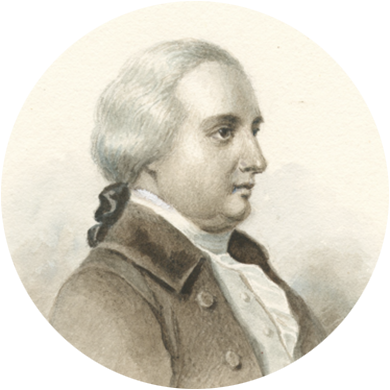

Biography
William Whipple was born in Kittery, Maine, in 1730. He was the son of a sea captain and brewer of the same name and a mother, Mary, who inherited a fortune from her father. William went to a common school until his early teens, but his education was enhanced by sessions with a tutor who was his mother’s cousin. When still a teenager, William Whipple decided to follow in his father’s footsteps and went off to sea in one of the senior Whipple’s ships. At 21, he became a ship’s master.
Whipple grew wealthy through his participation in the triangular trade between North America, the West Indies, and Africa, trading in rum, wood, and enslaved people. By 1759, he had quit life at sea and established a mercantile company with two of his brothers as partners. In 1767, at the age of 37, he married his first cousin Catherine Moffat and the couple soon moved to Portsmouth, New Hampshire. Although they had several children, none survived childhood.
Whipple’s success led ultimately to a role in politics that came as the relationship between Britain and the colonies was teetering on the brink of dissolution. In 1775, New Hampshire organized a new governing body known as the Provincial Congress after dissolving the British royal government. Whipple was elected to this body to represent Portsmouth. Like Josiah Bartlett, a fellow opponent of British rule in New Hampshire, Whipple also became a member of the province’s Committee of Correspondence.
Along with Bartlett, Whipple was a delegate to the Continental Congress during the final debate over independence. He wrote to Bartlett in January of 1776 about the coming session of the Congress,“ This year, my Friend is big with mighty events. Nothing less that the fate of America depends upon the virtue of her sons, and if they do not have virtue enough to support the most Glorious Cause ever human beings were engaged in, they don’t deserve the blessings of freedom.” When the time came to vote, both men offered resounding support for the Declaration of Independence.
Unlike many of the men who supported the “Glorious Cause,” Whipple decided that no man could hold another in bondage while fighting for freedom. He came to this conviction when his own enslaved servant, Prince, pointed out that Whipple was going to fight for his own liberty while he, as a black man, had “none to fight for.” Whipple conceded the point and offered Prince his freedom on the condition that Prince would fight the British. Whipple approved the move to allow African American regiments to be formed in the continental army. “This, I suppose,” he wrote, “will lay a foundation for the full emancipation of those wretches . . . . I hope it will be the means of dispensing the blessings of Freedom to all the human race in America.” This sentiment is striking as it came from a man who once profited from the slave trade.
Whipple’s own military service began in 1777. He commanded a brigade of four regiments who performed heroically at the Battle of Saratoga. Major General Gates recognized Whipple’s leadership in the campaign by naming him one of the two men to determine the terms of capitulation by British General Burgoyne. Through word of mouth, Benjamin Franklin, then in Paris, learned of the victory and used the news effectively as he negotiated an alliance with the French.
At war’s end, Whipple returned to his home in New Hampshire to take up an appointment as an associate justice of the Superior Court. But in the autumn of 1785, while traveling his court circuit, a heart ailment caused him to faint and fall from his horse. He was confined to his room until November 28 when he died. He was 55 years old.
On December 9, 1785, the New Hampshire Gazette noted his passing, writing, “In him concentrated every principle that exalts the dignity of man. His disinterested patriotism and public services are now known to all. And when newspaper encomiums are lost in oblivion, the pen of the historian shall preserve the remembrance of his virtue in the breast of succeeding generations. . . . He was generous and humane, and the elements so mixed in him that nature might rise up and say THIS WAS A MAN.”
Signer of the Declaration of Independence
Samuel Adams
1722–1803, Massachusetts
Summary
Samuel Adams along with his cousin John were leaders of the radical faction that opposed reconciliation with Britain and supported independence. Adams focused much of his later career on state politics.
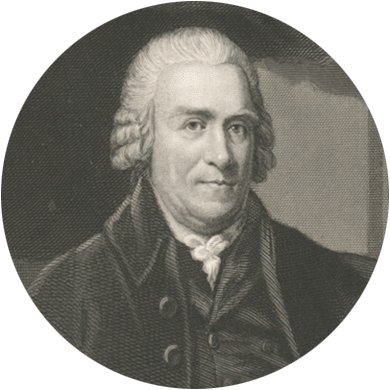

Biography
Adams was born on September 16, 1722 to Samuel Adams, Sr. and Mary Fifield Adams. Adams Sr. was a successful producer of malt, used for brewing, and thus his son and namesake grew up in a comfortable home. Samuel Sr. passed on to his son a firm commitment to his colony’s institutions of self-government, especially the town meeting. He also passed down a devotion to Congregationalist worship and reverence for the Massachusetts Charter and Body of Liberties. His stress on both personal and civic virtue became central to his son’s ideology.
Samuel attended the Boston Latin School and then went on to Harvard, just as many of the sons of prosperous Massachusetts families would do. After earning his undergraduate degree in 1740, Adams went on to gain a graduate degree three years later. For his graduate thesis, he posed the question, “Whether it be lawful to resist the supreme magistrate, if the commonwealth cannot be otherwise preserved?” Here, years before the Declaration of Independence was written, was the very question the Continental Congress delegates would grapple with, and would answer “yes.”
Samuel Adams would prove to be many things—a brilliant propagandist, a devoted lover of liberty, a fearless fighter against tyranny—but he was not a capable businessman. As his first employer noted, Samuel was too preoccupied with politics to ever succeed as a merchant. He soon wound up working for his father in the malthouse.
By 1747, Adams’s political sentiments led him to join the “popular party,” a group dedicated to serving as a watchdog against Parliamentary infringements on their liberties. In 1748, he founded a political newspaper, The Independent Advertiser, which aimed to “defend the rights and liberties of mankind.” But like many of his enterprises, this paper soon failed.
In 1749, Samuel Adams married Elizabeth Checkley. In 1756, Samuel accepted the Boston Town Meeting’s offer of a job as tax collector to help support his growing family. But Adams proved a poor choice for the position. He often did not collect the taxes, especially when his fellow townsmen could not meet their bill.
Dedicated to Politics
In 1757, Elizabeth died in childbirth, and Samuel responded to this tragedy by throwing himself into politics. The 1760s gave him a host of issues to focus his energies on. By 1763 Parliament began to impose new regulations and novel taxes on the colonies. Protests followed and Samuel Adams took a leading role in Boston resistance, first to the Sugar Act designed to end New England smuggling and then to the 1765 Stamp Act that imposed a novel direct tax on colonists. It was Adams who issued the strongest condemnation of these new laws. “For if our Trade may be taxed, why not our Lands? Why not the Produce of our Lands & everything we possess or make use of?....If Taxes are laid upon us in any shape without our having and legal Representation where they are laid, are we not reduced from the Character of free Subjects to the miserable State of tributary Slaves?” By 1776, this insistence on “no taxation without representation” would become the rallying cry of the Revolution.
In 1765 Adams was elected to the Massachusetts General Court, or House of Representatives. He sat down at once to pen a series of resolutions defending the rights and liberties of his colony’s citizens. In 1766, he was elected Clerk [secretary] of the General Court and this position carried a much needed salary.
In 1766, he played a major role in urging nonimportation of British goods. In 1768, British troops arrived in Boston to quell the protest against Parliament’s policies, and Adams took up his pen to condemn this move by the Mother Country. He urged resistance, writing “Will the spirits of the people as yet unsubdued by tyranny, unawed by the menace of arbitrary power, submit to be governed by military force? No.”
A Voice for Independence
Samuel Adams had become a master of propaganda, skilled in the use of the written word, but his quavering voice and shaky hand made him a poor orator. He wisely left the speech making to men like James Otis and Joseph Warren while he wrote persuasive articles. Between 1768 and 1769 he produced over twenty articles under the pseudonyms Vindex and Candidus. Then, in 1770, a series of accidents and mishaps led to what Americans called The Boston Massacre. It was Adams who organized a funeral for the slain colonists that was attended by over two thousand people.
Protest grew. In December 1773, colonist activists dumped English tea into the Boston Harbor rather than pay the tax on this tea. Adams praised this act of defiance, writing “You cannot imagine the height of joy that sparkles in the eyes and animates the countenances as well as the hearts of all we meet on this occasion.”
Adams was elected a delegate to the Second Continental Congress in 1775, along with John Adams, John Hancock, and Robert Treat Paine, all of whom signed the Declaration of Independence. In 1779, he joined John Adams and James Bowdoin in drafting a constitution for the state of Massachusetts. Although he remained in the Continental Congress until 1781, and helped draft the Articles of Confederation, he focused much of his remaining career on state politics. He served as President of the Massachusetts Senate and as Lt-Governor under John Hancock. When Hancock died, Adams took on the governorship. He was reelected to one-year terms three times.
Samuel Adams died at the age of 81 in October of 1803. He was praised in eulogy for “the greatness of his mind, and the magnanimity of his disposition…when he spoke, they were the words of truth; and when he advocated a principle, he promulgated the sentiments of his heart.”
Signer of the Declaration of Independence
John Adams
1735–1826, Massachusetts
Summary
John Adams played an important role in the colonies’ separation from Britain, and he insisted Thomas Jefferson draft the Declaration of Independence. Adams later became the second president of the United States.
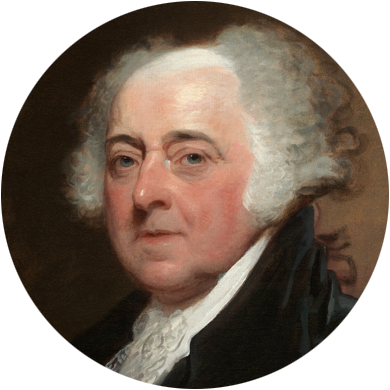

Courtesy National Gallery of Art, Gift of Mrs. Robert Homans
Biography
John Adams was born on the family farm in Braintree Massachusetts on October 30, 1735, the son of John Adams Sr. and Susanna Boylston Adams. Adams’s father insisted on his son’s education, but according to Adams, it was his mother, not his teachers, who formed his character. He began his schooling at age 6, studying at a dame school–what modern society might call a kindergarten—run by a local Braintree woman. He went on to Braintree’s Latin School, where he disliked the schoolmaster and was frequently truant. At 16, he entered Harvard College where his father hoped he would train for the ministry. He did not. After graduating in 1755, he taught school for a few years while he plotted a course for becoming “a great man,” admired for his honor and reputation. He decided the best occupation to achieve his goals was the law. He returned to Harvard for a master’s degree, read law with James Putnam, and in 1759, was admitted to the bar.
For Adams, law and politics were joined and by 1763, he had published his first essays that were critical of the local colonial elite. Writing as a farmer named “Humphrey Ploughjogger,” he attacked prominent office holders for their selfish pursuit of power. In 1765, Adams, again as Humphrey Ploughjogger, wrote four articles that came to be called “A Dissertation on the Canon and Feudal Law” that justified colonial opposition to the Stamp Act. It proved to be a window onto his personality: intensely combative, brutally honest, full of self-doubt, but equally full of confidence in his cause.
In 1770, Adams was in the political spotlight that followed the violent exchange between British occupying troops and American protestors that came to be known as the Boston Massacre. Adams’s defense led to the acquittal of the soldiers’ commanding officer and six of the soldiers. Although this made him temporarily unpopular among the citizens, anti-British political leaders appreciated that the trial showed Massachusetts’ respect for the justice system in a good light. Not long after the trials, Adams was chosen to fill a vacancy in the Massachusetts legislature. His law practice benefitted as well.
In 1774, Adams was elected a delegate to the First Continental Congress. He and his cousin, Samuel Adams, became the acknowledged leaders of the radical faction that opposed reconciliation with Britain. In early 1775, Adams published his Novanglus essays in which he insisted that Parliament had no authority to legislate for the colonies in any way. By the time the Second Continental Congress met, Adams was known as “the Atlas of Independence.” He influenced the decisions of the congress in significant ways, not only dominating the debate over independence, but nominating Washington to serve as commander of the Continental Army and insisting that Thomas Jefferson draft the Declaration of Independence although he was himself on the drafting committee. Explaining why he proposed Jefferson to write the document, Adams later recalled saying to Jefferson: "Reason first, you are a Virginian, and a Virginian ought to appear at the head of this business. Reason second, I am obnoxious, suspected, and unpopular. You are very much otherwise. Reason third, you can write ten times better than I can."
He was everywhere at once over the next few years of the Continental Congress, helping to shape American foreign policy, heading up the Board of War and Ordnance, and in 1778, joining Franklin in Paris to press France to support American independence. In 1779, he played a major role in drafting the Massachusetts constitution with its bicameral legislature and separation of powers that proved a model for the U.S. Constitution. His “Thoughts on Government” that guided the writing of this constitution was circulated throughout the colonies and served as a major guidebook for drafting other new state constitutions.
Adams’s achievements were many, but his diplomatic skills were few. He was given to explosive outbursts and did not see the value of discretion or compromise, making him a thorn in Franklin’s side at the Peace talks in Paris following Cornwallis’s surrender. Modern historians now suggest that Adams' volatility was the result of a hyperthyroid condition known as Graves Disease. Despite his poor showing of diplomatic prowess, in 1785, he was appointed ambassador to Great Britain. While in England, Adams briefly reunited with his closest friend from pre-war days, the Loyalist Jonathan Sewall. Sewall rightly observed Adams’s diplomatic handicap: His abilities are undoubtedly equal to the mechanical parts of his business as ambassador, but this is not enough. He cannot dance, drink, game, flatter, promise, dress, swear with the gentlemen, and small talk and flirt with the ladies; in short, he has none of those essential arts or ornaments which constitute a courtier.
In 1788, Adams returned to Massachusetts and the life of a farmer. But the new nation had other plans for him. He was elected George Washington’s Vice President, winning 34 electoral college votes compared to Washington’s 69. Adams considered his election “a curse rather than a blessing.” Knowing that the President would operate in a world full of “your Highnesses” and “ Your Lordships”, Adams proposed that Washington be called “Highness”; members of congress preferred the egalitarian term “Mr. President.” For his efforts, Adams was taunted and dubbed “His Rotundity.”
Adams played a minor role in politics as Vice President—and he resented it. "My country has in its wisdom contrived for me the most insignificant office that ever the invention of man contrived or his imagination conceived.” He worried that his role in the Revolution would be forgotten and Benjamin Franklin would be remembered as its hero.
In 1796, John Adams ran for president. His major rival for the position Washington had left was Thomas Jefferson. Alexander Hamilton worried that Adams was too vain, opinionated, and stubborn to heed the advice of Federalist leaders like himself. He preferred Thomas Pinckney. Adams’s view of Hamilton was no less harsh; he judged Hamilton to be “proud-spirited, conceited” and an “aspiring Mortal always pretending to Morality.” The hostility between the two men shaped Federalist politics throughout Adams’ presidency.
Adams’s presidency was dominated by the question of which side to support in the major struggle between France and Britain that arose following the French Revolution. Adams pursued neutrality but all this achieved was that both warring nations labelled the US an enemy and preyed on American ships. Adams sent commissioners to France in hopes of negotiating a new treaty of friendship, America’s honor was insulted by French demands for bribes before negotiations could begin.This diplomatic fiasco was dubbed the XYZ Affair and John Adams became a momentary hero when he called for a military build up in case France invaded. But Adams wanted to avoid a real invasion of American soil and sent a new delegation that achieved its goals with France. The build up of a standing army combined with relentless attacks on the President by Jeffersonians in the press did great damage to Adams’s public image.
Federalists fought back against the Jeffersonian propaganda – and the growth of the Jeffersonian party—by passing a series of laws known as the Alien and Sedition Acts. The Sedition Act made it a crime to publish “false, scandalous, and malicious” writing against the government or its officials. Fourteen individuals and a small number of anti-Federalist newspapers were indicted, but this had little real effect on silencing the attacks on Adams or protecting the Federalist domination of the central government. Adams never employed either of the Alien Acts.
In the election of 1800, Adams lost the presidency to Thomas Jefferson.. His political career was over and he returned to Braintree and to his wife of many years, Abigail Smith Adams, who he had married in 1764. He began work on an autobiography, but did not complete it. After four years in retirement, Adams began to reach out to old colleagues like Benjamin Rush. He was generally silent on events during his rival Jefferson’s administration, and only engaged in a feud with his old friend Mercy Otis Warren who described him as partial to monarchy and too ambitious in her history of the American Revolution. But ultimately, the friendship was renewed. When Jefferson retired in 1809, Adams became less restrained in his political criticism, aiming most of his anger not at Jefferson, but at Alexander Hamilton. Hamilton had died in a duel in 1804, but Adams felt compelled to defend himself against charges the New Yorker had made in 1800.
In 1804, Abigail Adams wrote to Jefferson, sending him condolences on the death of his daughter Polly. There was a brief exchange of letters, but Abigail’s anger at how her husband had been treated in the Jeffersonian press ended the correspondence. It would take until 1812 for the two former Presidents to reconcile. Benjamin Rush, a friend to both men, encouraged them to restore their friendship. When Adams tried to discuss their political history, Jefferson refused. Instead, they took up topics like philosophy and offered accounts of their current daily lives. Although the correspondence grew less frequent, the friendship was fully restored. On July 4, 1826, 93-year old Adams died of a heart attack. His last words were “Thomas Jefferson survives.” But it was not so; Jefferson had died several hours earlier.
Signer of the Declaration of Independence
Robert Treat Paine
1731–1814, Massachusetts
Summary
Robert Treat Paine hoped separation from Britain would not become necessary, but he signed the Declaration after the crown rejected a petition to avoid war.
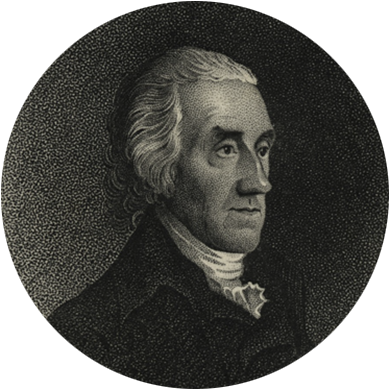

Biography
Robert Paine was born in Boston to Thomas Paine and Eunice Treat Paine. His father had been a pastor but had given up his clerical role to become a merchant. As the son of prosperous parents, Robert attended the noted Boston Latin School and then, like many socially privileged young men, went on to Harvard at the age of 14. He graduated in 1749, just as his father lost his fortune, and Paine taught school for a year, just as his fellow graduate John Adams did for a few years. Paine tried his hand in the mercantile world, including acting as the master of trading ships, but he was met with little success. By 1755 he was reading law with his mother’s cousin. In 1757 he was admitted to the bar. In 1761 he set up a practice in Taunton, a setting less competitive than Boston. Decades later, he would return to Boston.
Paine’s move to Taunton established him as one of the town’s leading citizens. By 1763 he was a justice of the peace. By 1768 Paine was serving as a delegate to an unauthorized assembly gathered to make public the colonists’ grievances against what they considered Britain’s growing oppression of its colonies. Paine’s reputation as a critic of the Mother Country was firmly established in 1770 when he joined the Solicitor General of the colony, Samuel Quincy, in prosecuting the British soldiers involved in what Americans called the Boston Massacre. John Adams took on their defense and, although it was Adams’s arguments that won acquittal for the soldiers, Paine’s own reputation was burnished by his role in the courtroom.
By 1773, as the tensions between Britain and the colonies neared the breaking point, Paine took his seat in the Massachusetts legislature known as the General Court. Yet he still held out the hope that separation from Britain would not become necessary. Slowly he changed his mind. By 1774 he agreed to serve in the Provincial Congress, a body created in response to royal Governor Thomas Gage’s refusal to convene the Massachusetts legislature. In effect, the Congress was a major step in seizing control of the political reins in the colony. Massachusetts then sent Paine to the Second Continental Congress, where he signed the colonial peace offering known as the Olive Branch Petition, a last-ditch effort to avoid war with the Mother Country. The petition was rejected by the Crown. Thus when the Congress voted for independence in 1776, Robert Treat Paine signed the Declaration.
On July 6, 1776, Paine wrote to his friend Joseph Palmer, arguing that Americans had much to gain and little to lose by declaring Independence. “It is,” he said, “our comfortable reflection, that if by struggling we can avoid the servile subjection which Britain demanded, we remain a free and happy people; but if, through the frowns of Providence, we sink in the struggle, we do but remain the wretched people we should have been without this declaration. Our hearts are full, our hands are full; may God, in whom we trust, support us.”
Paine chaired the Congressional Committee on Ordnance and he pressed hard for increasing the domestic manufacture of gunpowder, muskets, and artillery. In a letter to a friend, he expressed his frustration with the priorities of his fellow Americans: “I wish the Inhabitants of the United States were more intent upon providing and manufacturing the Means of defense, than making Governments with[ou]t providing for the means of their support.”
Paine returned to Massachusetts at the end of December 1776, and in 1777 he was elected Speaker of the state’s House of Representatives. In 1780 he was a member of the committee that drafted the state constitution. He became Massachusetts’ Attorney General in 1777 and held that position until 1790. During these years it was his duty to prosecute the treason trials of Shays’ Rebels. But he also prosecuted a case, Commonwealth v. Jennison, that proved pivotal in the abolition of slavery in Massachusetts. His last public service was as a justice of the State Supreme Court from 1790 to 1804.
Paine enjoyed a peaceful retirement until he died in 1814 at the age of 83. He was remembered fondly by an early female historian, Hannah Mather Crocker. “No man loved wit better than he did,” she wrote. “He often appeared lost in profound thought but could relax in a moment at the sound of a witty speach [sic].”
Signer of the Declaration of Independence
Elbridge Gerry
1744–1814, Massachusetts
Summary
Elbridge Gerry urged delegates to sign the Declaration and took a leading role in supplying the Continental Army. Gerry declined to sign the Constitution as a delegate and briefly served as vice president to James Madison.
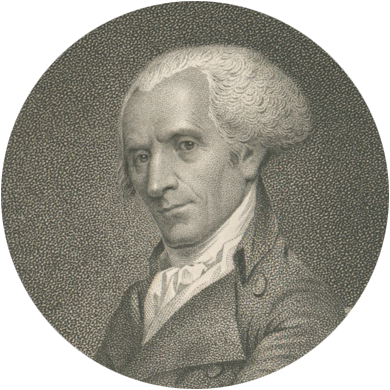

Biography
Elbridge Gerry was born in Marblehead, Massachusetts in July of 1744. His father, Thomas Gerry, was a wealthy merchant and shipper and this allowed Elbrdige to study with private tutors, and to attend Harvard College for both a bachelor and a masters degree. When he graduated in 1762 at the age of 18, he joined his family’s business. By the 1770s the Gerrys were among the colony’s wealthiest merchants.
Gerry was a shrewd businessman, but did not cut a fine figure as a gentleman. He was thin and small, with a squint in his eyes and a slight stutter in his speech. He seemed to wear a perpetual worried and dissatisfied look on his face. Men found him touchy, easily offended, stubborn, suspicious, and pessimistic but, oddly, women enjoyed his company.
Despite his stutter, Gerry decided to enter politics in 1772. He was supported in this decision by his mentor, Samuel Adams, a Bostonian who was well known for his outspoken advocacy of colonial independence. Gerry became a member of the Massachusetts legislature and served on Marblehead’s committee of correspondence which linked anti-British leaders across the colonies. He was chosen a delegate to the First Continental Congress but the death of his father led him to decline. He did, however, accept an election to the Second Continental Congress in 1776 where urged fellow delegates to sign the Declaration of Independence.
Gerry’s role in supporting independence led John Adams, also representing Massachusetts, to praise Gerry writing, “If every Man here was a Gerry, the Liberties of America would be safe against the Gates of Earth and Hell.” The two men became fast friends. James Monroe also befriended Gerry, but few of his other peers formed close relationships with Gerry, for though admittedly brilliant and often persuasive, his stubborn insistence on the correctness of his own views –which were erratic and unpredictable--would make him decidedly unpopular in the halls of government. Fellow congressman, Charles Thompson, summed up their frustration with Gerry when he declared that Gerry’s “pleasure seems proportioned to the absurdity of his schemes.”
During the revolution, Elbridge Gerry took a leading role in supplying the Continental Army. He used European business connections to acquire military supplies and he financed privateering operations against British shipping. Due to his repeated calls in the Continental Congress for better pay and equipment for enlisted men, Gerry gained the nickname “soldiers’ friend.” In 1780, Gerry left Congress because of a disagreement over the price schedule for suppliers like himself. Yet he profited so richly from supplying the military, that he was able to retire from business and invest his money in land.
For three years after abandoning his seat in the Continental Congress, Gerry was absent from politics. At last, in 1783, the state legislature persuaded him to return to the Congress while it was meeting in New York City. Here he met and married Ann Thompson, twenty years his junior and the daughter of a wealthy New York merchant.
In 1787 Gerry agreed to serve with Nathaniel Gorham, Caleb Strong, and Rufus King as a delegate to the Constitutional Convention in Philadelphia, he managed to irritate almost every other delegate because of his unpredictable and often contradictory stances on the central issues facing the Convention. He began as a strong supporter of an empowered central government but, after arguing about the role of ordinary voters in the selection of members of the House and Senate, his ardor cooled. As Madison observed in his notes on the debate, Gerry was adamantly opposed to popular selection of the House of Representatives. With the memory of Shays’ Rebellion clearly fresh in his mind, Gerry declared that, “The evils we experience flow from the excess of democracy. The people do not want virtue, but are the dupes of pretended patriots.” Events in Massachusetts had, he readily conceded, made him less republican than before; he “had been taught by experience the danger of the leviling [sic] spirit.” Yet at the same time that he feared democracy, he was wary of the excesses of power in the proposed new government. He was especially concerned about presidential power and, although he supported George Washington to be the country’s first executive, he demanded that impeachment proceedings be spelled out in the constitution. “A good magistrate,” he argued, “will not fear them…a bad one ought to be kept in fear of them.” On these and other issues, Gerry took the floor to harangue as much as possible to persuade his fellow delegates. Altogether he rose to be recognized 153 times. In the end, although he had supported independence and the adoption of the Articles of Confederation, he joined George Mason and Edmund Randolph of Virginia in their refusal to sign the Constitution. At issue for these three men was the absence of a Bill of Rights.
Yet, by 1789, Gerry was a supporter of the new federal government, and he was elected to serve in the First House of Representatives. He knew, he told a friend, that many of his fellow representatives viewed him as an enemy of the Constitution, but he insisted that this was “remote from truth.” Instead, he declared “Since the commencement of the Revolution I have been ever solicitous for an efficient federal government.” His only caveat had been that it possessed so much power that the governed would be subject to “the rapacity and domination of lawless and insolent ambition.” He did not feel that Madison’s proposed bill of rights could provide that protection. During the debate over its adoption, Gerry repeatedly demanded that all the amendments proposed in the ratifying conventions by opponents of the Constitution be considered for inclusion in any bill of rights, especially those that aimed to severely diminish the power of the federal government. He wearied his fellow congressmen with attacks on the government’s taxing powers, and generally challenged what he saw as a Federalist plot to erode state sovereignty. In the end, the efforts by Gerry and the minority of congressmen who held Anti-Federalist positions were defeated.
Despite his Anti-Federalist stance on the Bill of Rights, Gerry took a pro-Federalist position on Alexander Hamilton’s reports on public credit. By 1792, he had opted out of further participation in Congress. He returned home to take care of his ailing wife. His next foray into politics was to serve as a presidential elector for his friend John Adams in the 1796 election. In 1797, President Adams insisted--against the advice and objections of members of his cabinet--on appointing Gerry as one of three commissioners on a delicate mission to win a new treaty of amity with France. Few people were surprised to learn that Gerry quickly alienated his fellow commissioners and pursued an independent, and unsuccessful, effort to negotiate with the French. The mission, later known as the XYZ affair, did nothing to burnish Gerry’s reputation. In fact, on his return to Massachusetts, his carriage was stoned by angry citizens and he was burned in effigy. The Federalist denunciation of Gerry led him to formally join the Democratic-Republican party.
Failures to win the governorship in four successive attempts and financial disaster marked the period from 1800 to 1810 for Gerry. But, he won the governor’s seat in 1810 and again in 1811. During these years he did his best to expel Federalists from the state government. In 1812 he supported the Republican dominated legislature’s creation of new electoral districts that would solidify their control over the state government. Gerry signed the legislation. A local Federalist newspaper pointed out that the shape of one of the new districts resembled a salamander and published a political cartoon calling the district a “Gerry-mander.” To this day, partisan redistricting is called gerrymandering.
By 1812, Gerry was out of office and in serious debt. The Republican Party came to his rescue by choosing him as James Madison’s running mate in the upcoming presidential election. Two years later, at the age of 70, Gerry’s complicated career was ended by a fatal heart attack. A correspondent to Thomas Jefferson summed up the general opinion of Gerry when he described him as “a man of sense, but a Grumbletonian. He was of service by objecting to everything he did not propose.”
Signer of the Declaration of Independence
Stephen Hopkins
1707–1785, Rhode Island
Summary
Stephen Hopkins served as Rhode Island’s governor and he was the oldest member of the Continental Congress, except for his friend, Benjamin Franklin.
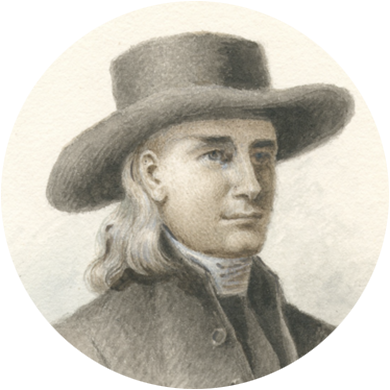

Biography
Hopkins was the son of William and Ruth Wilkinson Hopkins, and a descendent of one of the original settlers of Providence Plantations in Rhode Island. He was thus a member of one of Providence’s most prominent families, though not one of its wealthiest. He was also the cousin of the Revolutionary era’s most famous traitor, Benedict Arnold. Despite his notable lineage, Hopkins did not receive a formal education. His mother, grandfather and uncle gave him lessons, and he was a voracious reader, taking advantage of the many classics of English history and philosophy in his Grandfather’s small personal library. Hopkins first vocation was as a surveyor and an astronomer, but his reputation as a respected member of his community soon set him on the path to a political career. In his early twenties, the small community of Scituate selected him to moderate its town meeting. At 25, he became the town clerk and soon afterward, he rose to be president of the town council. He was chosen to represent Scituate in Rhode Island’s General Assembly from 1732 to 1741. When he was elected Speaker of this Assembly, he moved to the more settled area of Providence. Here he became a merchant who constructed, equipped and owned ships, and with four the Brown brothers [who together founded Brown University], he built an iron foundry that would later supply cannons and pig iron to the Revolutionary army.
In 1747 Stephen was appointed to the colony’s Supreme Court—although he had no law degree—and by 1755 he was the governor of Rhode Island. He had one notable political rival: Samuel Ward. The rivalry between these two men became so intense that it proved a distraction to a colony trying to cope with its tensions with the British government. The two men decided that the public good would be best served if they both pledged not to run for any office in 1768. In 1774, however, both Ward and Hopkins were chosen to represent Rhode Island in the First Continental Congress.
At 68, Hopkins was one of the oldest members of the Congress, second only to his friend Benjamin Franklin, who was born in 1706. During the Stamp Act crisis, Hopkins had penned a pamphlet entitled “The Rights of Colonies Examined” in which he attacked both the Sugar Act and the Stamp tax. He began this pamphlet with a powerful commitment to liberty, calling it “the greatest blessing that men enjoy,” and comparing it to slavery which he pronounced “the heaviest curse that human nature is capable of.” He went on to declare that “British subjects are to be governed only agreeable to laws they themselves have in some way consented.” Three years later, John Dickinson would echo these sentiments in his more widely distributed Letters from a Farmer.
By 1774, a palsy in Hopkins’s hands made any attempt at writing painful. He could, however, speak his mind in Congress. He believed that war was inevitable and gave this ultimatum to his fellow delegates: “Powder and ball will decide this question. The gun and bayonet alone will finish the contest in which we are engaged, and any of you who cannot bring your minds to this mode of adjusting the quarrel, had better retire in time”. When it came time for Hopkins to sign the Declaration of Independence, the palsy that plagued him forced him to hold his right hand with his left to steady it. “My hand trembles,” he told his fellow delegates, “but my heart does not.”
Hopkins helped to draft the Articles of Confederation, but his failing health compelled him to return to Rhode Island soon afterward. He died in July of 1785. His funeral procession was attended by judges, the President, professors and students from Rhode Island’s college, and ordinary citizens of his home state. A monument at his gravesite reads, in part, “He stood in the front rank of statesmen and patriots. Self-educated, yet among the most learned of men; His vast treasury of useful knowledge his great retentive and reflective powers, combined with his social nature, made him the most interesting of companions in private life.” The usually critical John Adams, who greatly admired Hopkins, would have agreed.
Signer of the Declaration of Independence
William Ellery
1727–1820, Rhode Island
Summary
William Ellery was in the mercantile business, and he opposed British policy toward the colonies. Ellery signed the Declaration and remained in Congress until 1785.
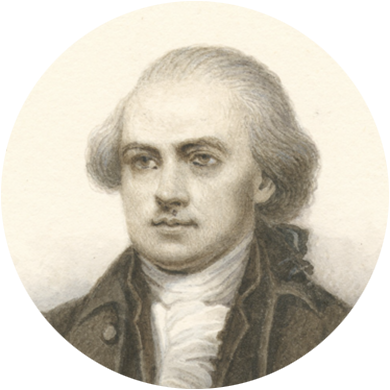

Biography
William Ellery was born in Newport, the son of William and Elizabeth Almy Ellery. As the oldest son of a wealthy merchant, William would inherit a major portion of his father’s estate. Like so many of the colonies’ elites, William began his education at home, tutored by his father, but at 16, he was a student at Harvard. When he graduated in 1747, he went into the family’s mercantile business.
William’s public service began in 1750 when he was appointed Clerk of the Court. In this role he learned much about the practice of law and the writing of writs and deeds, and the experience led him to pursue a career as a lawyer. He passed the bar in 1770 and began his practice.
As early as 1765, Ellery had become an active opponent of British policy toward the colonies. He helped lead a riotous march of Rhode Islanders through Providence to demonstrate local resistance to the Stamp Act. When Parliament passed the Intolerable or Coercive Acts, designed to punish Massachusetts for the Boston Tea Party, Ellery expressed his opposition to the Crown’s interference in colonial affairs. But it was the fighting at Lexington and Concord that convinced him that no accommodations should be sought with Britain. He urged the Continental Congress to “exert yourself.” He felt it was debasing to be ruled by Crown supporters when they could be ruled by Sons of Liberty. “There is liberty and fire enough,” he declared, “it only requires the application of the bellows. Blow then, a blast that will shake this country.”
During the 1770s, Ellery hoped to fill any vacancy in the Rhode Island delegation to the Congress that might occur. He got his wish in early 1776 when Samuel Ward became too ill to continue to serve. Ellery presented his credential to the Second Continental Congress in May, just as the debate over independence was beginning. He voted for Richard Henry Lee’s resolution that the colonies were and ought to be independent on July 2. On July 10, he wrote to his brother Benjamin that “We have lived to see a Period which a few years ago no human forecast could have imagined—to see these Colonies shake off and declare themselves independent of a State which they once gloried to call Parent….” Ten days later, still proud of Congress for its radical action, he wrote to Rev. Ezra Stiles, President of Yale College, saying that Americans would accept no accommodations Britain might offer to preserve the union of colonies and Mother Country. “[T]he door is shut,” he said; “We have been driven into a Declaration of Independency & must forget our former love of our British brethren. The Sword must determine our quarrel.”
On August 2 William Ellery joined other members of Congress in signing the Declaration of Independence penned by Thomas Jefferson. Ellery recognized the historic nature of the day. “I was determined to see how they all looked as they signed what might be their death warrant, I place myself beside the Secretary Charles Thomson and eyed each closely as he affixed each name to the document.” He was proud to note that “Undaunted resolution was displayed in every countenance.”
Ellery remained in Congress until 1785, serving through the adoption of the Articles of Confederation and until the movement for a reassessment of the Articles would lead to the Philadelphia convention that drafted the Constitution. He did so at great cost to his financial resources. To save money, he rode on horseback from Rhode Island to the sessions of Congress rather than traveling in the relative comfort of a carriage. He was keenly aware that few people along his route would take him for a political leader of the country. As a short and slightly built man, he readily acknowledged that he was not an impressive figure. “Had I announced myself as a member of Congress, who would have believed me? Setting aside my spectacles, there is, I am sure, no dignity in my person or appearance.”
Although those who knew Ellery admired him as an interesting and well- informed speaker, an entertaining correspondent, and an equally entertaining conversationalist, Ellery never boasted of his social skills or of his career accomplishments. Late in life he summed up his career with typical modesty and gentle humor: “I have been a clerk of the court, a quack lawyer, a member of Congress, one of the lords of the Admiralty, a judge, a loan officer, and finally a Collector of the customs and thus, not without great difficulty, but as honestly, thank God, as most men, I have got through the journey of a varied and sometimes anxious life.” That life was not only varied, it was long: William Ellery died in 1820, one of only three Signers to live into his 90s.
Signer of the Declaration of Independence
Roger Sherman
1721–1793, Connecticut
Summary
Roger Sherman voted for Lee’s resolution of independence and served on the committee to draft the Declaration. Sherman proposed the Connecticut Compromise at the 1787 Constitutional Convention.
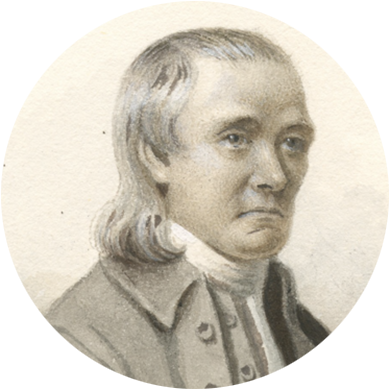

Biography
Roger was the second of seven children born to William and Mehetabel Sherman. Soon after his birth, his parents moved the family from Newton, Massachusetts to Stoughton. His father was a small town farmer, who worked in off seasons as a cordwainer or shoemaker, a trade Roger learned from him. Although there was food on the table and a roof over his head, Rober Sherman grew up with few material comforts and little memories of games and play. Working on the farm, he learned to plow a field and cut wood, activities that helped develop traits such as constant industry and an iron constitution. Because his parents were observant Christians, Sabbath was a somber day spent at the meetinghouse.
Sherman acquired the skills of reading, writing and basic arithmetic in a local school that ran sessions only in the winter. Any advanced mathematical skills he was to display later in life were self-taught.
In 1740, 19-year-old Roger Sherman moved to New Milford Connecticut to join his older brother. In March of the following year, his father died without leaving a will and the courts granted Roger 109-acres of farmland from the estate. But he was also required to pay his mother and siblings for the shares they were entitled to and this meant he began adult life in debt.
Moving to New Milford, Sherman slowly shifted from shoemaking to surveying. By 1745, he had been appointed Surveyor of Lands for New Haven county. In 1749, he believed he was financially able to marry and took as his bride Elizabeth Hartwell of Stoughton. He also took up a new role as the author of Almanacs, publishing the first in 1750 and a new occupation as half-owner of a general store. When he had accumulated enough funds from his surveying duties and his mercantile profits, he began to buy land. He also took up the study of the law and by 1754, he was admitted to the Connecticut bar and set up a successful legal practice.
As Roger Sherman prospered, the path to political office opened. He was a selectman by 1754, a justice of the peace by the following year and was elected to the General Assembly each year afterward until 1761.
When Elizabeth Sherman died in 1760, Roger pulled up stakes and moved to New Haven and in 1763, he remarried, this time to Rebecca Prescott, daughter of a prosperous merchant of Salem, Massachusetts. His reputation in New Haven grew and by 1766, he was appointed a judge of the Superior Court of Connecticut. In 1772, he turned over his successful store to his son in order to devote himself entirely to public life.
Sherman’s response to the early signs of discontent toward and resistance to Britain’s new policies was conservative. The rise of the Sons of Liberty across New England and their agitation against the Stamp Tax troubled him. “I have no doubt of the upright intentions of those gentlemen who have promoted the late meetings in several parts of the Colony which I suppose were principally intended to prevent introduction of the Stamp papers, and not in the least to oppose the laws or authority of the government,” but, he added, “is there no danger of proceeding too far in such measures?”
But by 1774, Sherman had agreed to serve as a delegate to the First Continental Congress. Here he signed the agreement to abstain from any form of trade with England or the West Indies until the oppressive laws of 1774 were repealed. He was also chosen to represent Connecticut in the Second Continental Congress to gather the following May.
By May of 1775, events carrying serious consequences deepened the rift between Mother Country and colonies. Only a month before the new Congress met, shots were fired at Lexington and Concord. The Congress quickly established a Continental Army and appointed Virginia’s George Washington to its command. On November 1, 1775, Congress learned that King George had rejected their Olive Branch Petition and proclaimed the colonies in rebellion. By June of 1776, Sherman had joined in voting for Richard Henry Lee’s resolution and soon afterward he joined four fellow congressmen, including Thomas Jefferson, on the committee to draft the Declaration of Independence.
When the Congress decided to create the country’s first constitution, the Articles of Confederation, Sherman represented Connecticut on the drafting committee. He continued to serve in congress until 1781. When Cornwallis surrendered to Washington, Sherman and his fellow Connecticut delegate, Richard Law, sent the news to the Governor of Connecticut. “This great event,” they wrote, “we hope, will prove a happy presage to a complete reduction of the British forces in these States, and prepare the way for the establishment of an honorable peace.”
Although the war hurt Sherman financially, his focus remained on public service. He served on the Governor’s council, on the Connecticut Superior Court, in the Continental Congress, and as mayor of New Haven. Then, in 1787, he went to Philadelphia as a delegate to what would come to be called the constitutional convention. In the beginning, he hesitated to commit to abandoning the Articles of Confederation. Sherman did not oppose strengthening the government by giving it taxing power and the authority to regulate commerce, but he believed this could be done without abandoning the Articles. As he saw it, “the problem with the old government was simply that it lacked the power to enforce its decrees.” Sherman’s reluctance to replace the Articles angered fellow Connecticut political leader Jeremiah Wadsworth, who complained to New York’s Rufus King that Sherman “is disposed to patch up the old scheme of government.” He warned King that Sherman was “cunning as the Devil, and if you attack him, you ought to know him well; he is not easily managed, but if he suspects you are trying to take him in, you may as well catch an Eel by the tail.”
Despite any reservations, Sherman diligently participated in the design of the new constitution. It was Sherman who proposed what came to be called the Connecticut or the Great Compromise regarding representation in the two houses of Congress, although his argument that each state should have only one vote in the Senate was rejected.
Sherman’s final contribution to the convention came as it was closing. On September 12, Virginia delegate George Mason took the floor to call for the addition of a bill of rights to the new Constitution. His proposal took the majority of the delegates by surprise. Only the members of the Committee on Detail might have seen this proposal coming for they had heard a similar suggestion from one of its members—and they had rejected it. Now, the weary delegates, eager to return to their homes after four months of debate and argument, wanted to reject it as well. In the heated debate that followed, Gouverneur Morris, who had drafted the final version of the Constitution, insisted that there should be no “tampering” with his handiwork. Other delegates expressed a jaundiced view of Mason’s assurances that a bill of rights could be quickly written and voted upon. Experience had taught them that nothing could be done at this convention without long and tedious debate over its content or its written presentation. As tempers flared, Roger Sherman rose to speak. His stern demeanor and his reputation for sensible solutions had earned him the respect of the men around him. Most would agree with Thomas Jefferson’s assessment that Roger Sherman was “a man who never said a foolish thing in his life.” At that moment, Sherman gave voice to the general feelings of the convention: there was no need to guarantee the people’s rights since those rights remained under the protection of the states. The constitution had given the proposed federal government no jurisdiction in the matter. With that, the debate ended. Yet, during the ratification process, Sherman and his colleagues would learn that in refusing to add a bill of rights, they had handed the opponents of the constitution a powerful weapon in the ratification battle. And when Madison proposed the 10 amendments that constituted the Bill of Rights, Roger Sherman raised no objection to their inclusion in the Constitution.
When Connecticut ratified the Constitution it chose Roger Sherman to be one of its representatives to the First Federal Congress. Then in 1791, his home state sent him to the Senate. In 1793, however, he suffered an attack of typhoid fever that lasted two months. On July 23, he died. Roger Sherman was one of two people, along with Robert Morris, to sign three of the most important documents of the Revolutionary era: the Declaration of Independence, the Articles of Confederation, and the Constitution. Sherman also signed the Continental Association of 1774. Small wonder that Yale President Ezra Stiles praised Sherman as an “extraordinary man, a venerable uncorrupted Patriot.”
Signer of the Declaration of Independence
Samuel Huntington
1731–1796, Connecticut
Summary
Samuel Huntington was on the Connecticut’s Supreme Court, and he spoke out publicly against the Coercive Acts. Huntington signed the Declaration and later presided over approval of the Articles of Confederation.
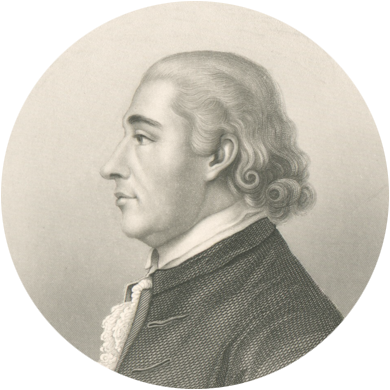
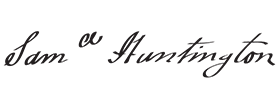
Biography
Samuel Huntington was the second son born to Nathaniel and Mehetabel Thurston Huntington. His father was a farmer—not wealthy, but modestly successful. Although several of Samuel’s brothers went to college, Samuel did not. Instead, he worked on the farm. He began to educate himself, however, encouraged by the family’s minister who gave him access to his own library. The library was not the only magnet that attracted Samuel; the minister’s daughter Martha drew him to his mentor’s home as well. As soon as he was able to support a wife, he and Martha married.
Huntington’s main interest was the law, and in 1754, he was admitted to the Connecticut bar. By 1760 he had moved from his hometown of Windham to the larger town of Norwich and set up his law practice there. In 1764, the town sent him to the colony’s General Assembly and, from that point on, his political rise was assured. He served next in the upper house of the legislature and then joined the Governor’s Council. By 1773 he was on the colony’s Supreme Court and became its chief justice in 1784.
Huntington was not a political radical, but it was clear that he was no supporter of Britain’s policies in the decade following England’s victory in the French and Indian War. He spoke out publicly against the Coercive Acts in 1774, and by 1776 he was in Philadelphia as one of Connecticut’s delegates to the Second Continental Congress. In Philadelphia Huntington contracted smallpox and did not join the congressional debates until February of 1776. Along with fellow Connecticut delegates Roger Sherman and Oliver Wolcott, Huntington signed the Declaration of Independence.
Although Huntington was not known as a particularly talented orator, he was recognized for his industry on Congressional committees and for his composure in debate. In September of 1779 his colleagues chose him to serve as President of the Continental Congress. The fact that he did not show strong regional bias on issues was a key reason delegates from the South and from the middle states supported this appointment. Benjamin Rush of Pennsylvania explained why Huntington was the perfect choice for the job, writing that he was “a sensible, candid, and worthy man, and wholly free from State prejudices.”
As President of the Congress, Huntington presided over the Congress’s approval of the Articles of Confederation. From that point on, Huntington’s title became President of the United States in Congress Assembled. Although he often wrote wistfully of returning home to Connecticut, he remained in Congress as its President until July of 1781, when poor health caused him to resign. The state of Connecticut made him its Lieutenant Governor in 1784 and its Governor in 1786. Although he continued on the state Supreme Court bench while Lieutenant Governor, he stepped down when he became the chief executive. In 1788 he presided over the state’s ratifying convention for the US Constitution.
Huntington’s health declined in the 1790s. On January 5, 1796, he died of what 18th century doctors called “dropsy of the chest”—or, in modern terms, edema, the accumulation of fluids in his chest cavity. In 1794, a visitor from England aptly described Huntington as “a respectable looking man grown gray in the service of his country, of strong sense in conversation, of a countenance sedate, thoughtful and begninant, and of plain unaffected manners.”
Signer of the Declaration of Independence
William Williams
1731–1811, Connecticut
Summary
William Williams was an early critic of British policies who arrived in Philadelphia after independence had been declared. He signed the Declaration on August 2, 1776.
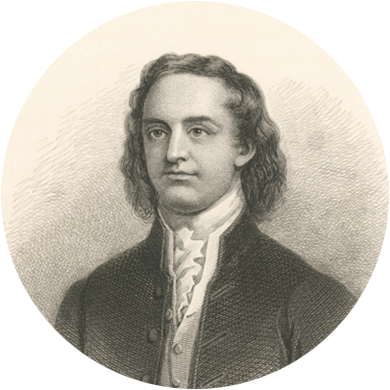

Biography
Born in Lebanon, Connecticut, William was the son of the pastor of the First Congregational Church of Lebanon, Solomon Williams, and his wife, Mary Porter Williams. Like his father before him, Williams attended Harvard College where he studied theology and law, intending to follow his father into the ministry. But in 1754 when war between France and England spread to America, he decided to join the militia and fight for Britain. After the British victory in that war, he chose a new path: He opened a store in his hometown. By 1757, he had entered colony-wide politics, serving in the Connecticut House of Representatives from 1757 until 1776, and then again from 1780 to 1784.
Williams was an early critic of British policies and an activist. He joined the Sons of Liberty, supported the non-importation agreements of 1769 and was sorely disappointed when some of Connecticut’s leading merchants began to ignore their commitment to non-importation once most of the Townshend Acts were repealed. His marriage, in 1771, to the daughter of Connecticut’s Governor Jonathan Trumbull, the only royal governor to support independence, reinforced his own growing belief that independence was essential.
On July 1, 1774, only a month after the Coercive Acts were passed, Williams composed a bold and angry letter from “America” to King George III. He published it, using a pseudonym, in the Connecticut Gazette. The piece praised George II who, Williams wrote, had governed the colonies well. Sadly, Williams declared, George III did not. “We only ask that you would govern us upon the same constitutional plan, and with the same justice and moderation that [your father] did, and we will serve you forever. And what is the language of your answer...? Ye Rebels and Traitors...if ye don't yield implicit obedience to all my commands, just and unjust, ye shall be drag'd in chains across the wide ocean, to answer your insolence, and if a mob arises among you to impede my officers in the execution of my orders, I will punish and involve in common ruin whole cities and colonies, with their ten thousand innocents, and ye shan't be heard in your own defense, but shall be murdered and butchered by mydragoonsinto silence and submission. Ye reptiles! ye are scarce intitled [sic] to existence any longer....Your lives, liberties and property are all at the absolute disposal of my parliament."
Williams' strong support of the American cause led to his appointment as a delegate to the Second Continental Congress. Because this appointment came on July 11, 1776, nine days after Connecticut learned that independence had been declared, Williams did not participate in the debate over a break from Britain. He did not arrive in Philadelphia until July 28, but he did sign the Declaration of Independence on August 2 as a representative of his state.
On August 10, 1776, British troops readied to land on Long Island. As a veteran of an earlier war, Williams could only hope, as he told Joseph Trumbull, that the American soldiers “will acquit themselves like Men & be strong in the Day of approaching Conflict.” After the Americans were crushingly defeated at the Battle of Brooklyn, he wrote once again to his in-law: “Our Affairs are truly in a critical Situation, but far I hope from desperate. My trust & hope is in a merciful & just God, who with one Volition of his Will can change their appearance. No means for our defense & Safety must be omitted [sic] &; may God grant Our Officers & soldiers, great Wisdom, Understanding, Courage & Resolution.” But as the American army abandoned New York, he argued that this turn of events signaled “the Displeasure & Anger of almighty God against a sinful People.” His sorrow was palpable, yet it did not remain. He was soon expressing a will to win and a wish that God would “be on our Side & vindicate our righteous Cause agt our most unjust & more than Savage Foes.”
Williams did not remain long at the Congress. By the 13th of November, 1776, he had returned to Connecticut. He was content to leave the national political stage and devote his energies to his home state. Beginning in 1780, he was a member of the Governor’s council. Despite never having passed the bar, he became a judge of the Windham County Court in 1781 and served on that bench until 1804. In 1784, he was made a judge of the Connecticut Supreme Court of Errors.
Although generally well thought of, Williams apparently did receive criticism for resigning his colonelcy in the Connecticut militia when the revolution began. His reputation was restored when, in 1781, following Benedict Arnold’s raid on New London, Williams rode 23 miles in three hours to volunteer to protect the town. He arrived too late; New London was in flames. And that winter, when a French regiment was stationed in Lebanon, he turned over his home to French officers.
Signer of the Declaration of Independence
Oliver Wolcott
1726–1797, Connecticut
Summary
Oliver Wolcott represented Connecticut at the Continental Congress, signing the Declaration belatedly due to illness.
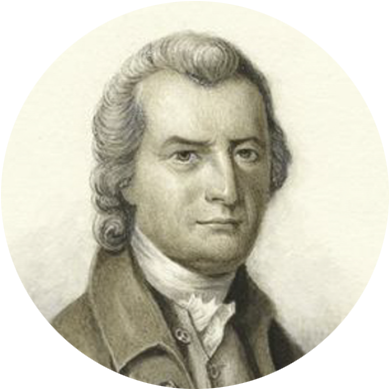

Biography
Oliver Wolcott, the youngest son of Connecticut Governor Roger and Sarah Drake Wolcott, was born in Windsor Connecticut on November 20, 1726. He graduated from Yale College in 1747 and then accepted a commission from the Governor of New York to organize a militia to defend the colonies against the French during King George’s War. When the war ended, he moved to Goshen in northwestern Connecticut in order to study and practice medicine with one of his brothers. But he soon decided to abandon medicine; he moved instead to the newly created county of Litchfield and began a career as a merchant.
Given his family’s social background, he was soon involved in local politics. He served as sheriff of the county from 1751 to 1771. He was vocal in his opposition to British policies in the years after the French and Indian War, and Connecticut elected him to serve in the Continental Congress in 1775. By February of 1776, he warned that “Our difference with Great Britain has become very great. What matters will issue in, I cannot say, but perhaps in a total disseverance from Great Britain.” It was clear that he would come down on the side of independence.
But he became seriously ill in 1776 and did not sign the Declaration until some time later.
Wolcott served in the Continental Congress every year until 1783 with the exception of 1779 when he was not elected a delegate. But his attendance was irregular since political participation in the revolution was not his only role; he was also an officer in Connecticut’s militia army. As a Brigadier General, he commanded the fourteen militia regiments sent to New York to assist the Continental Army, and in September 1777, he led a force of volunteers from his brigade to join Horatio Gates’s army against British General Burgoyne. By 1779 he was a Major General responsible for the defense of Connecticut’s seacoast and in May 1780 he became a member of the state’s Council of Safety, the executive committee for the prosecution of the war.
When the war ended, Wolcott focused more intently on his political career. He was appointed to the bench of the Connecticut Supreme Court of Errors in 1784, and two years later he was elected Lieutenant Governor of Connecticut. In 1796, upon the death of Governor Samuel Huntington, Wolcott became his state’s governor. He held this office until his death the following year at the age of 71.
Signer of the Declaration of Independence
Matthew Thornton
1714–1803, New Hampshire
Summary
Matthew Thornton was elected to the Continental Congress after the debate on independence had taken place, but he was permitted to sign the Declaration In November.
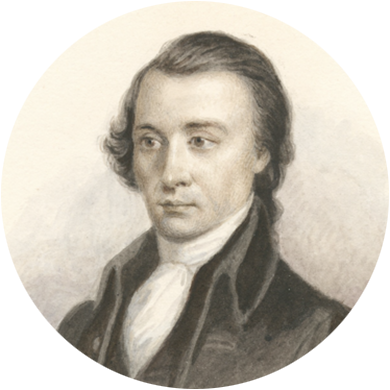

Biography
Matthew Thornton was born in Ireland, the son of James and Elizabeth Thorn ton, but when he was three , his family immigrated to America. The Thorntons first settled in a frontier town of Maine, but after a Native American attack in the summer of 1722, they moved to the more settled and safer Worcester, Massachusetts. Matthew studied medicine in nearby Leicester and set up a very successful practice in New Hampshire. He served the New Hampshire Militia troops as their doctor during the British conquest of the French Fortress Louisbourg in Canada in 1745. Thornton’s rise as a public figure began in 1758 when he was elected to serve in the New Hampshire Provincial Assembly. He also won a royal commission as justice of the peace, an appointment that was often the first acknowledgement of a community’s esteem.
Matthew Thornton became a central player in the colony’s politics by 1774. In that year, Royal Governor John Wentworth, prorogued , or dismissed, New Hampshire’s Provincial Assembly and after Lexington and Concord, he fled the colony. In 1775, Thornton was elected president of the New Hampshire Provincial Congress, which was, in effect, the governing body of the colony. By this time, the Provincial Assembly had created a Committee of Safety, one of the steps that would lead to independence. Thornton was also chosen to chair that critical committee. As he took office, he issued a statement to the people of New Hampshire in which he asserted that America was in crisis and that “the horrors and distresses of a civil war” were now a reality. “Duty to God, to ourselves, to posterity, [and] ends forced by the cries of slaughtered innocents, have urged us,” he declared, “to take up arms in our own defense… ”
Thornton worked on the draft of a state constitution created by a convention in December of 1775. In January 1776 this constitution was ratified by the Congress of New Hampshire, which made New Hampshire the first American colony to enact its own constitution.
Thorton was elected to the Continental Congress in 1776 after the debate on independence had taken place. He did not arrive in Philadelphia until November of that year, but he was permitted to sign the Declaration of Independence four months after its official signing that summer. He was elected once again to serve in the Continental Congress, but poor health forced him to decline.
In 1780 Thornton retired from his medical practice and purchased a farm on the banks of the Merrimack River, near Exeter. By then, he was a locally known political essayist and was soon to become a successful farmer and ferry operator. Although he never attended law school, he had been appointed to the New Hampshire Superior Court in 1776 and continued to serve on the bench until 1782. By 1784, he was in the New Hampshire Senate. He died at the age of 89 on a visit to his daughter in Massachusetts during the summer of 1803.
At his funeral, the minister described Matthew Thornton as “venerable for his age, and skilled in his profession, and for the several very important and honorable offices he had sustained.” Friends and contemporaries echoed the respect offered in this eulogy. Contemporaries described him as a man of considerable intelligence and, in his private life, an agreeable companion who loved to shower others with entertaining anecdotes and tales of fictitious adventures, spun for their amusement.